URBE INFINITA
Urbe Infinita (Infinite Metropolis) is an ongoing visual investigation into self-built architecture in Lima, Peru. Through photography, video, testimonies, and imagery from Google Street View, the project explores the processes of incremental construction that define the city's unfinished, largely unplanned urban landscape.
ABOUT THE PROJECT
01 — ABOUT THE PROJECT
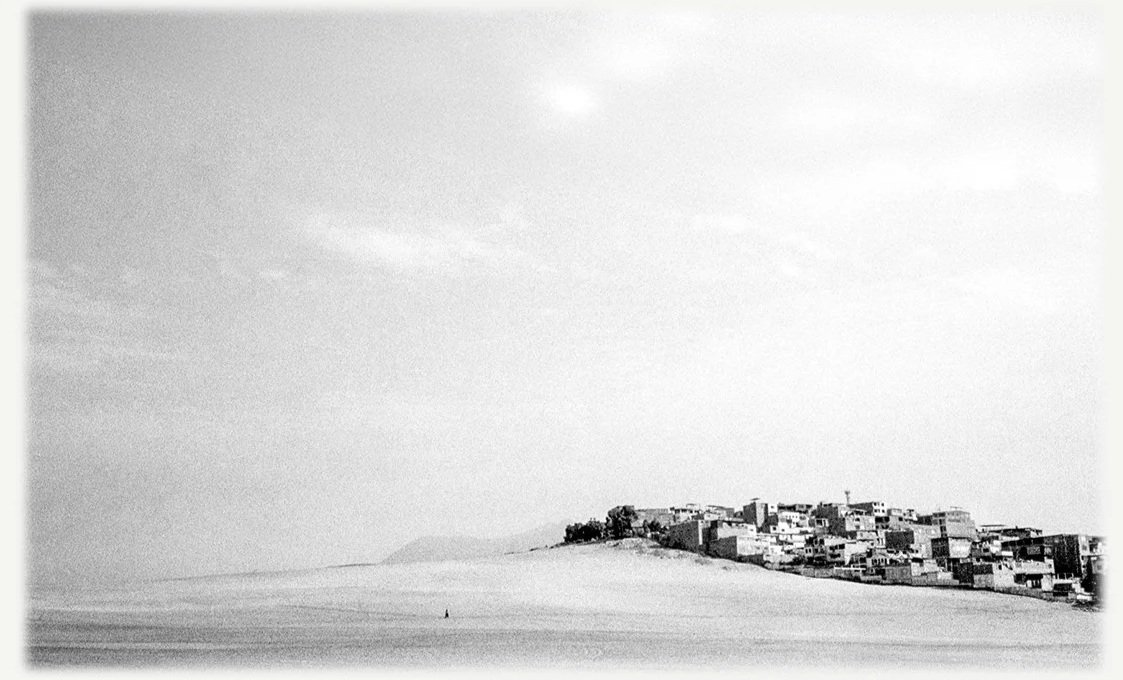
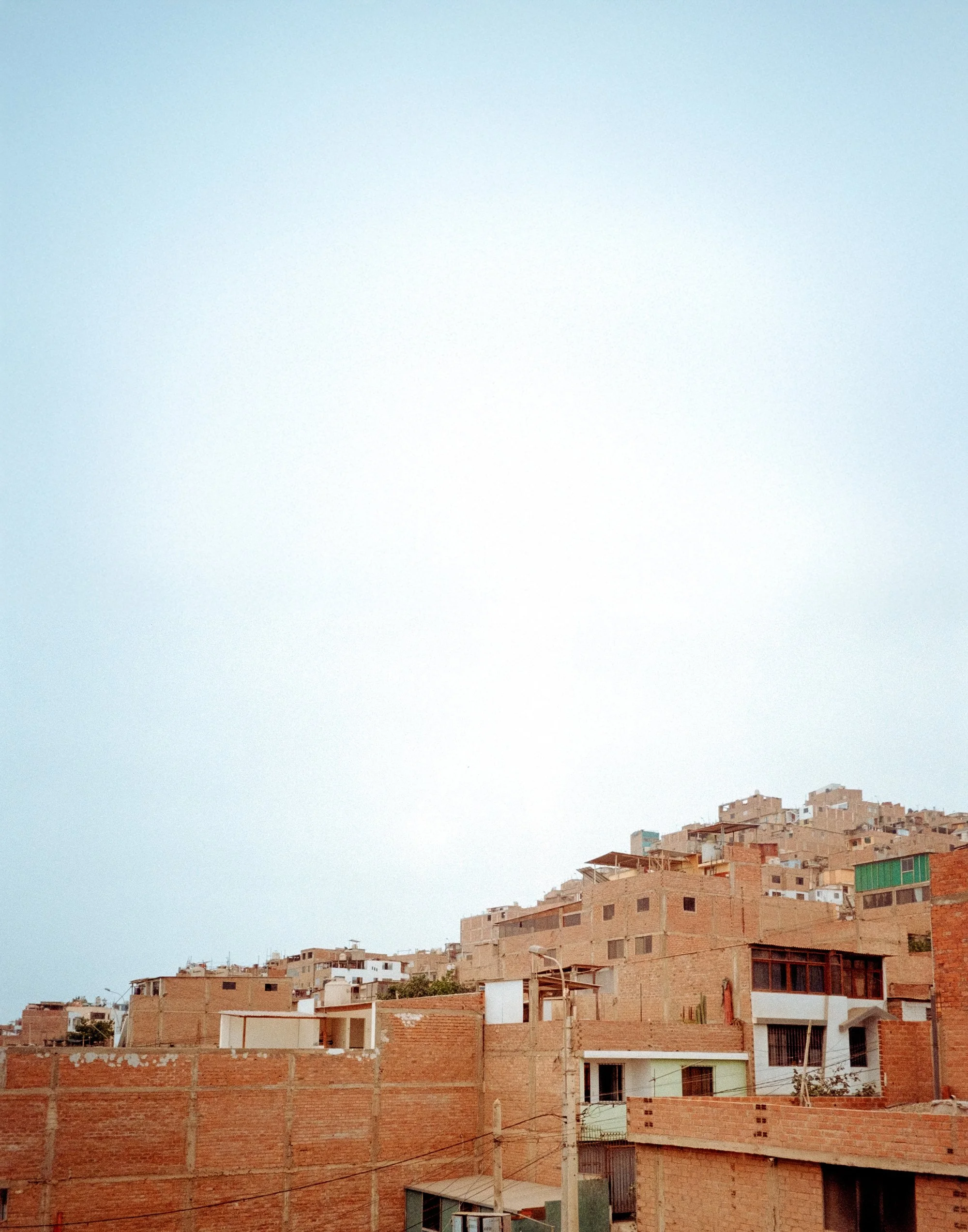
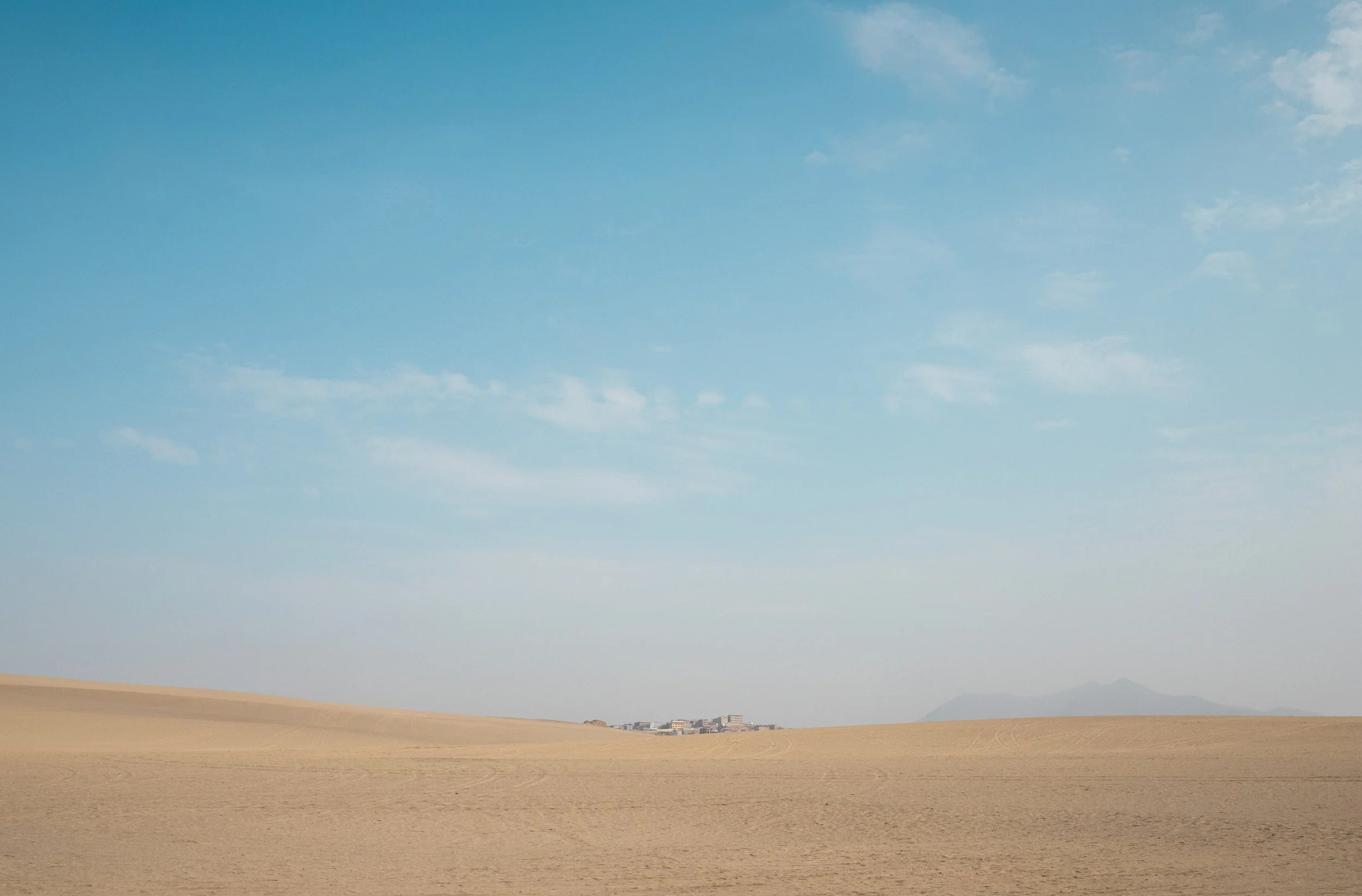
When I came across Tim Ingold’s idea that buildings, like natural environments, are constantly evolving, I immediately thought of the architecture of my city, Lima. Home to over 10 million people—nearly a third of Peru’s population—Lima is a sprawling metropolis that has expanded rapidly across the coastal desert. An unfinished, largely unplanned landscape of exposed brick facades, steel rods protruding as signs of future expansion, and staircases leading to floors yet to be built.
This is the landscape of self-built architecture: homes constructed and expanded gradually, shaped by the changing needs and resources of their inhabitants, often across generations. Seven out of ten homes in Lima have been built through this process. Never finished in the traditional sense, these houses continue to evolve alongside the lives of their inhabitants. On a massive scale, this process has given rise to entire neighborhoods built largely outside formal urban planning, where streets and houses emerge simultaneously. Today, the majority of Lima’s urban territory has been urbanized through self-construction. A city that builds itself.
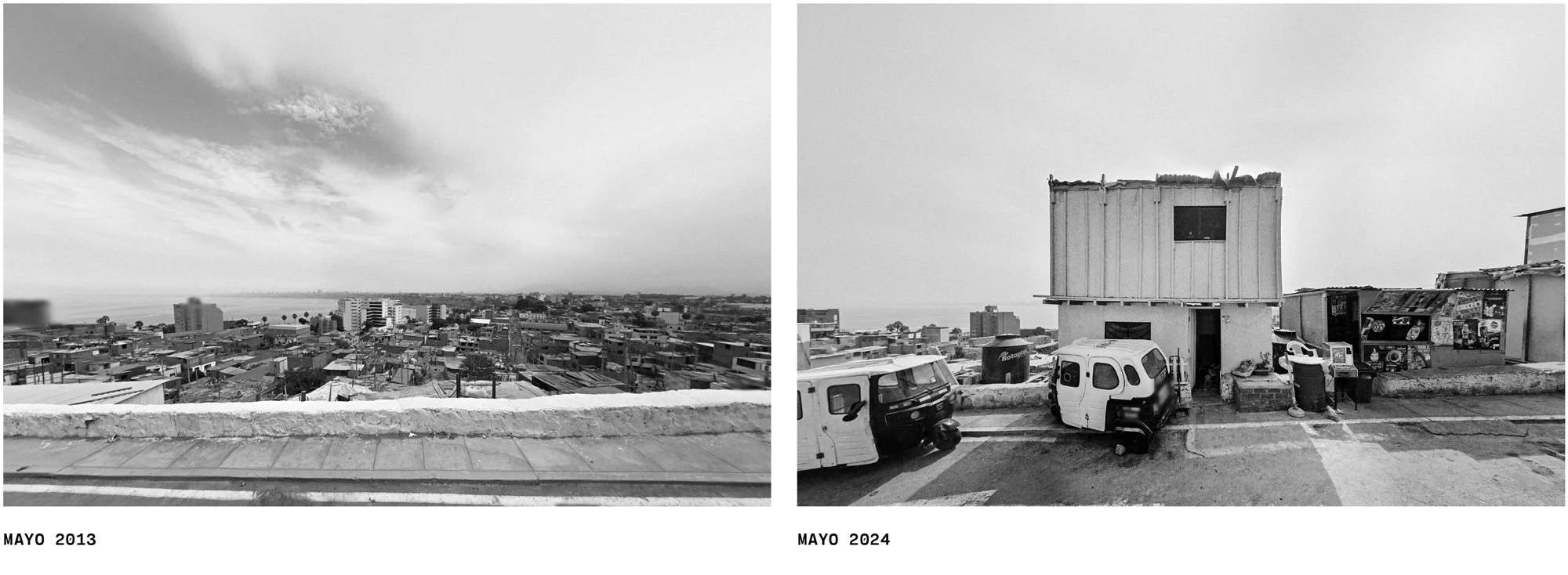
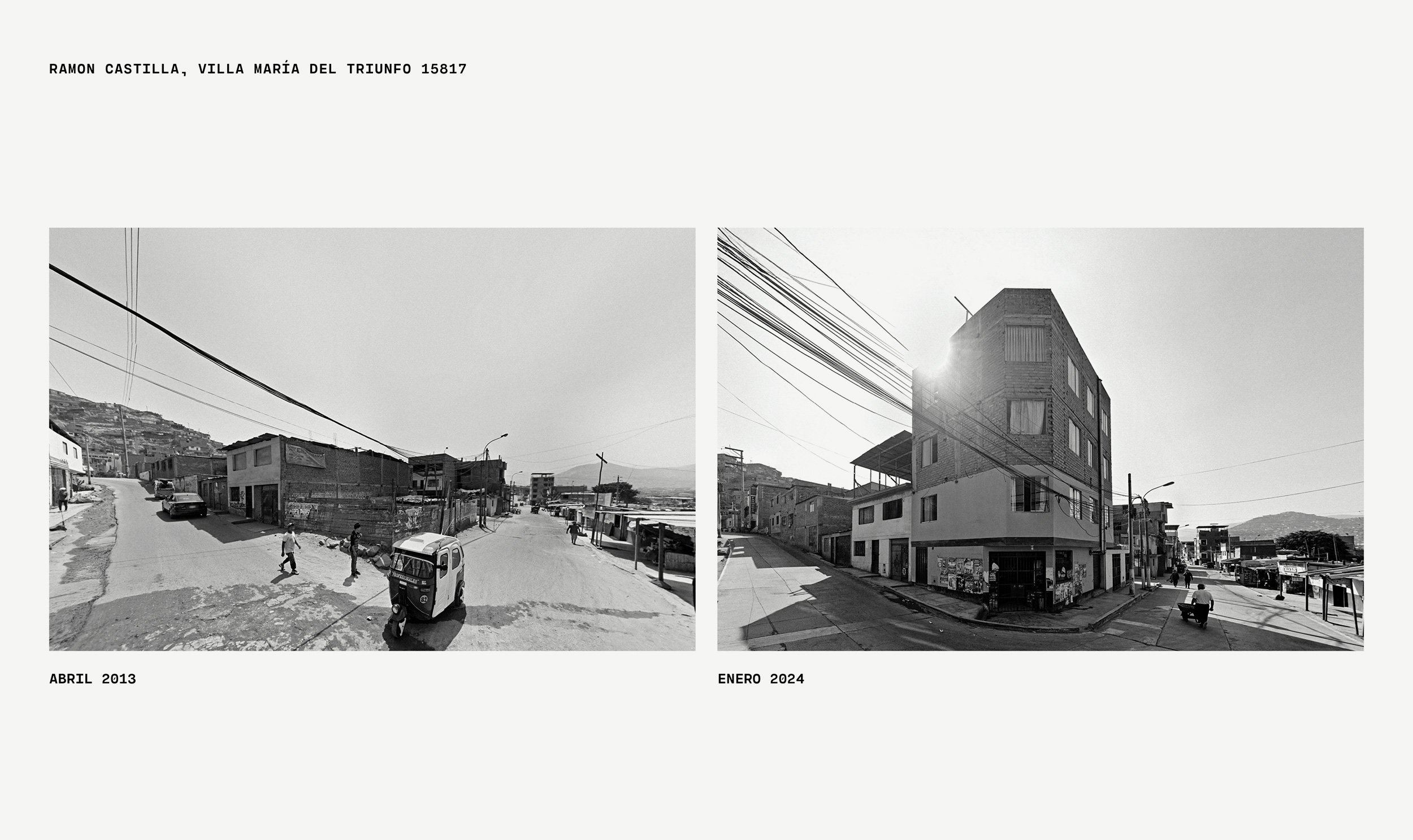
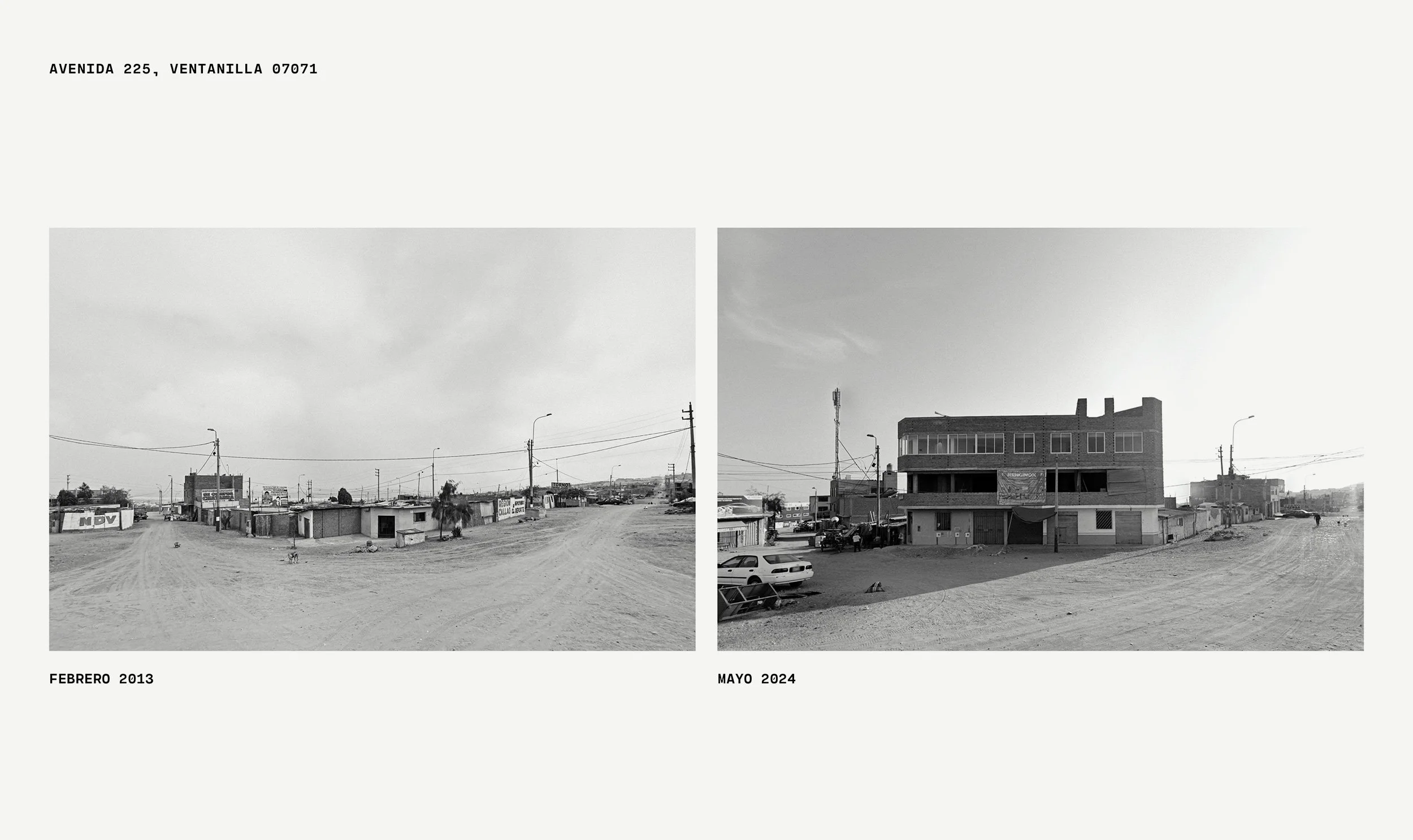
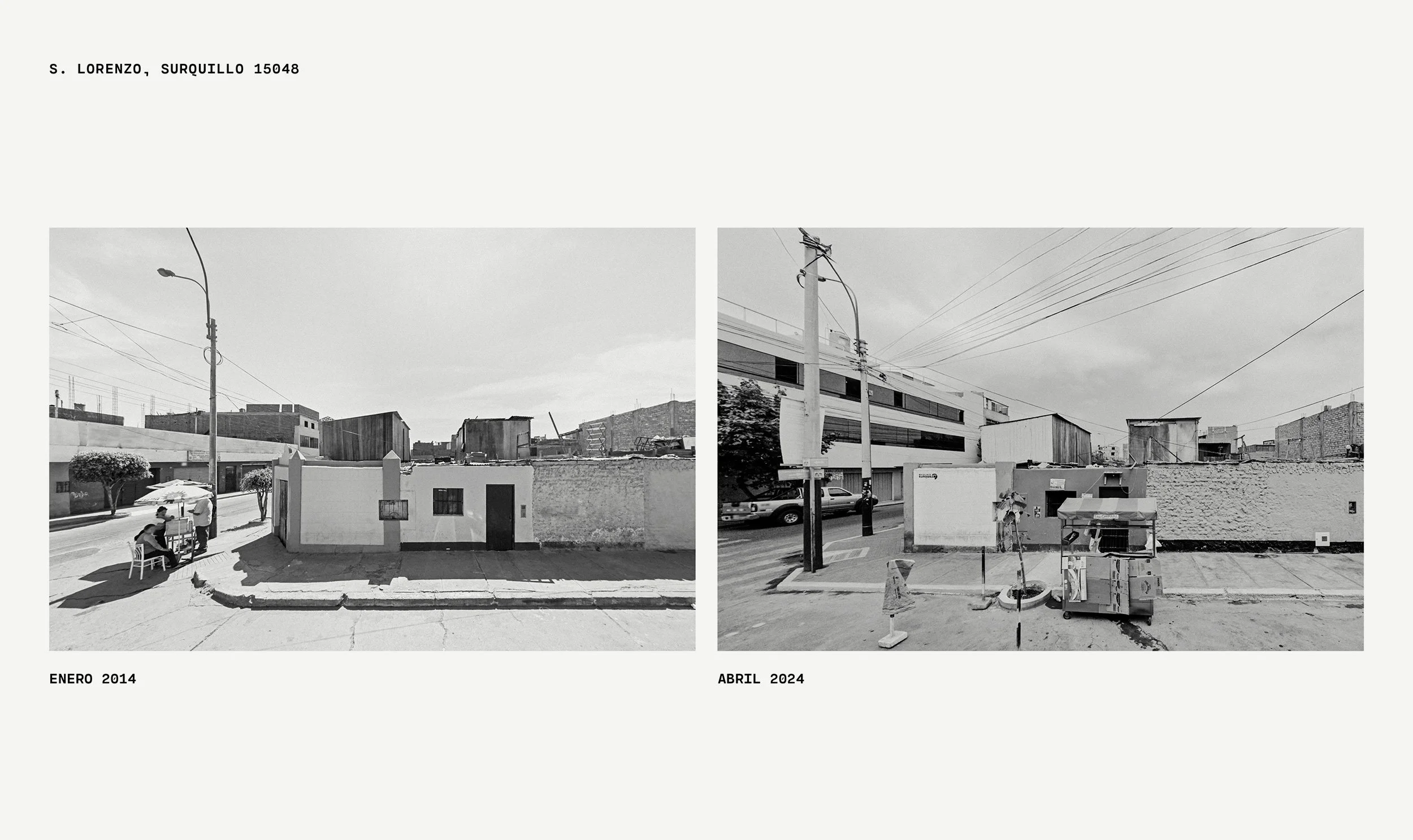
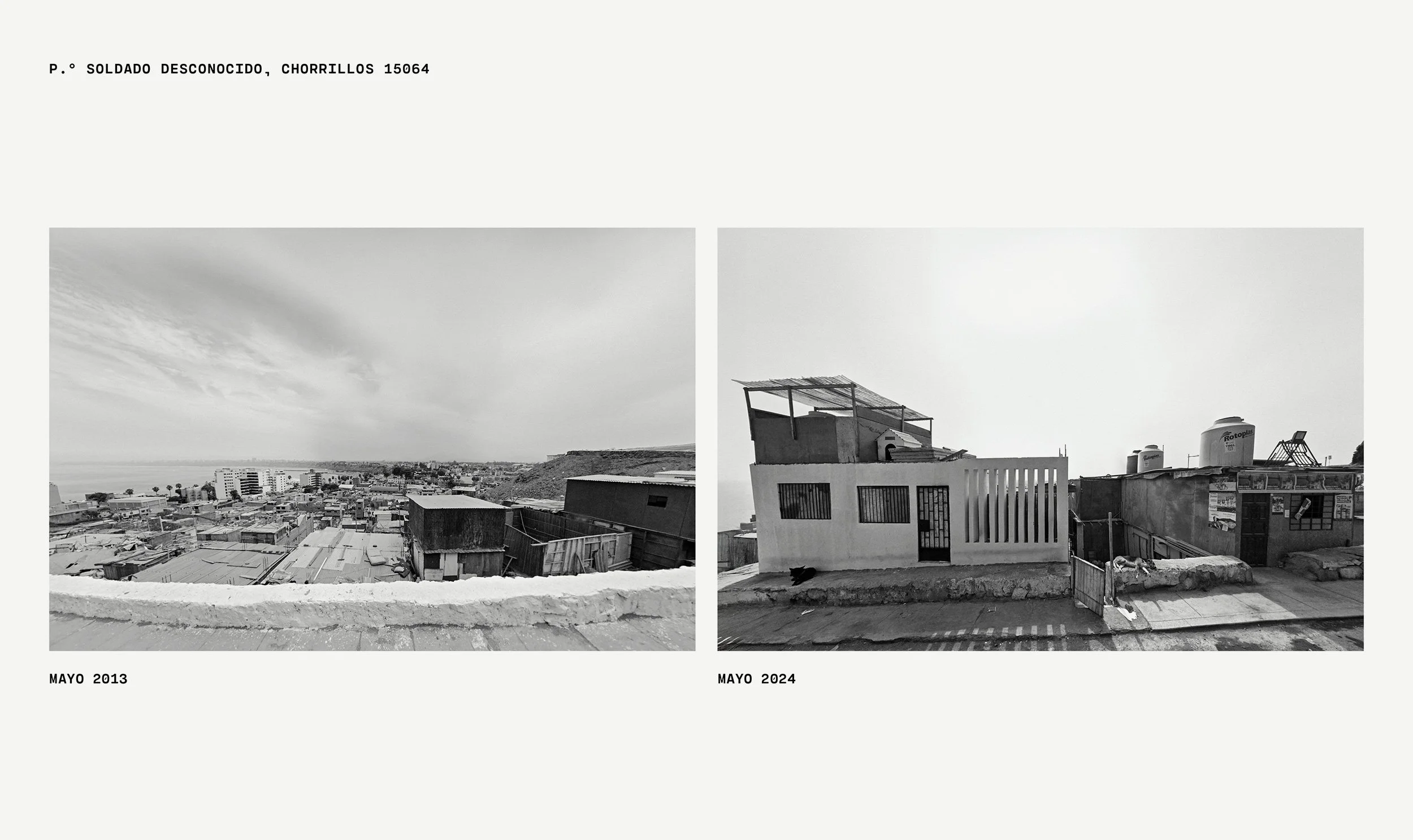
After reading Ingold, I began exploring Lima’s self-built neighborhoods through Google Street View. The platform offers not only a spatial exploration, but also a journey through time. Using images captured between 2012 and 2024, I assembled a series of “before and after” comparisons documenting the transformation of individual structures. These images make the passage of time tangible, capturing a city in constant evolution. What gradually emerged was a visual archive of structures that, paradoxically, resist being archived: forms that have shaped a city that has yet to recognize them.
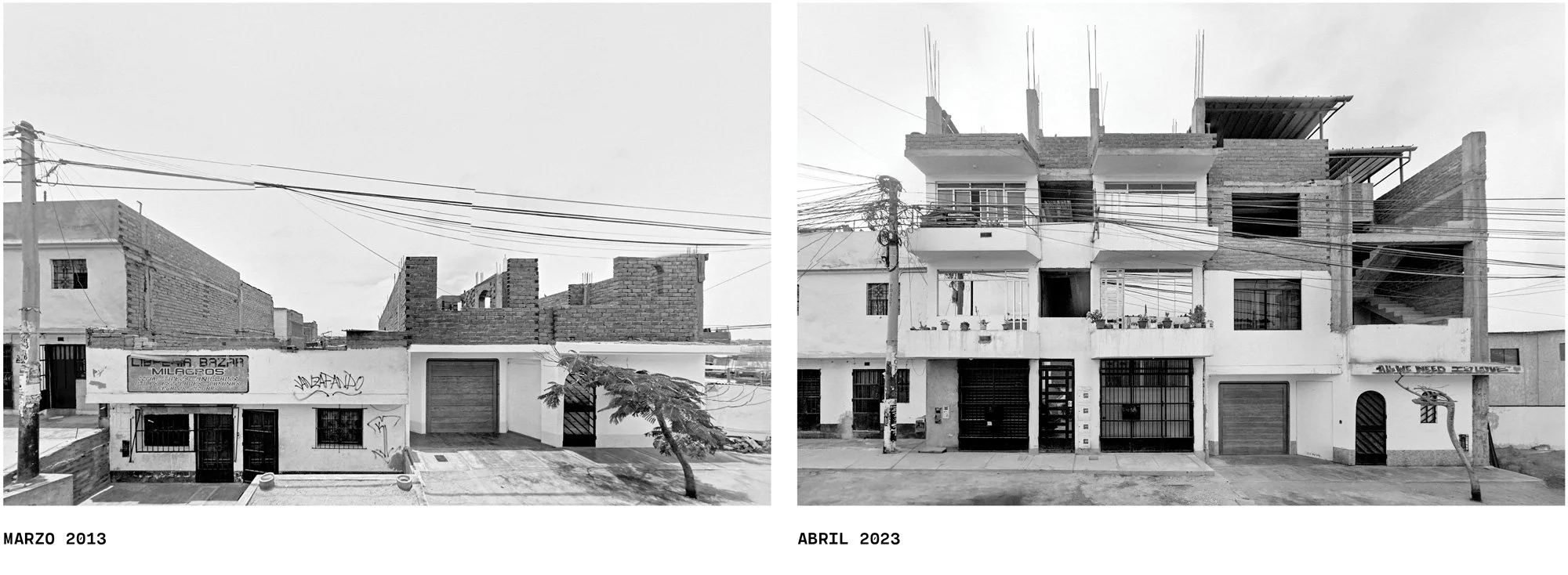
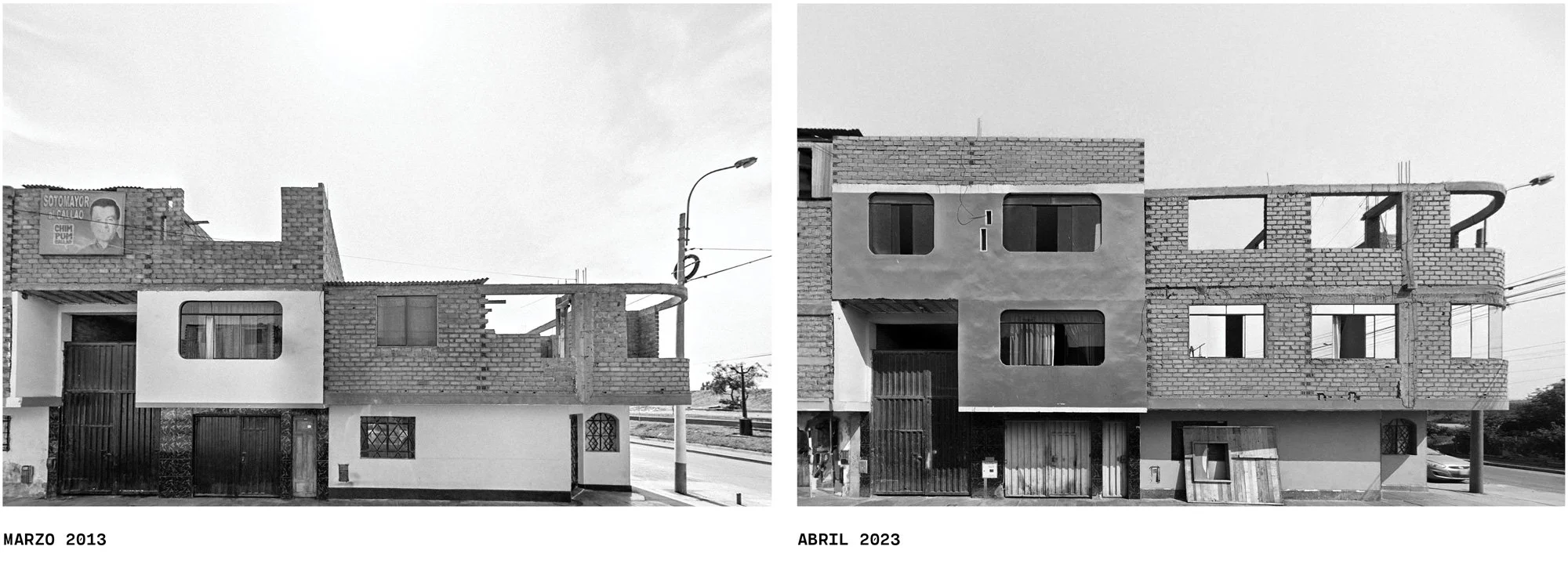
This visual record spans just over a decade, but self-construction began transforming Lima’s landscape on a massive scale in the mid-twentieth century, when thousands of people migrated from rural areas to Lima, seeking to escape poverty. Faced with a hostile system that imposed legal barriers to housing and basic services, they turned to self-construction as a means of survival. By establishing their own communities and economies, they transformed the city from the ground up, as part of what José Matos Mar called desborde popular (popular overflow).
Within this context, self-construction became central to debates about the city. Urban planners and architects, both local and international, saw in it a potential alternative to the rigidity of traditional planning. The outlook was optimistic: this surge of social activity, reshaping the urban landscape, might give rise to a new order. Decades later, we continue to inhabit a city profoundly shaped by this desborde popular, without the state or formal institutions ever having fully integrated it.
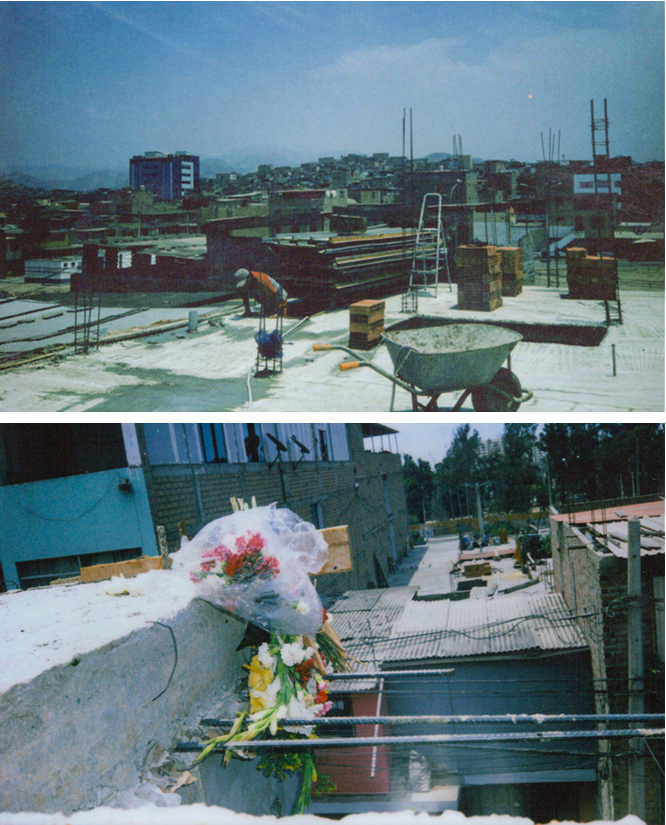
What does the landscape we have built reveal? Urbe Infinita is an attempt to understand our urban environment as a living system. To think of self-built homes as generational archives. Dreams in perpetual construction. A visual record of how people adapt and survive within a system that does not always include them. Chance and necessity transformed into architecture, into city, into home.
These structures are contradictory monuments: to resilience, to labor, to precarity, and to state neglect. Ultimately, they are expressions of the human need to persist, to create, to build.
1
4
01 — ABOUT THE PROJECT

When I came across Tim Ingold’s idea that buildings, like natural environments, are constantly evolving, I immediately thought of the architecture of my city, Lima. Home to over 10 million people—nearly a third of Peru’s population—Lima is a sprawling metropolis that has expanded rapidly across the coastal desert¹. An unfinished, largely unplanned landscape of exposed brick facades, steel rods protruding as signs of future expansion, and staircases leading to floors yet to be built.
This is the landscape of self-built architecture: homes constructed and expanded gradually, shaped by the changing needs and resources of their inhabitants, often across generations. Seven out of ten homes² in Lima have been built through this process. Never quite finished in the traditional sense, these homes continue to evolve alongside the lives of their inhabitants. On a massive scale, this process has given rise to entire neighborhoods built largely outside formal urban planning, where streets and houses emerge simultaneously. Today, the majority of Lima’s urban territory has been urbanized through self-construction. A city that builds itself.
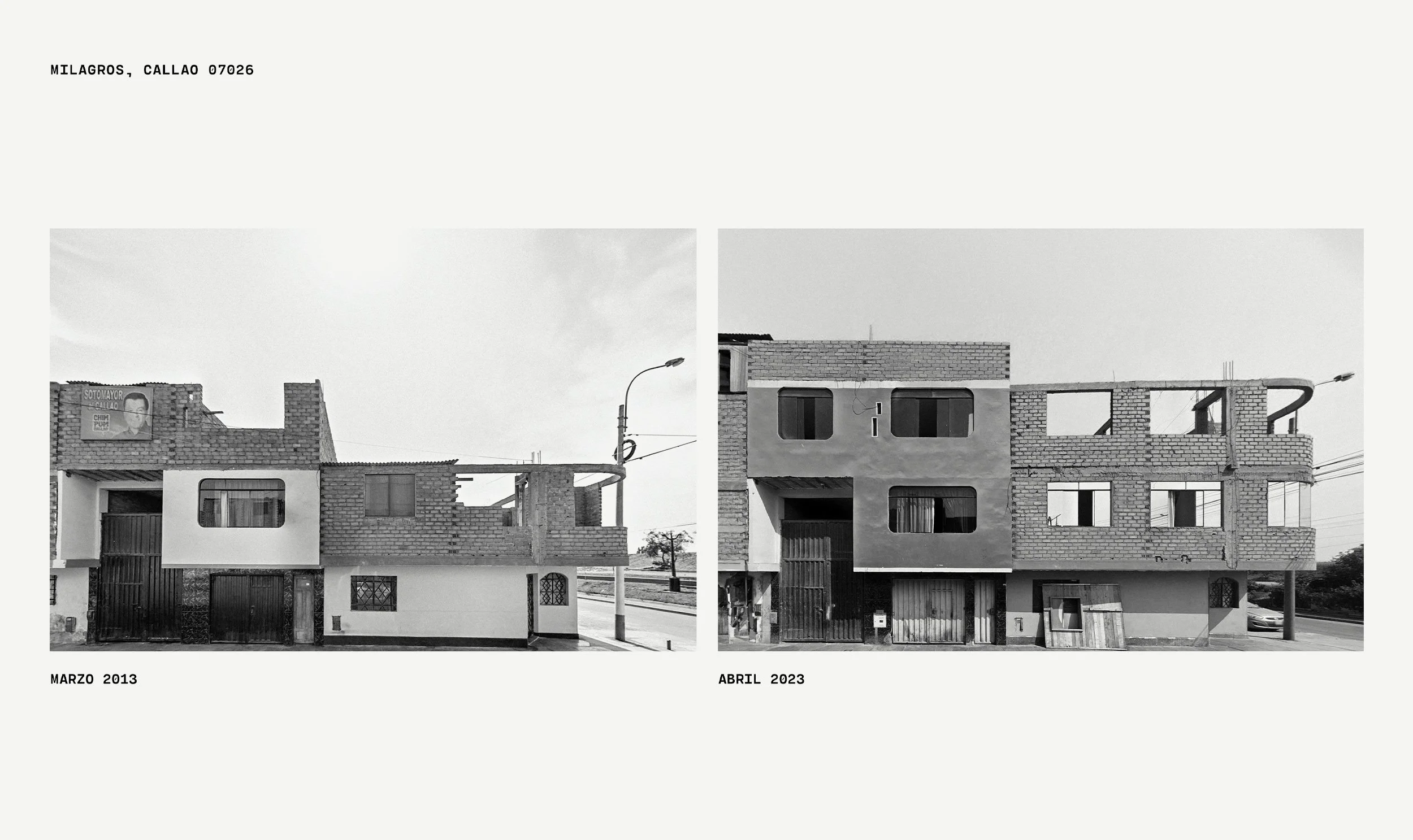
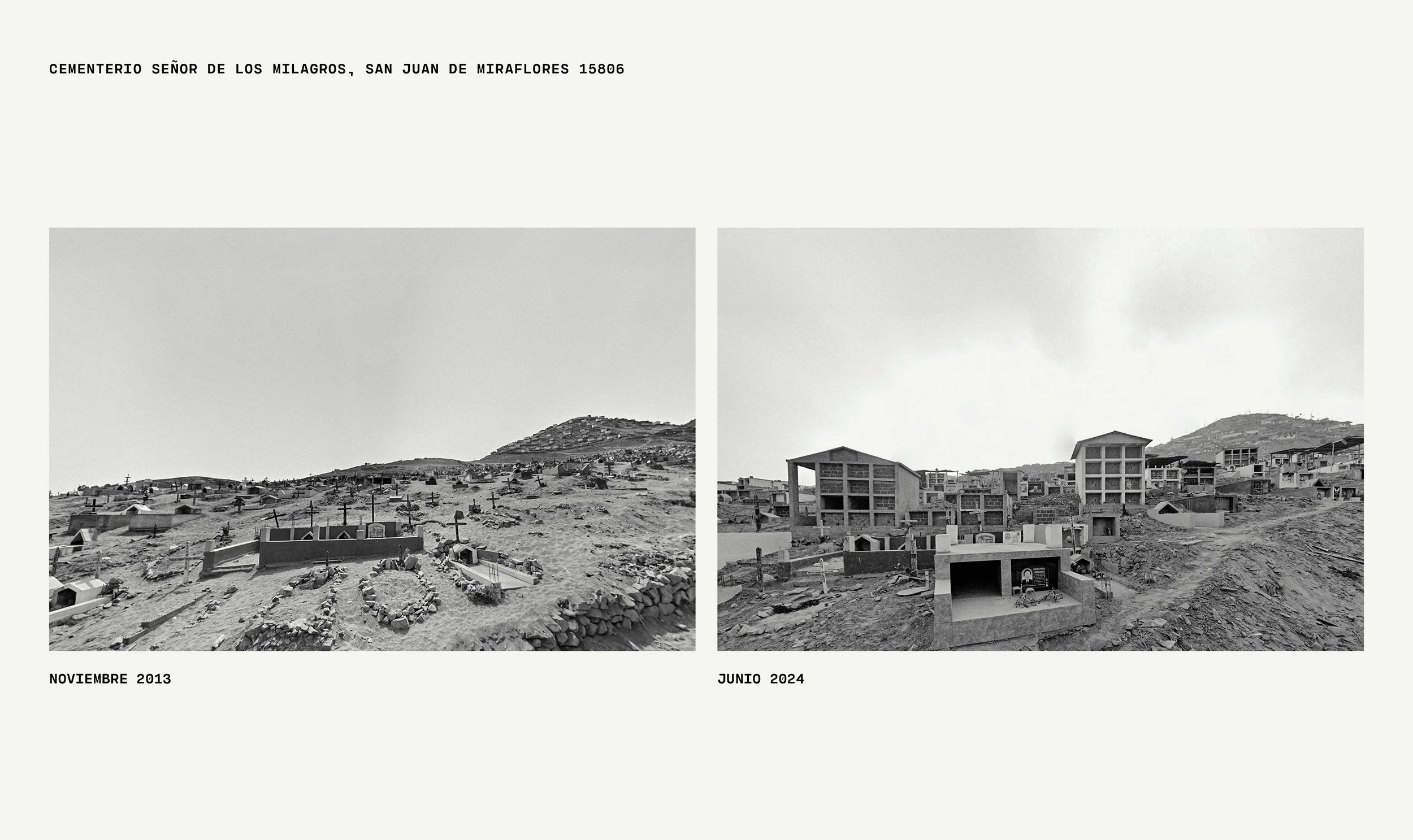
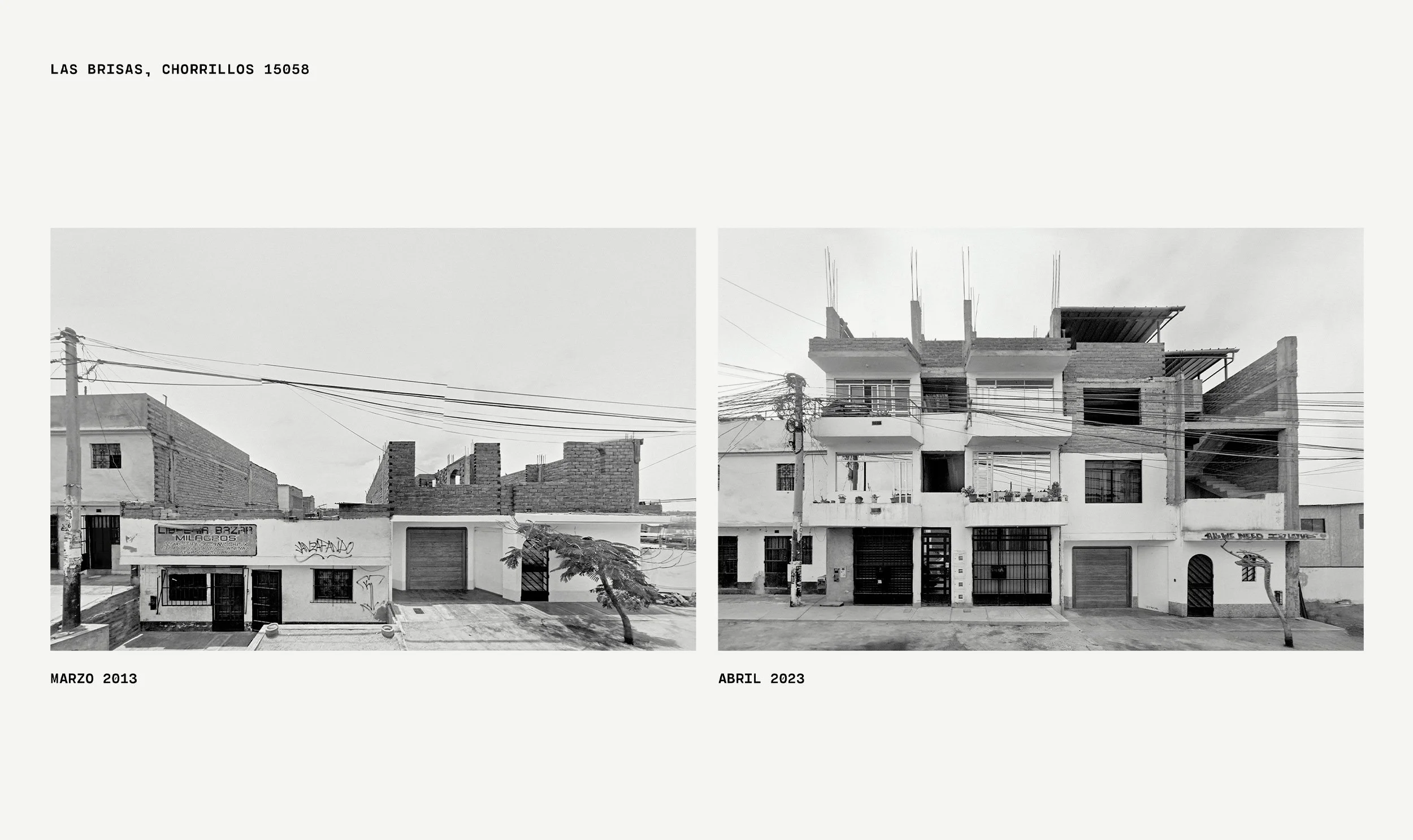
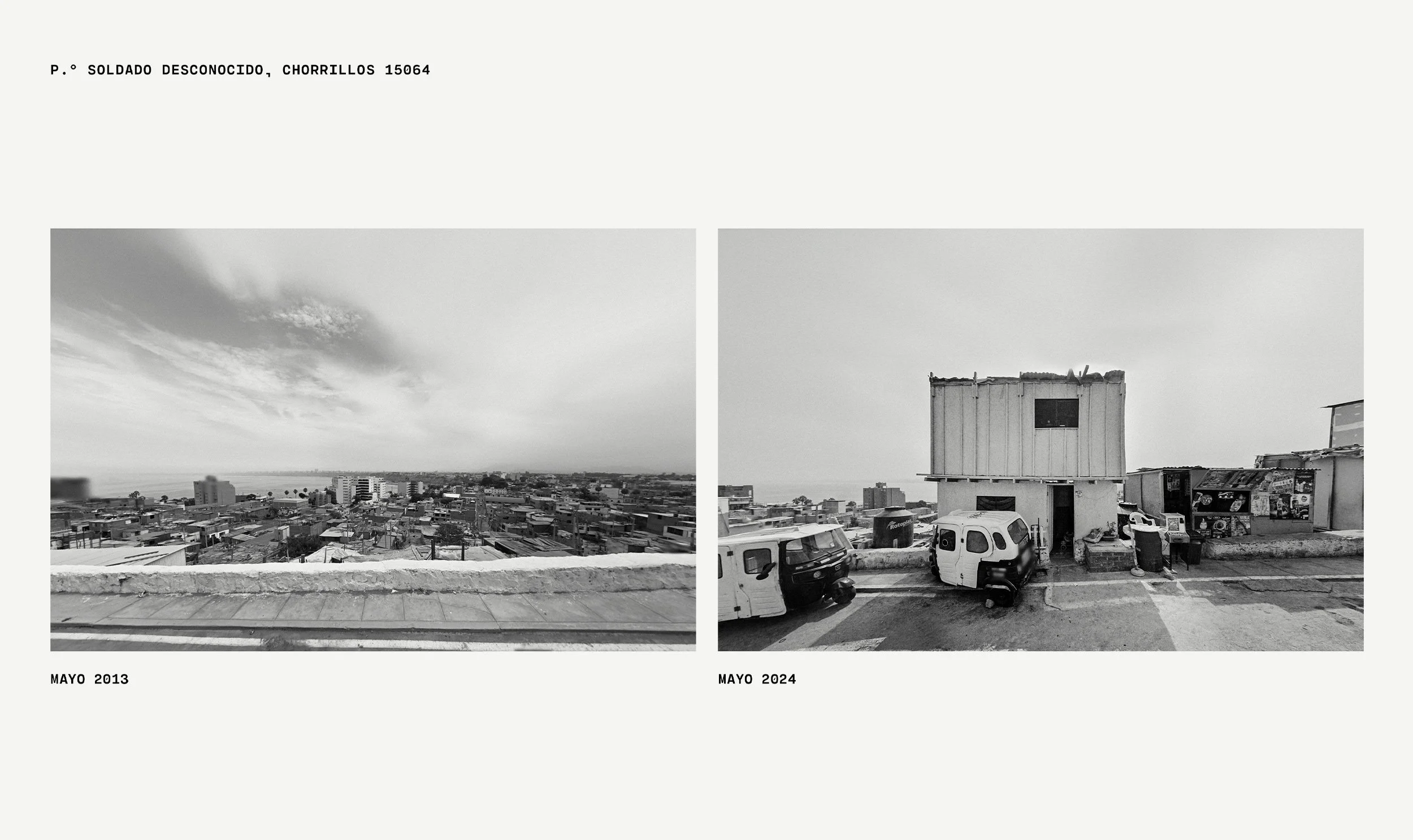
After reading Ingold, I began exploring Lima’s self-built neighborhoods through Google Street View. The platform offers not only a spatial exploration, but also a journey through time. Using images captured between 2012 and 2024, I assembled a series of “before and after” comparisons documenting the transformation of individual structures. These images make the passage of time tangible, capturing a city in constant evolution. What gradually emerged was a visual archive of structures that, paradoxically, resist being archived: forms that have shaped a city that has yet to recognize them.
This visual record spans just over a decade, but self-construction began transforming Lima’s landscape on a massive scale in the mid-twentieth century, when thousands of people migrated from rural areas to Lima, seeking to escape poverty³. Faced with a hostile system that imposed legal barriers to housing and basic services, they turned to self-construction as a means of survival. By establishing their own communities and economies, they transformed the city from the ground up, as part of what José Matos Mar called desborde popular (popular overflow).
Within this context, self-construction became central to debates about the city. Urban planners and architects, both local and international, saw in it a potential alternative to the rigidity of traditional planning⁴⁵. The outlook was optimistic: this surge of social activity, reshaping the urban landscape, might give rise to a new order. Decades later, we continue to inhabit a city profoundly shaped by this desborde popular, without the state or formal institutions ever having fully integrated it.³
What does the landscape we have built reveal? Urbe Infinita is an attempt to understand our urban environment as a living system. To think of self-built homes as generational archives. Dreams in perpetual construction. A visual record of how people adapt and survive within a system that does not always include them. Chance and necessity transformed into architecture, into city, into home.
These structures are contradictory monuments: to resilience, to labor, to precarity, and to state neglect. Ultimately, they are expressions of the human need to persist, to create, to build.
2
3
4
02 — CHAPTERS
Urbe Infinita is an ongoing visual investigation, currently comprising three chapters that explore different dimensions of self-construction.
CHAPTER I — ARCHIVE OF SELF-CONSTRUCTION
STRUCTURES IN TRANSFORMATION
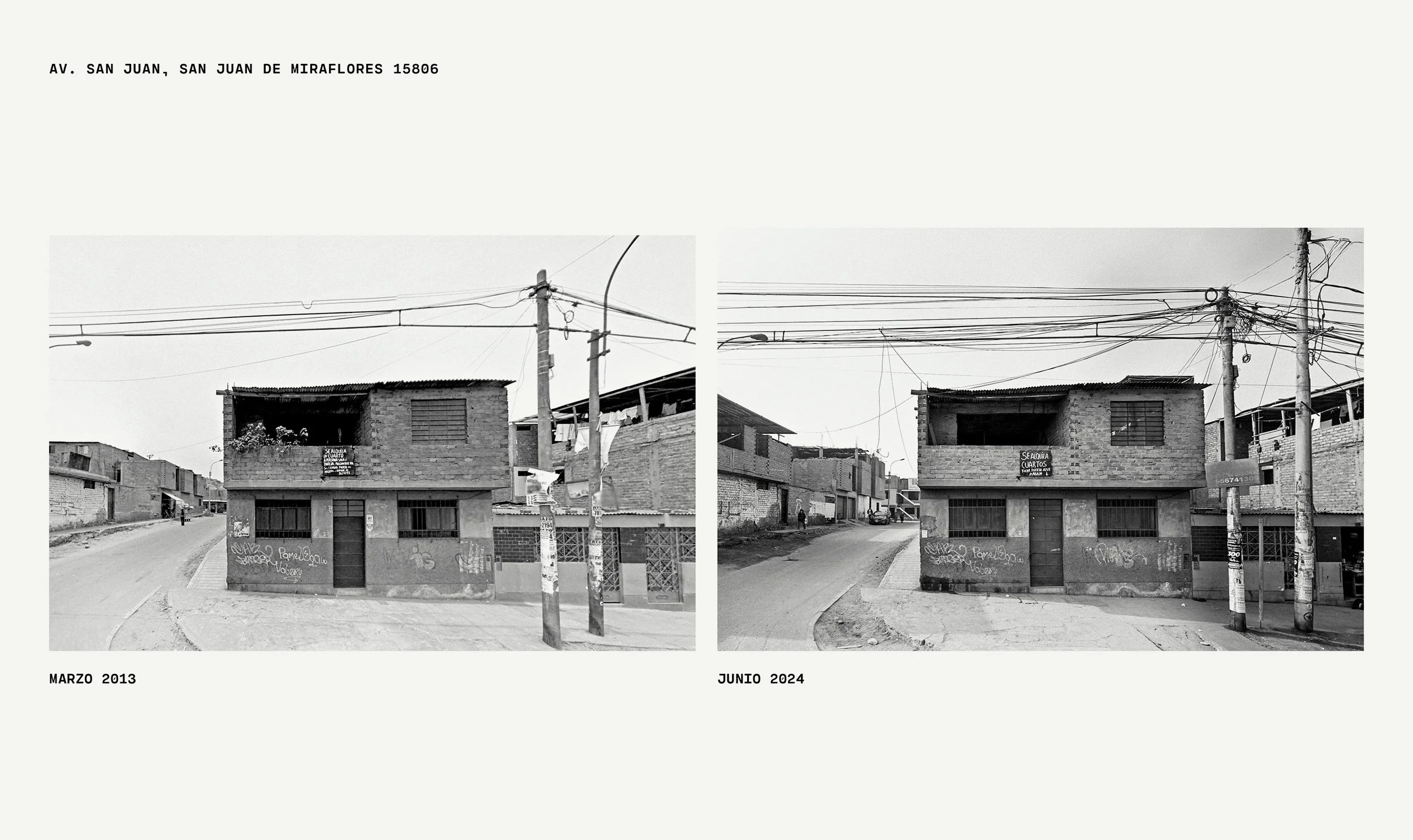
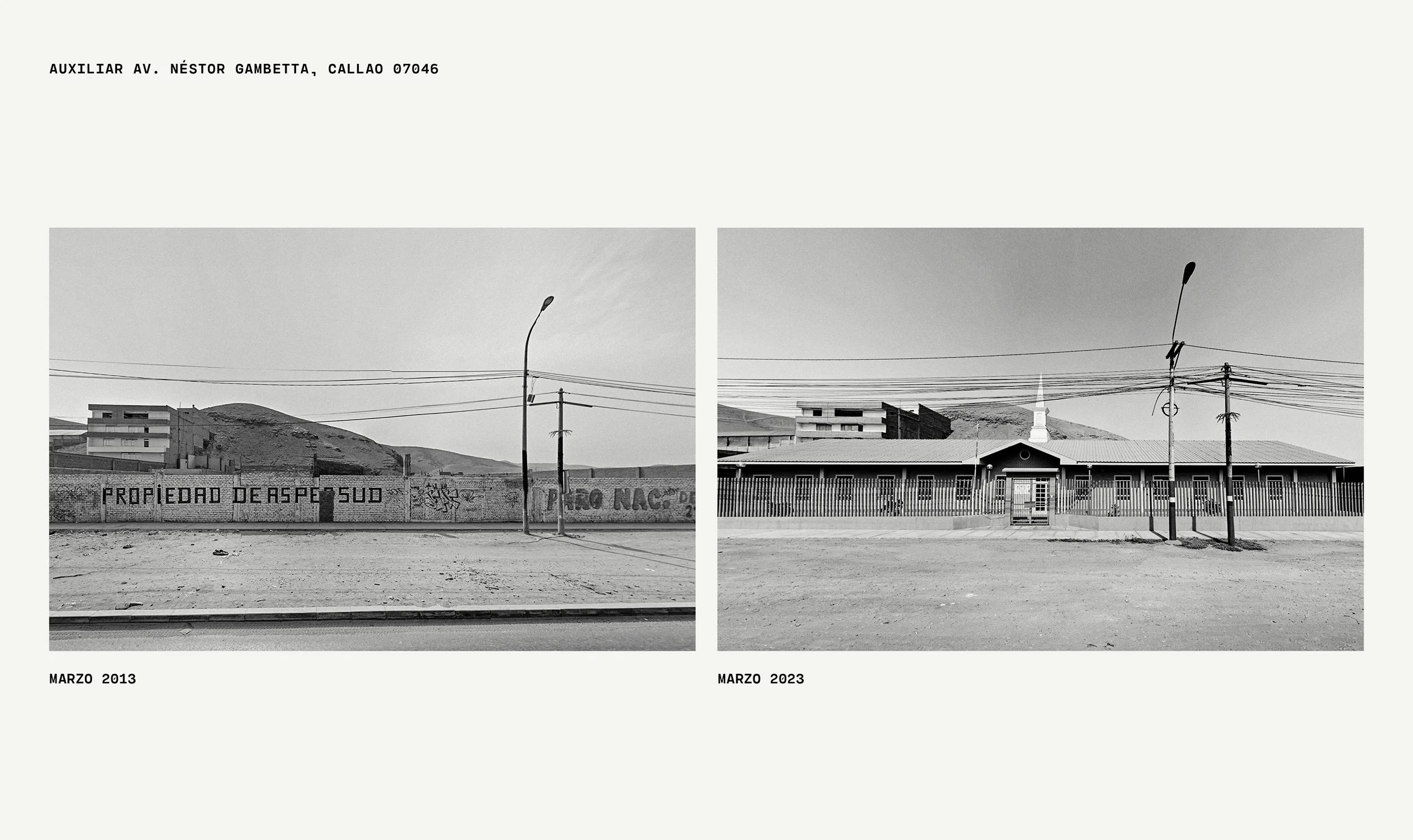
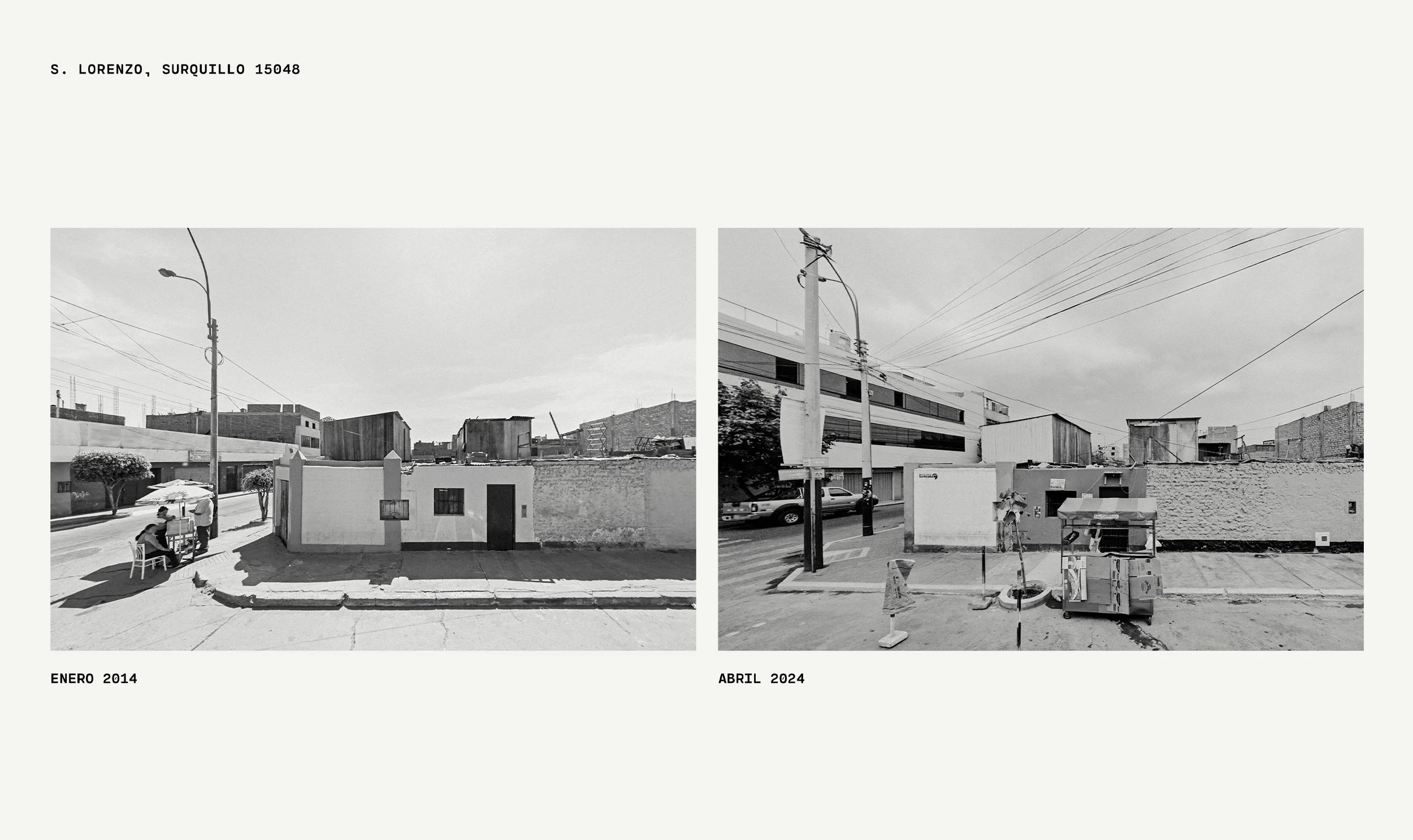
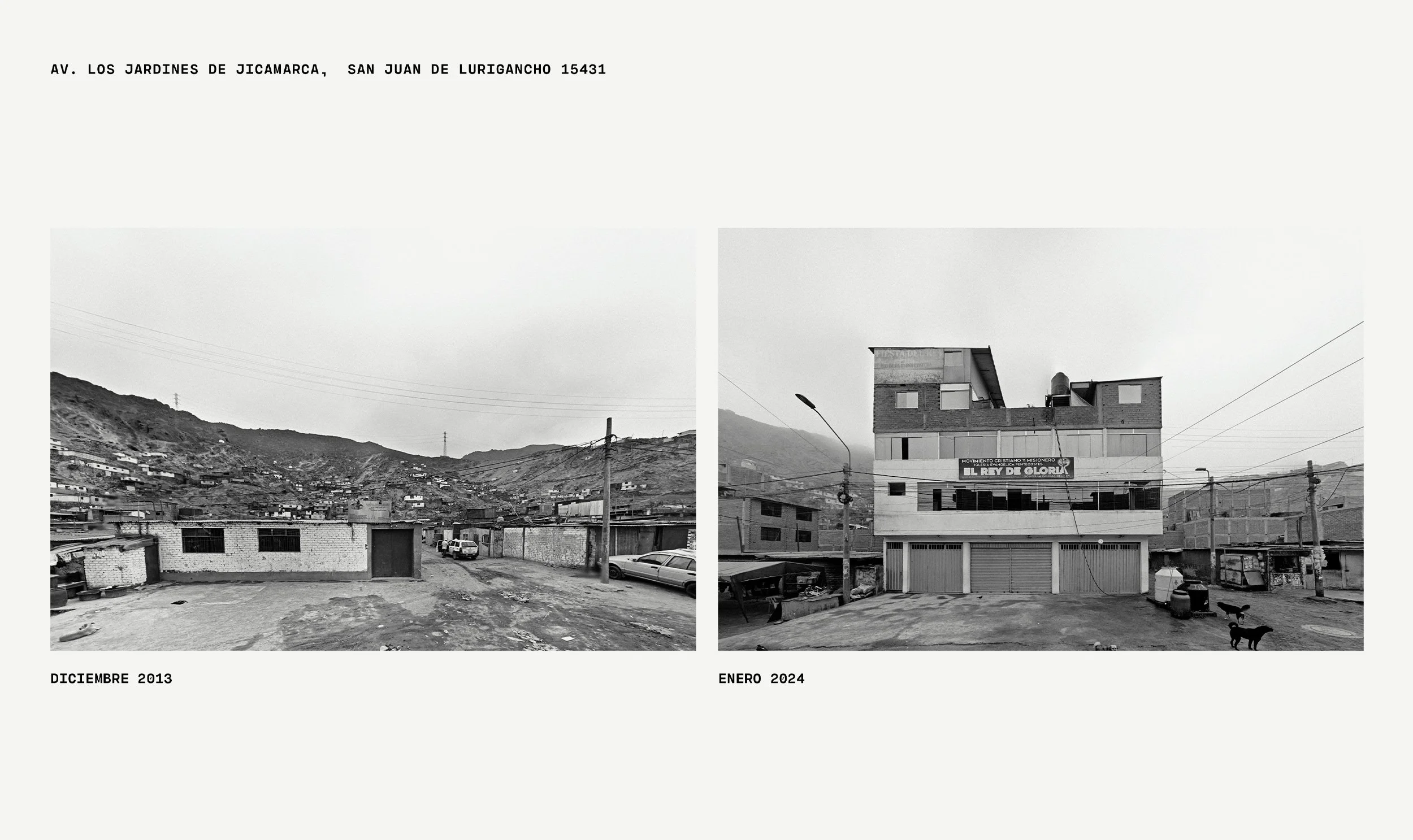
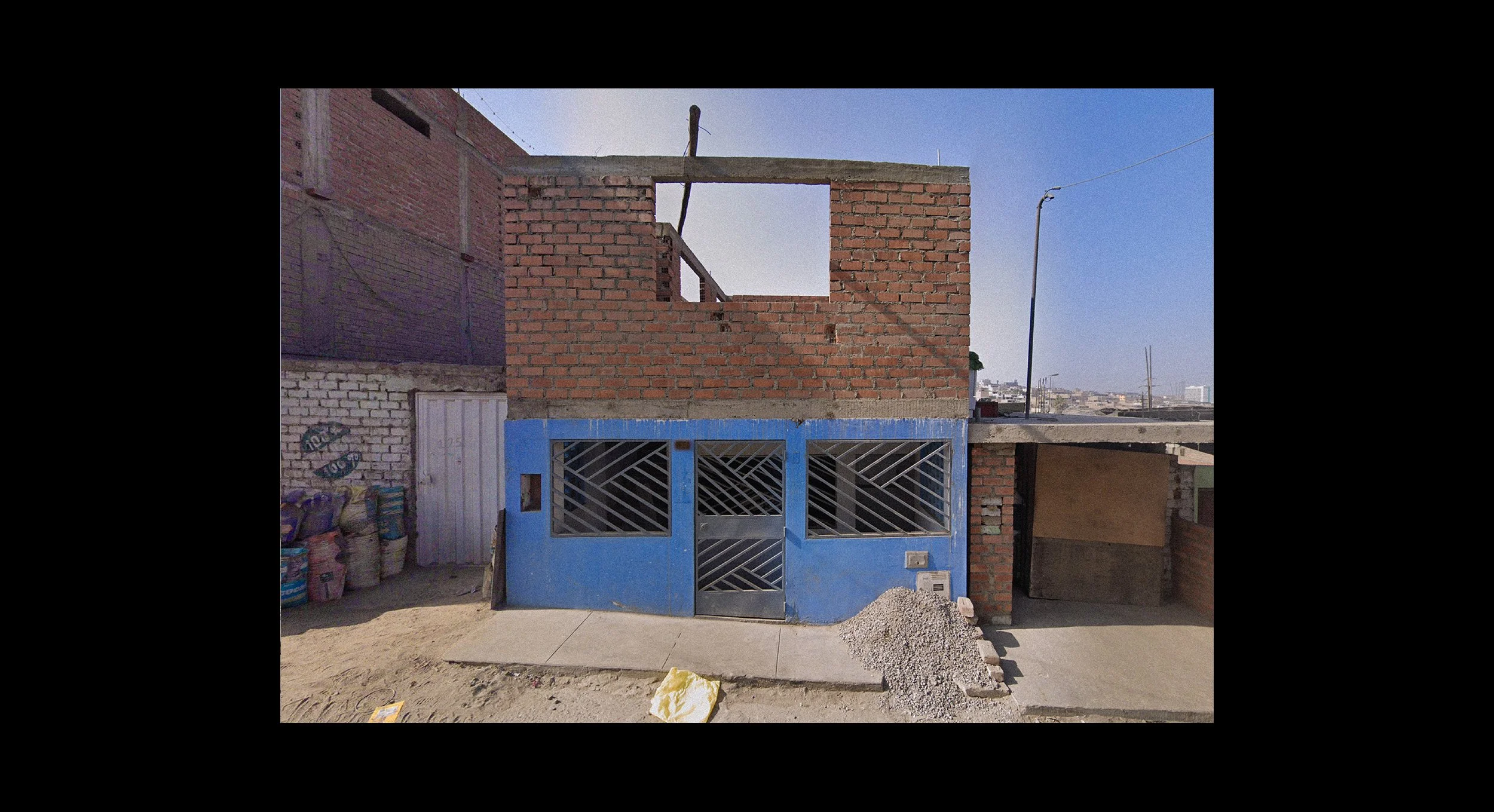
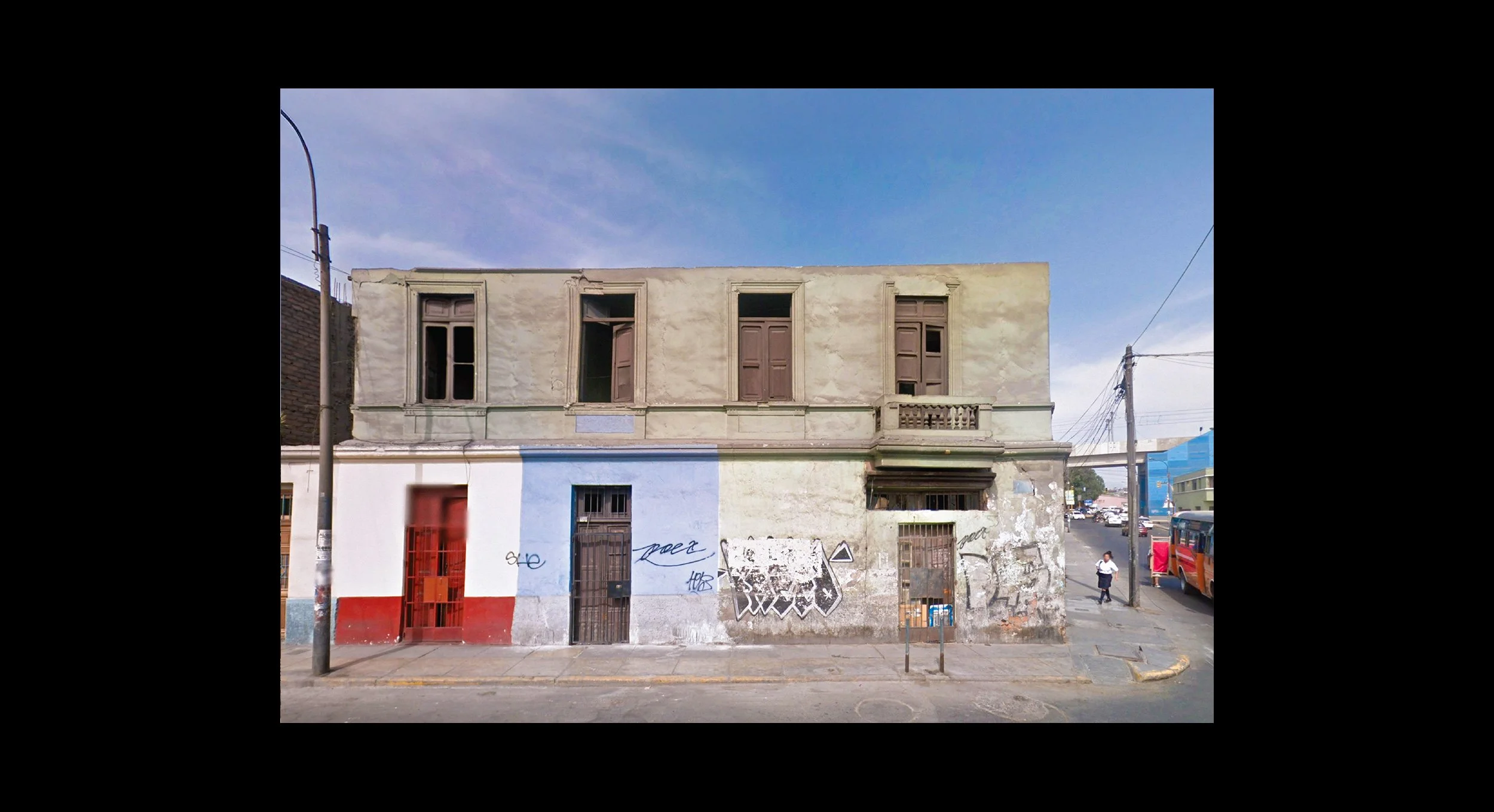
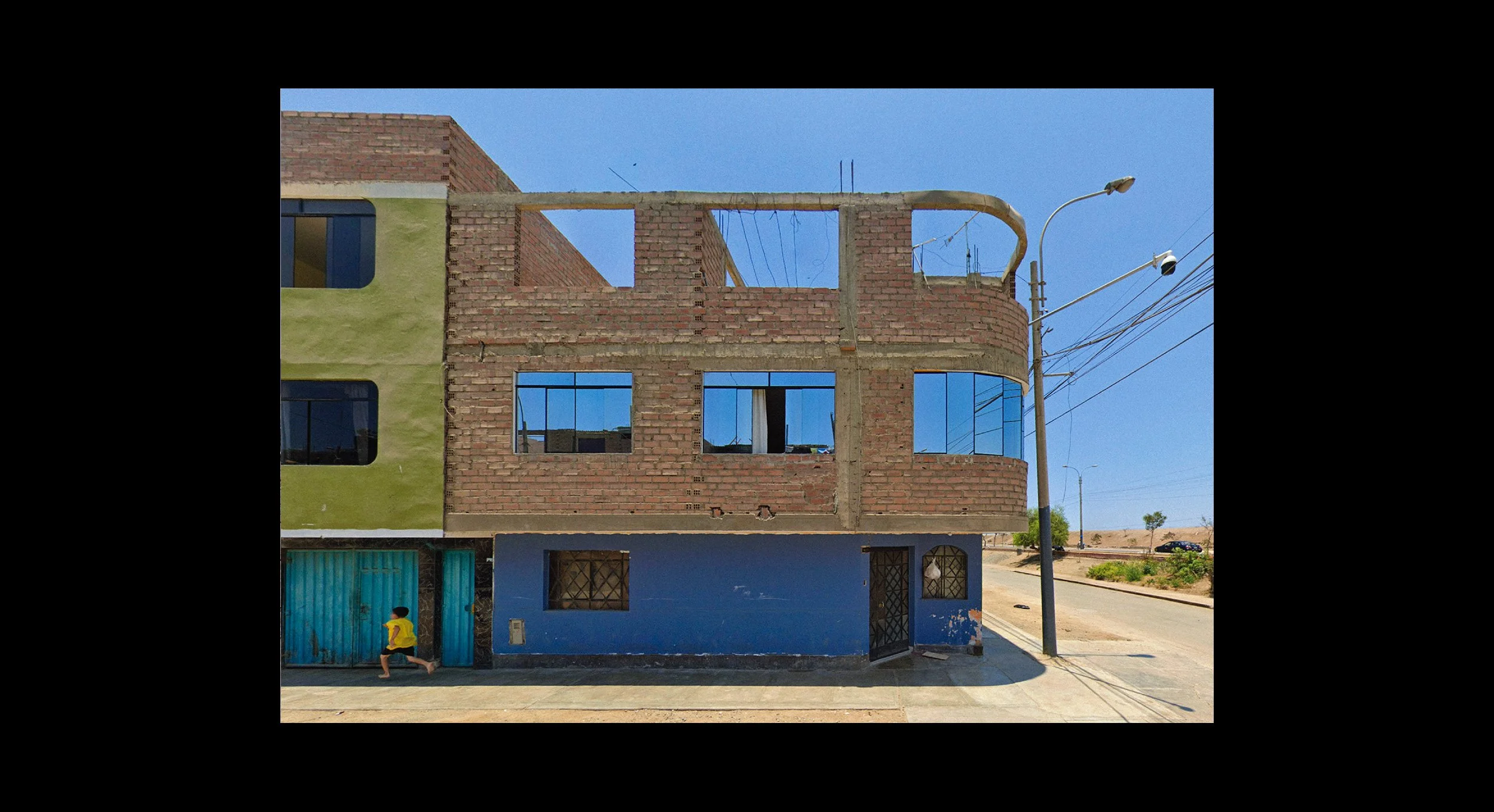
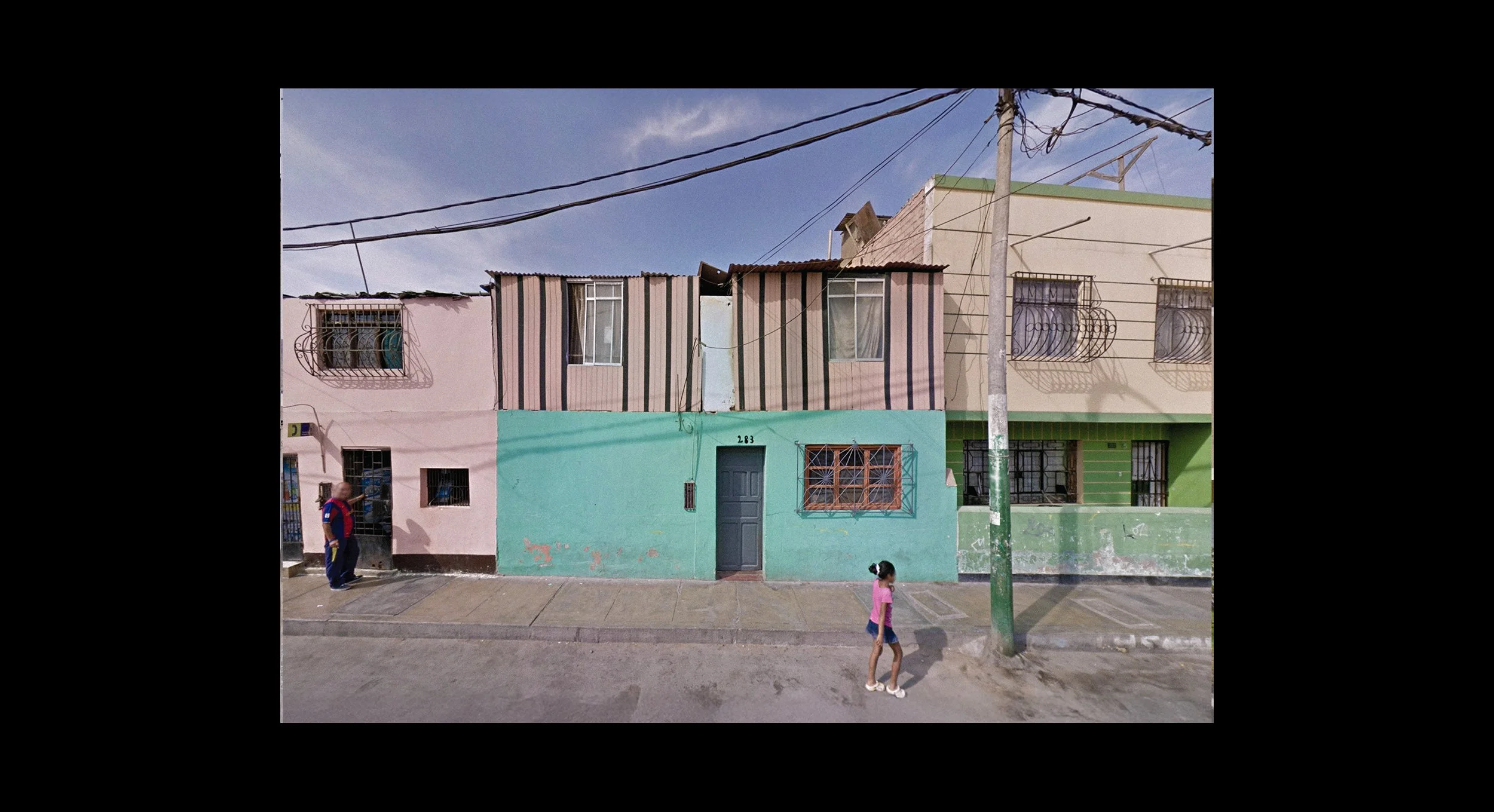
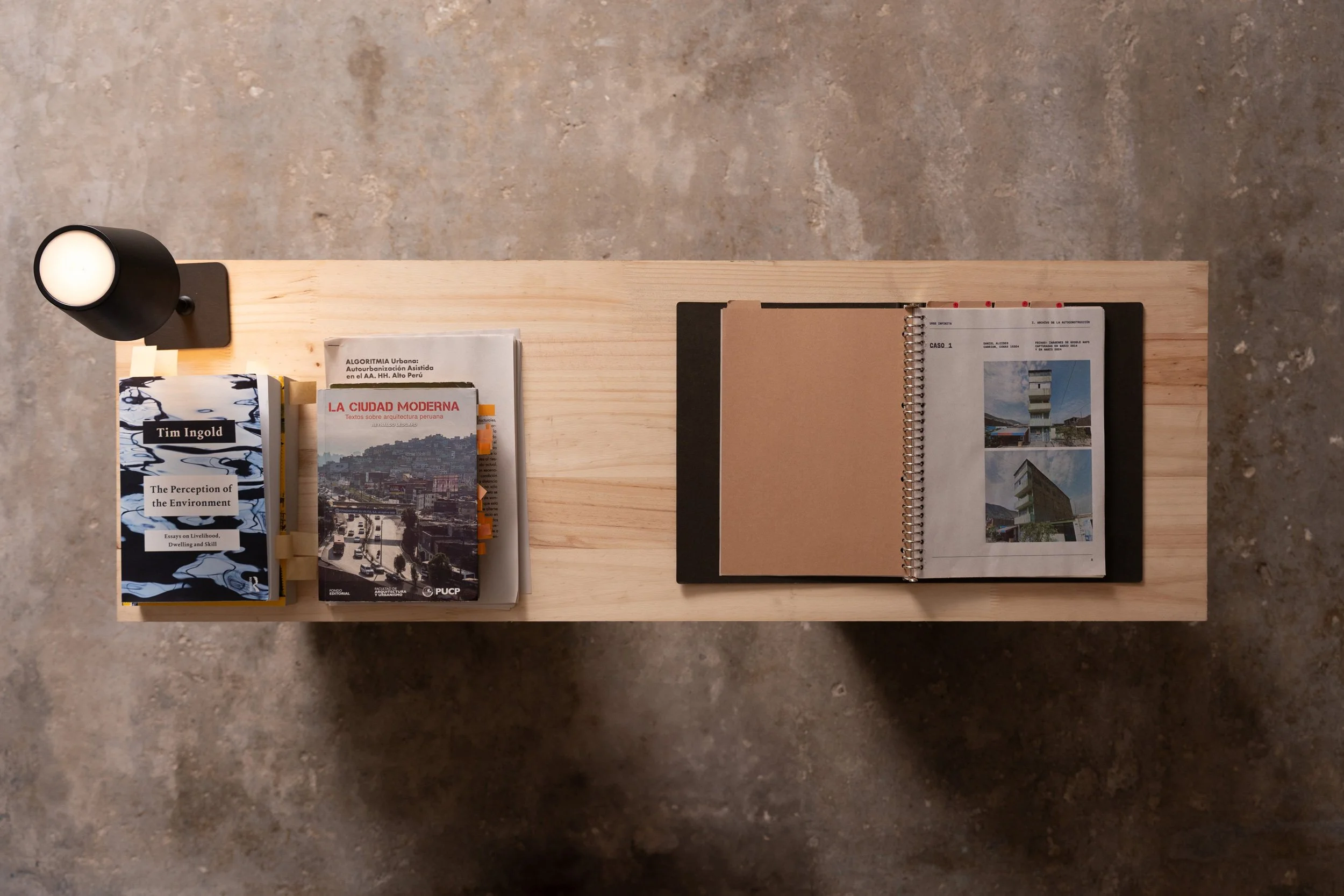
The first chapter, and the central element of the project, is an archive of Lima’s self-built architecture composed of images sourced from Google Street View. The platform offers endless exploration of the city’s streets, revealing how the same locations change over time. To make sense of this vast collection of images, I selected and organized views of the same structures into “before and after” pairs. I treat these screenshots as photographs, correcting distortions and removing elements of the digital interface.
ARCHIVE OF SELF-CONSTRUCTION
CHAPTER I
STRUCTURES IN TRANSFORMATION
The first chapter, and the central element of the project, is an archive of Lima’s self-built architecture composed of images sourced from Google Street View. The platform offers endless exploration of the city’s streets, revealing how the same locations change over time. To make sense of this vast collection of images, I selected and organized views of the same structures into “before and after” pairs. I treat these screenshots as photographs, correcting distortions and removing elements of the digital interface.
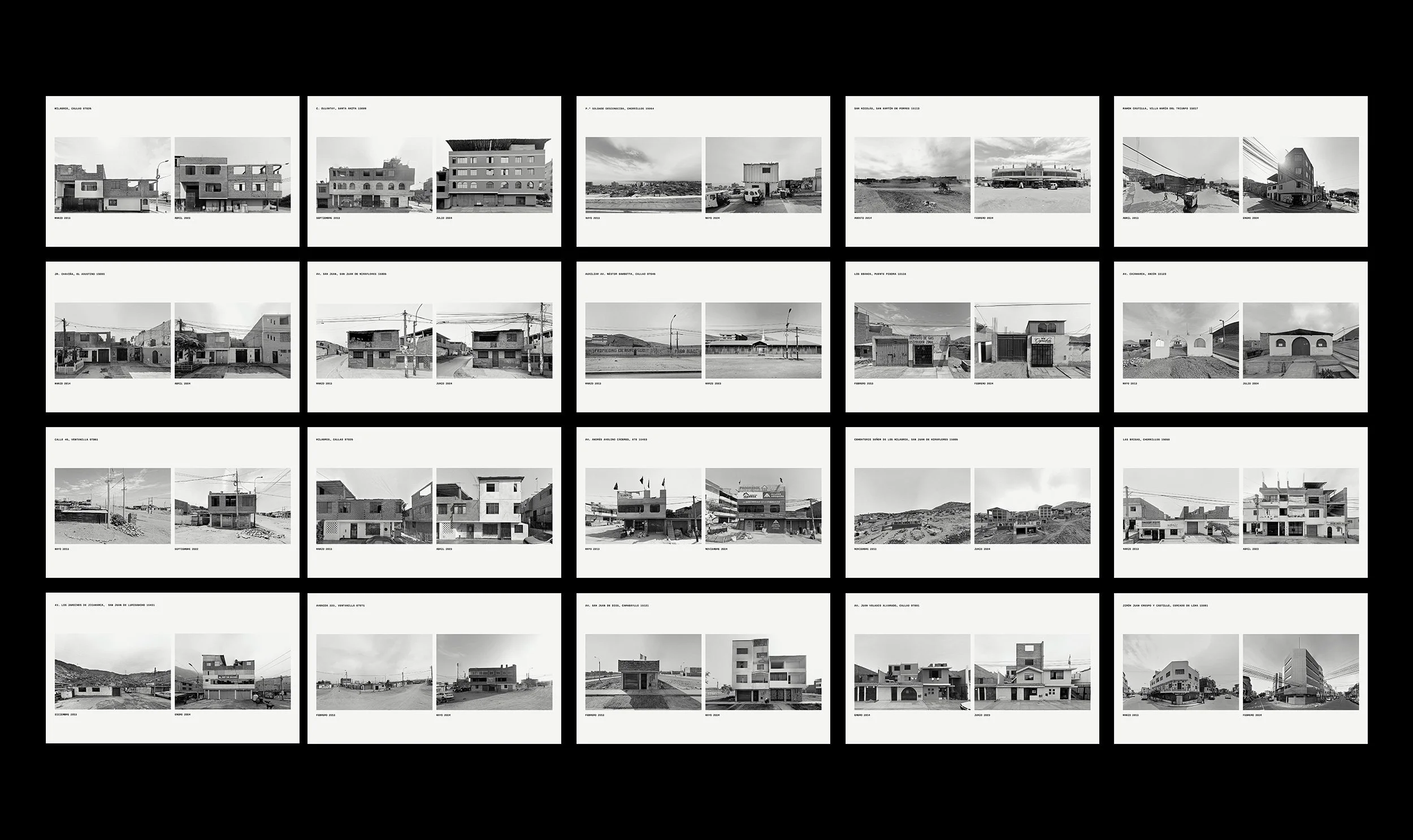
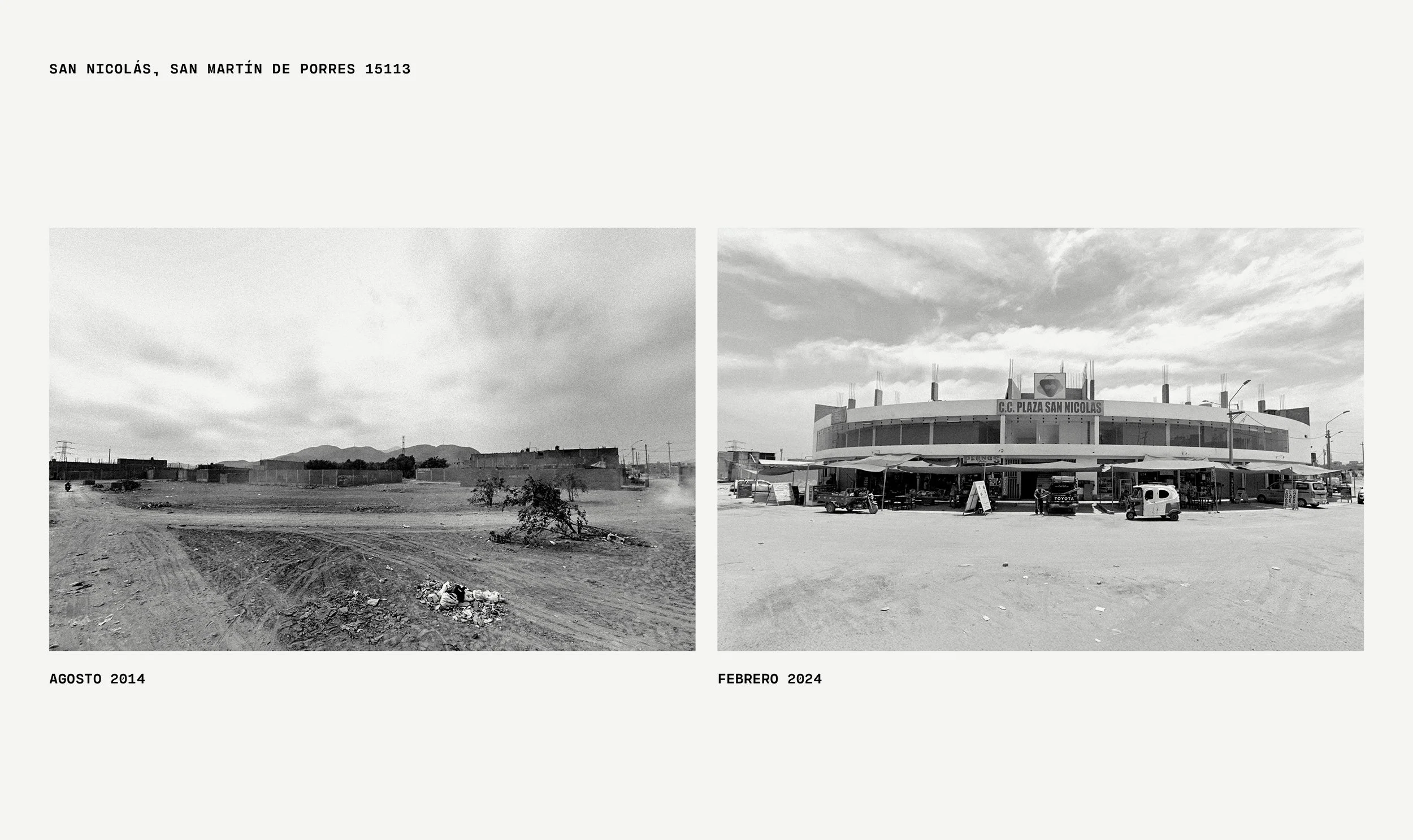
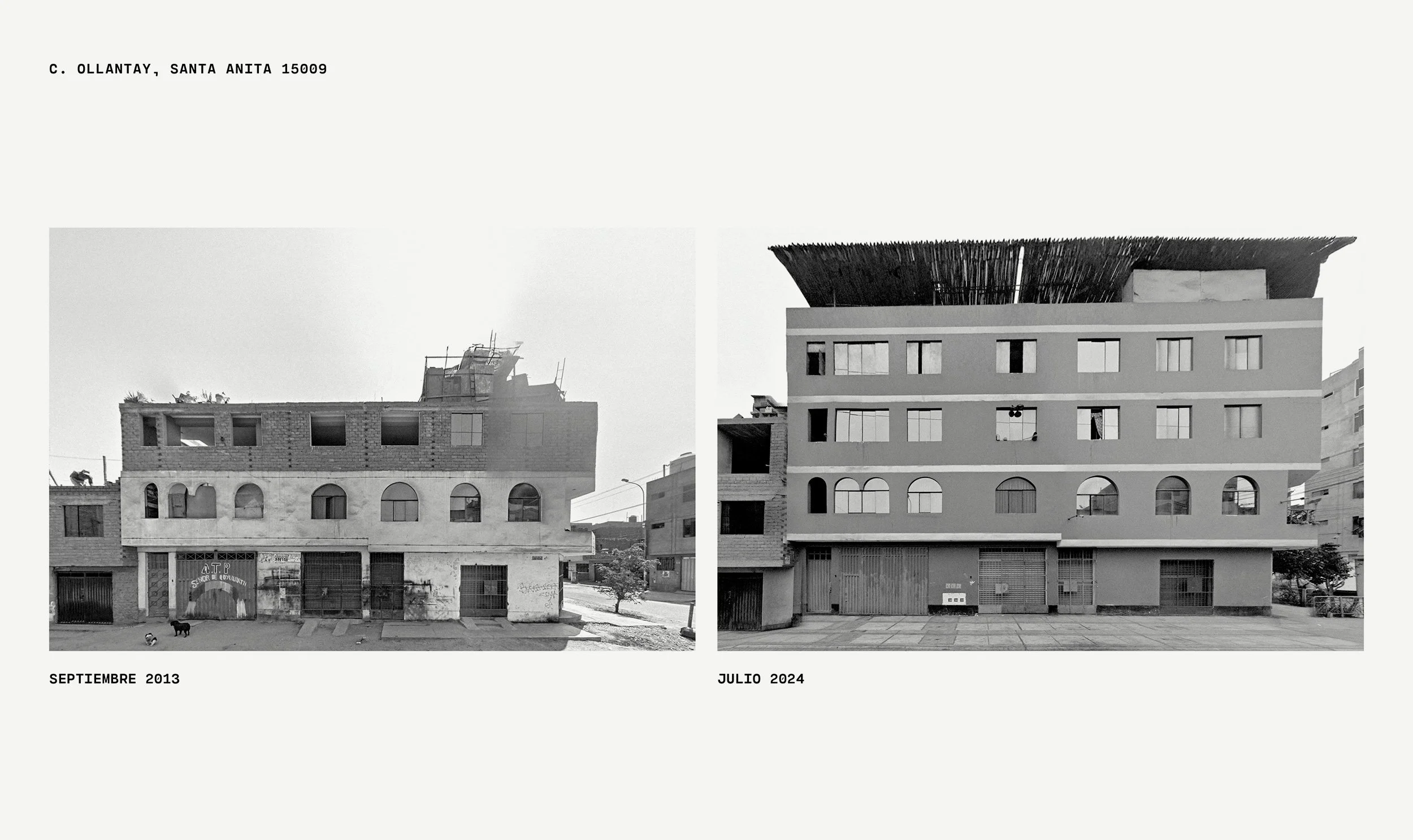
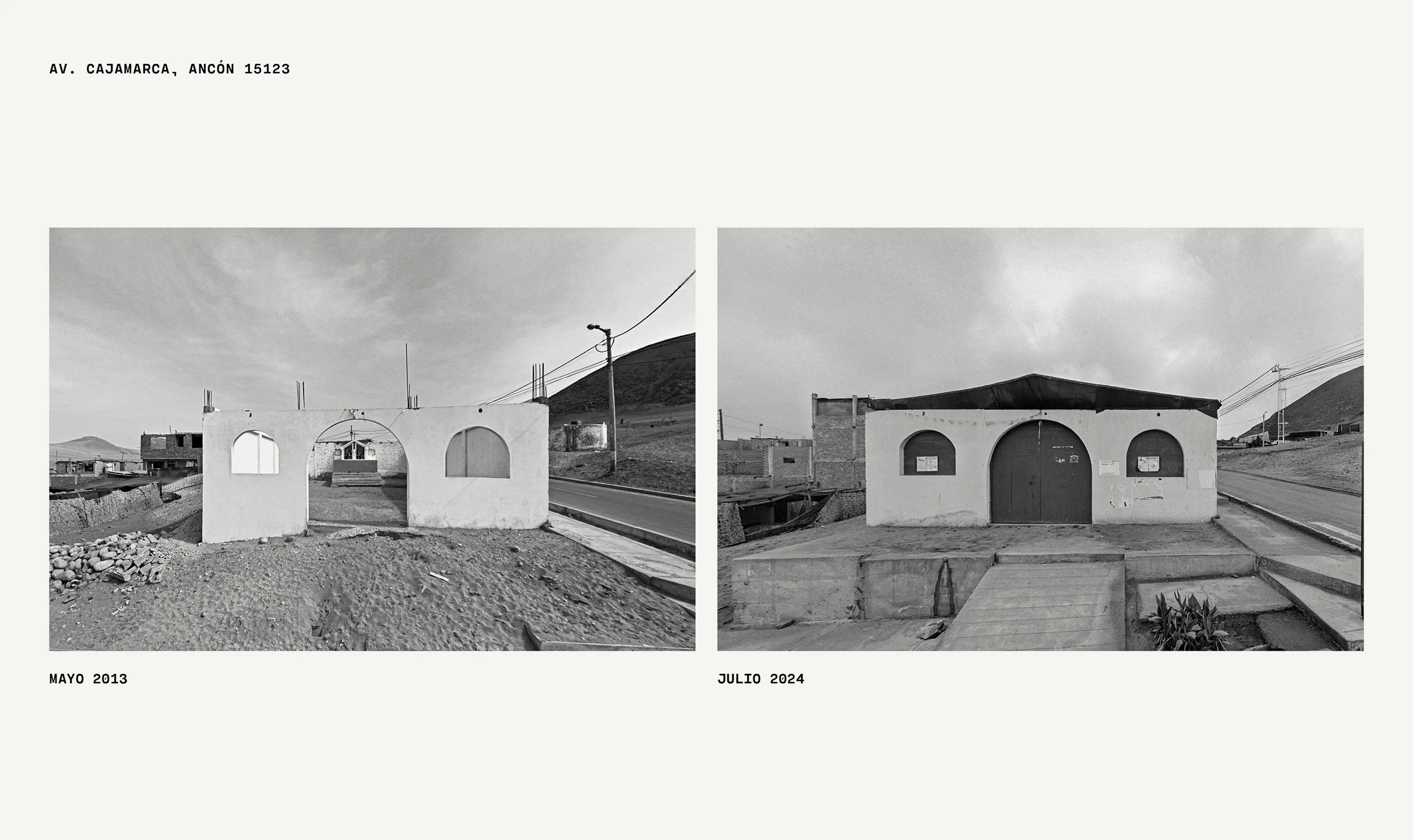
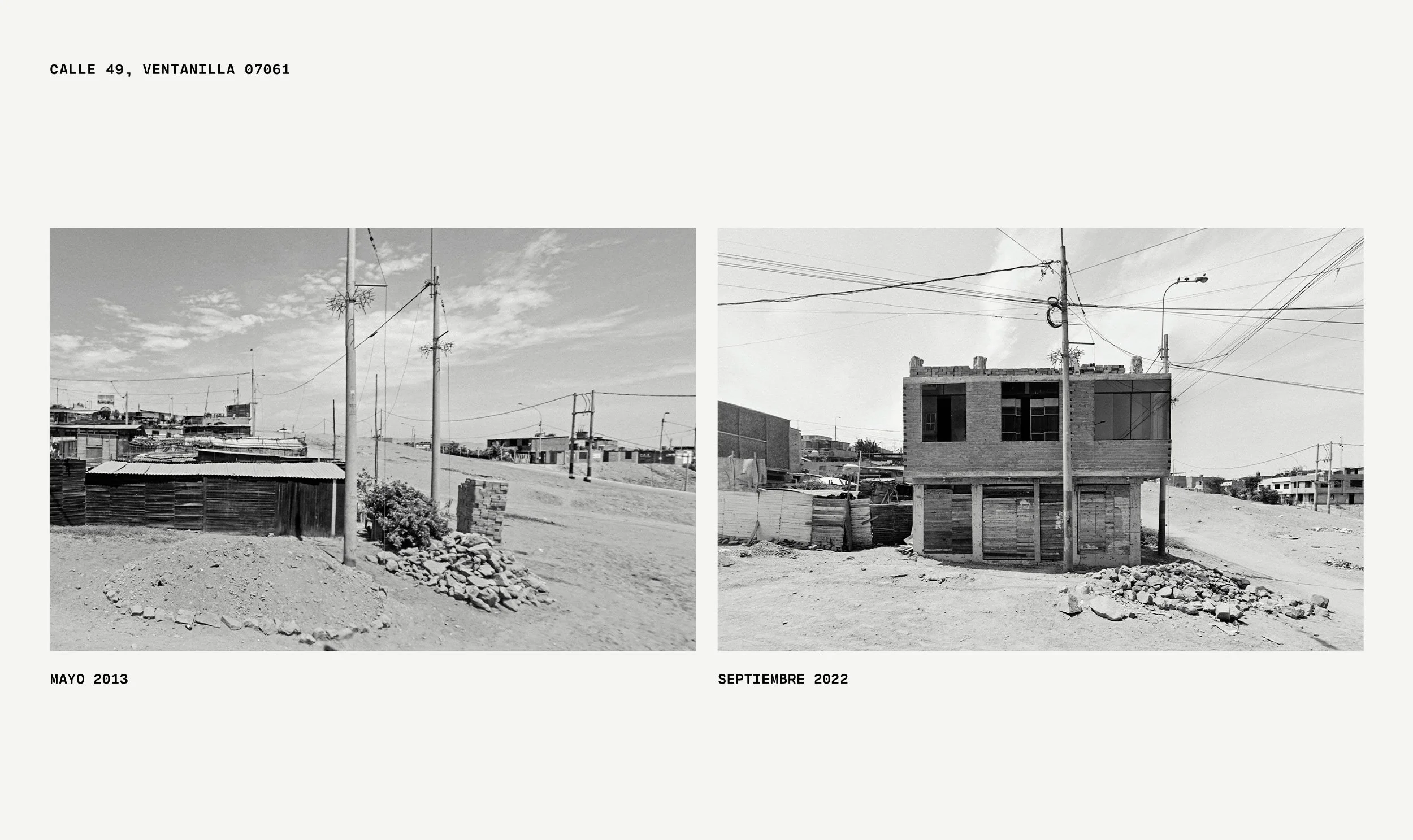
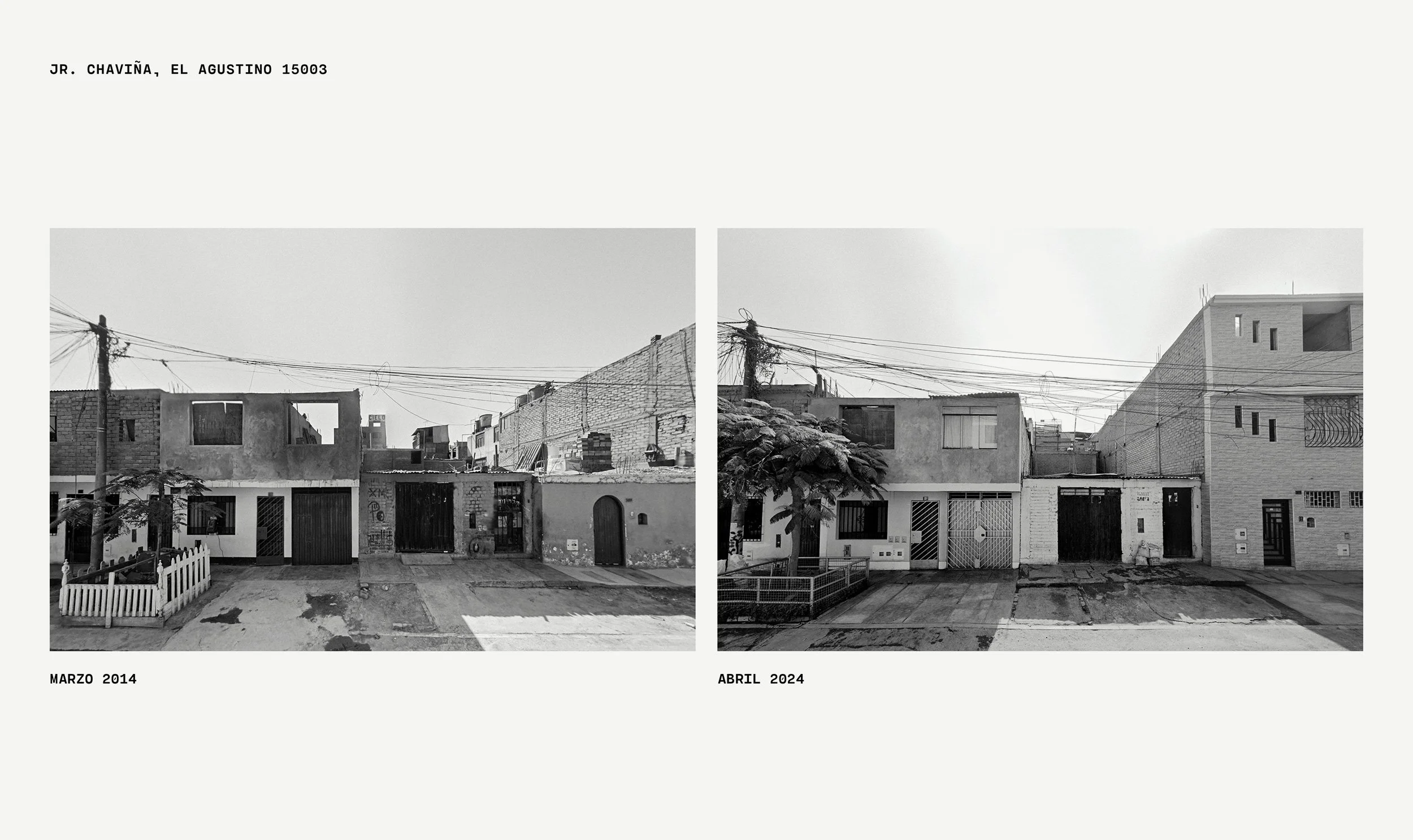
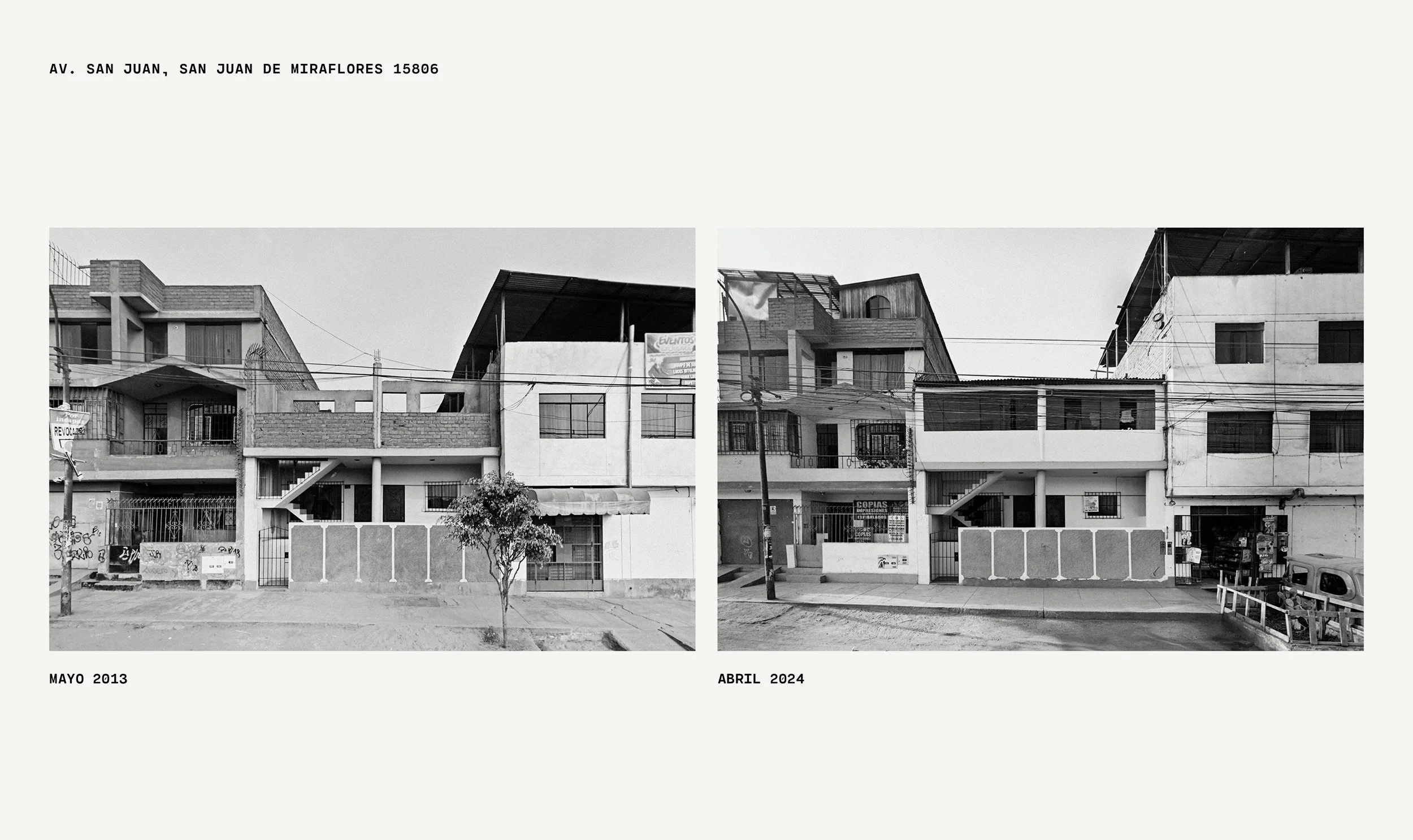
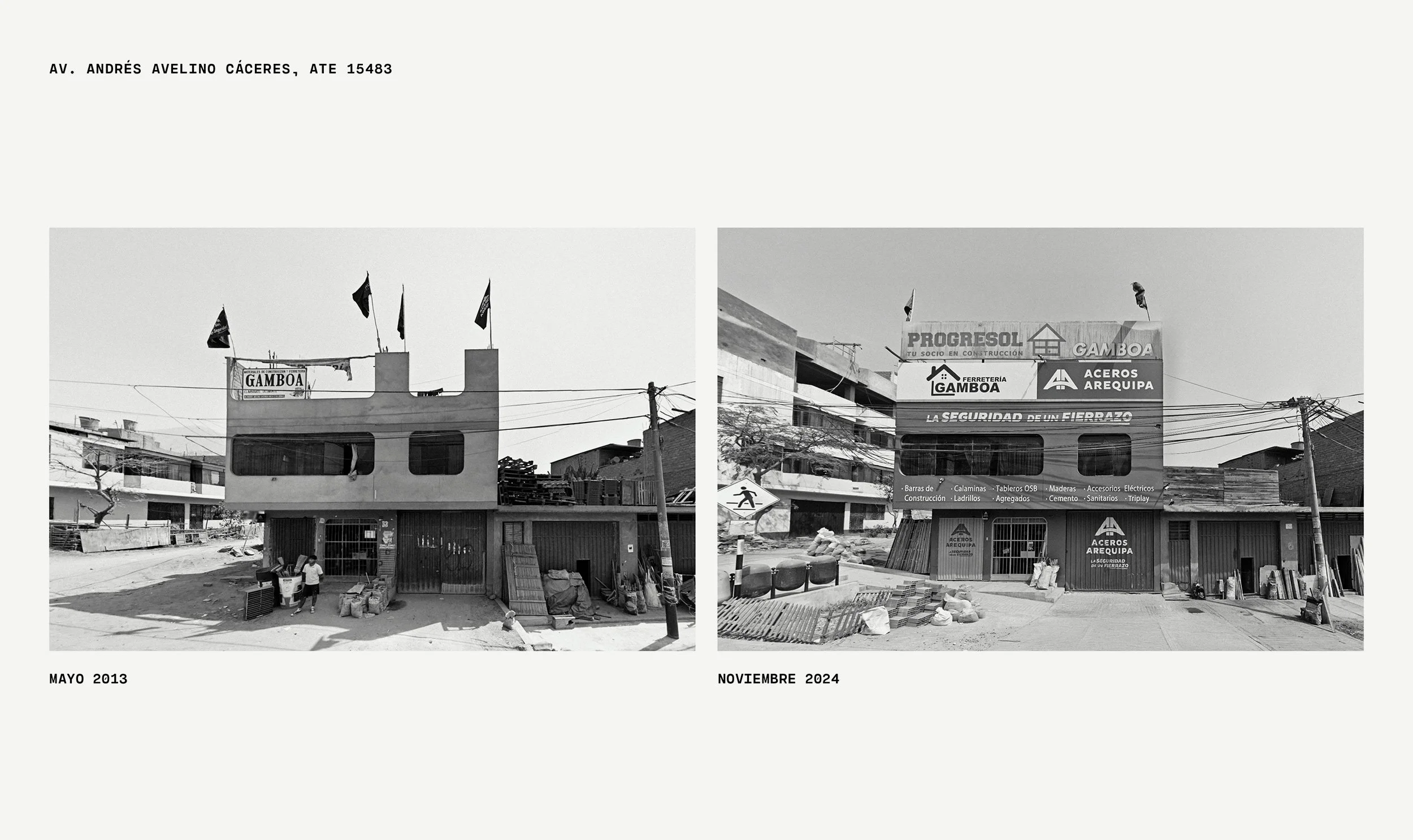
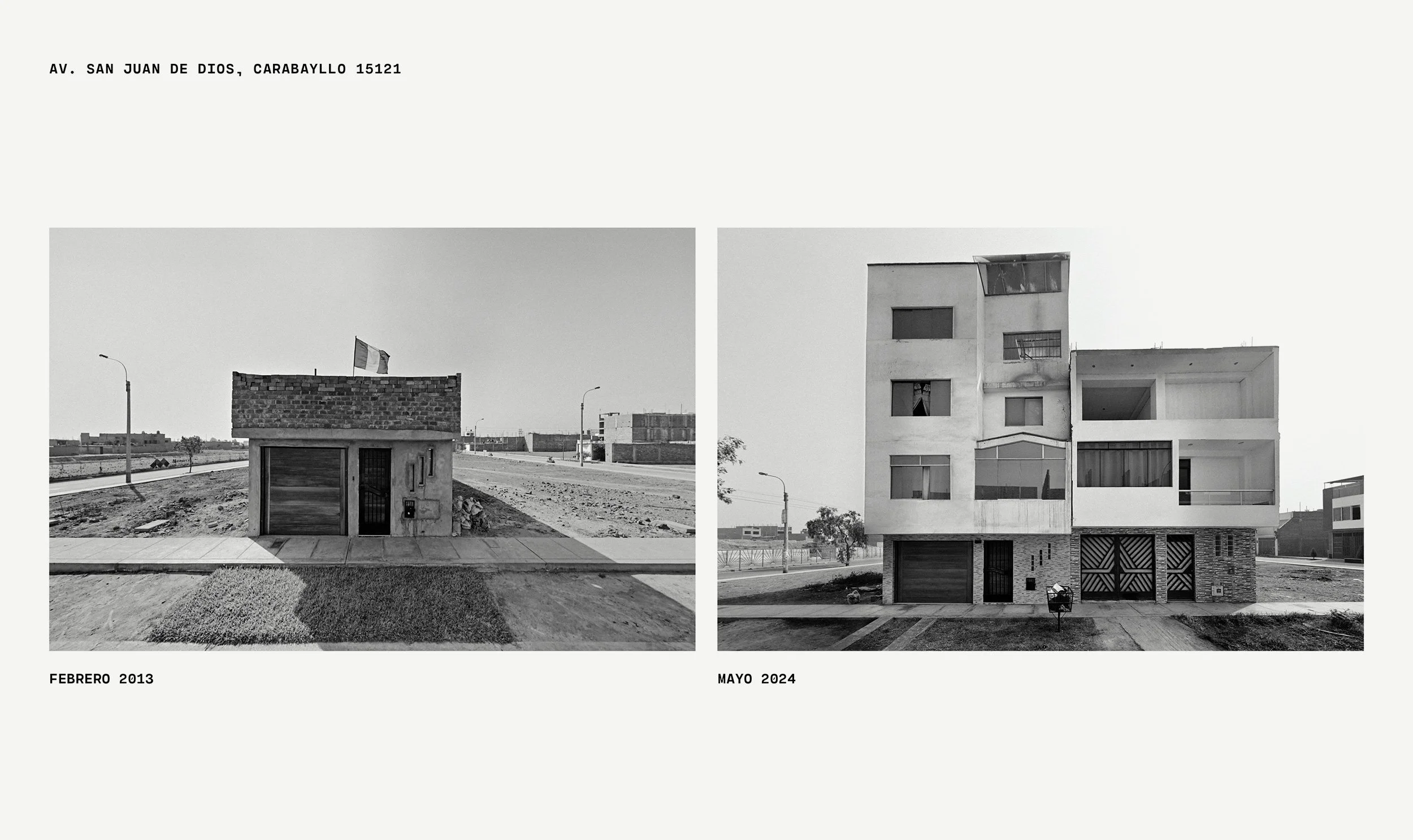
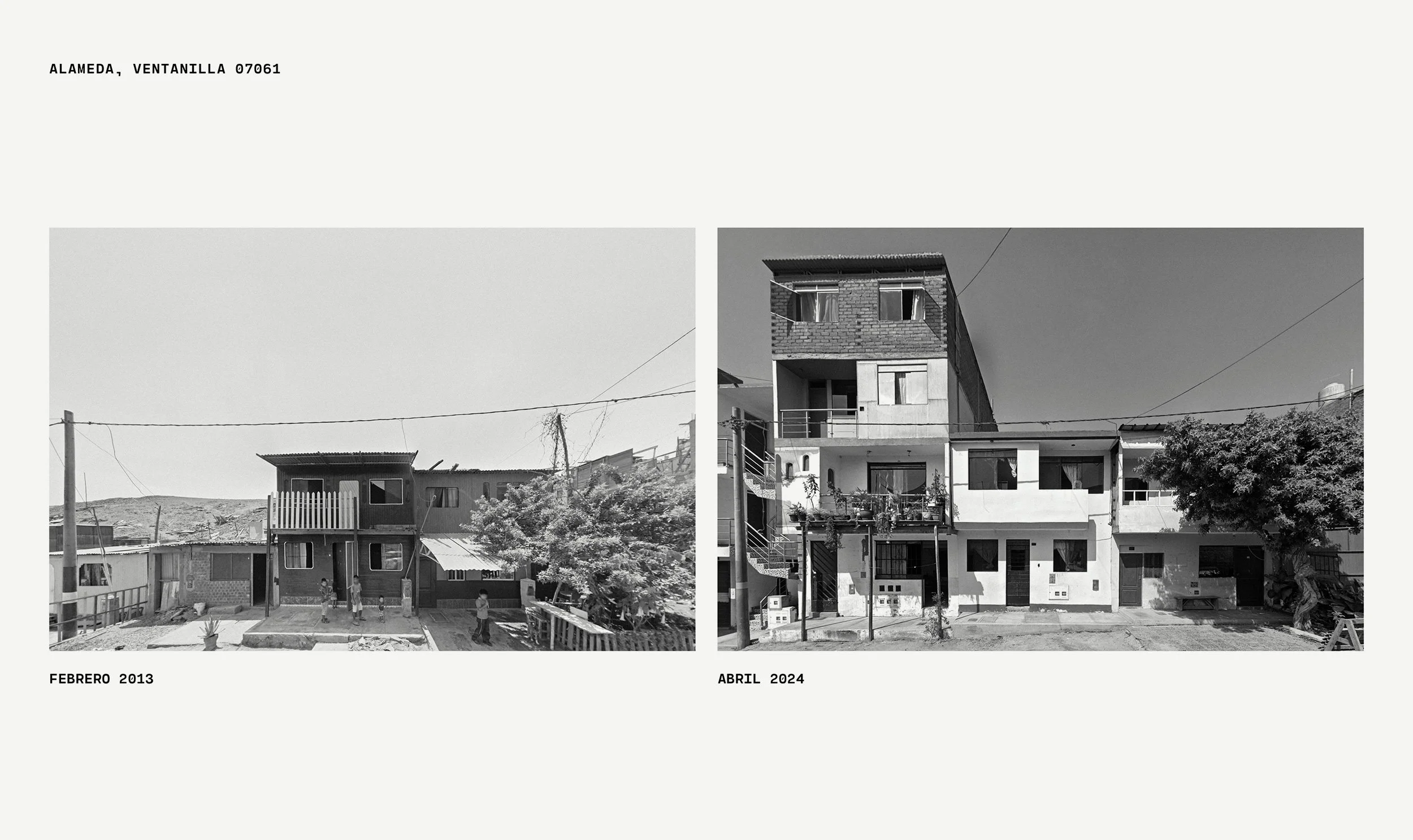
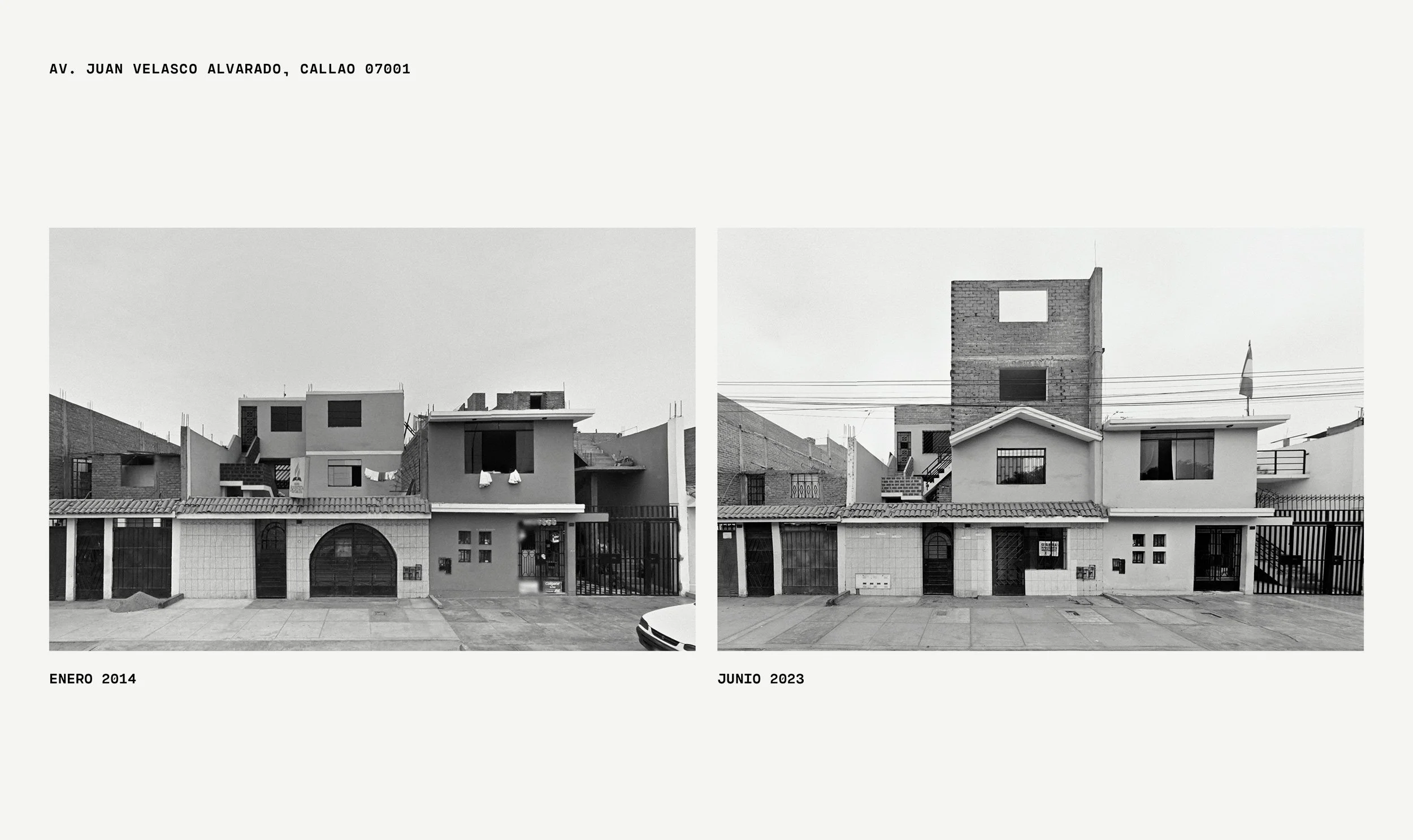
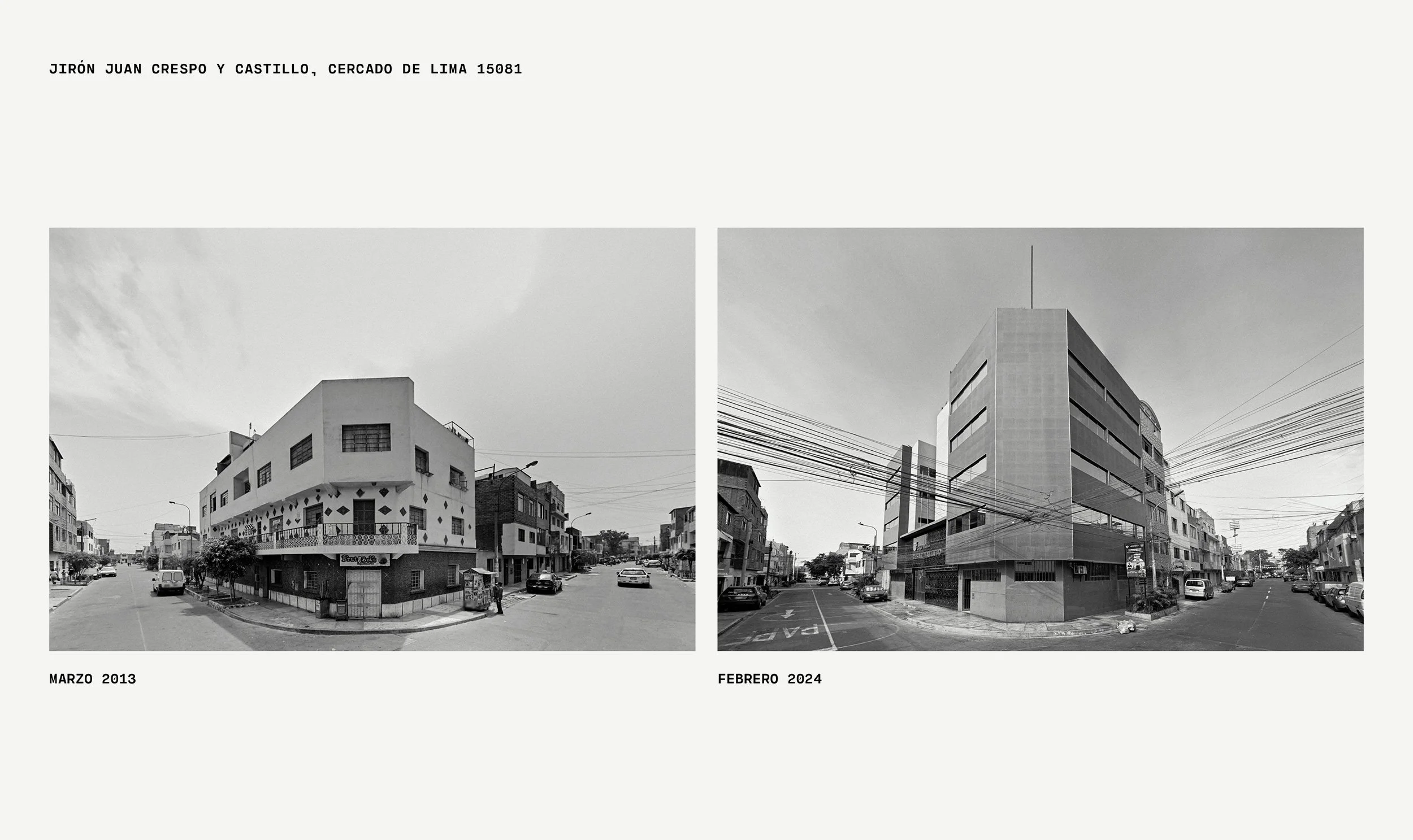
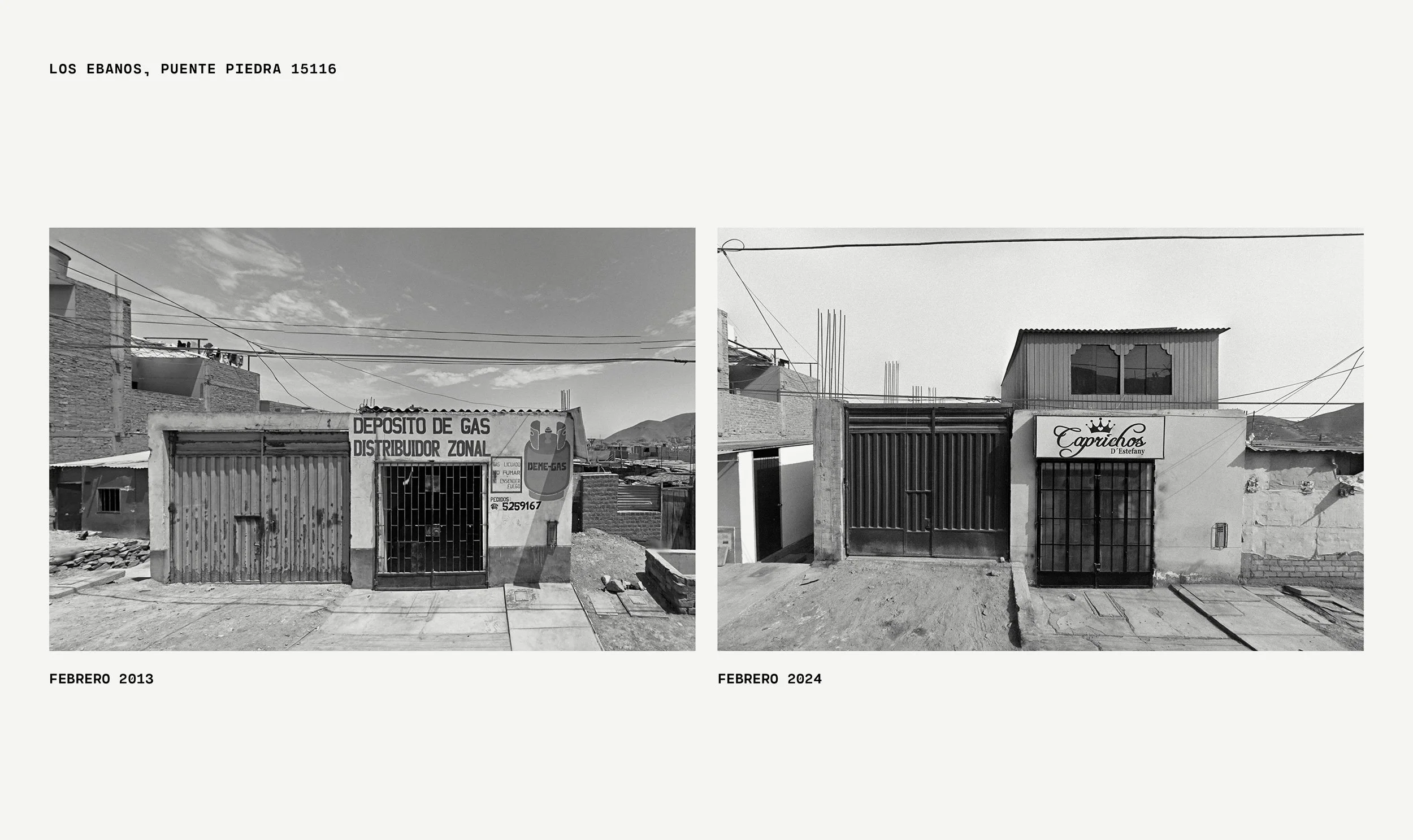
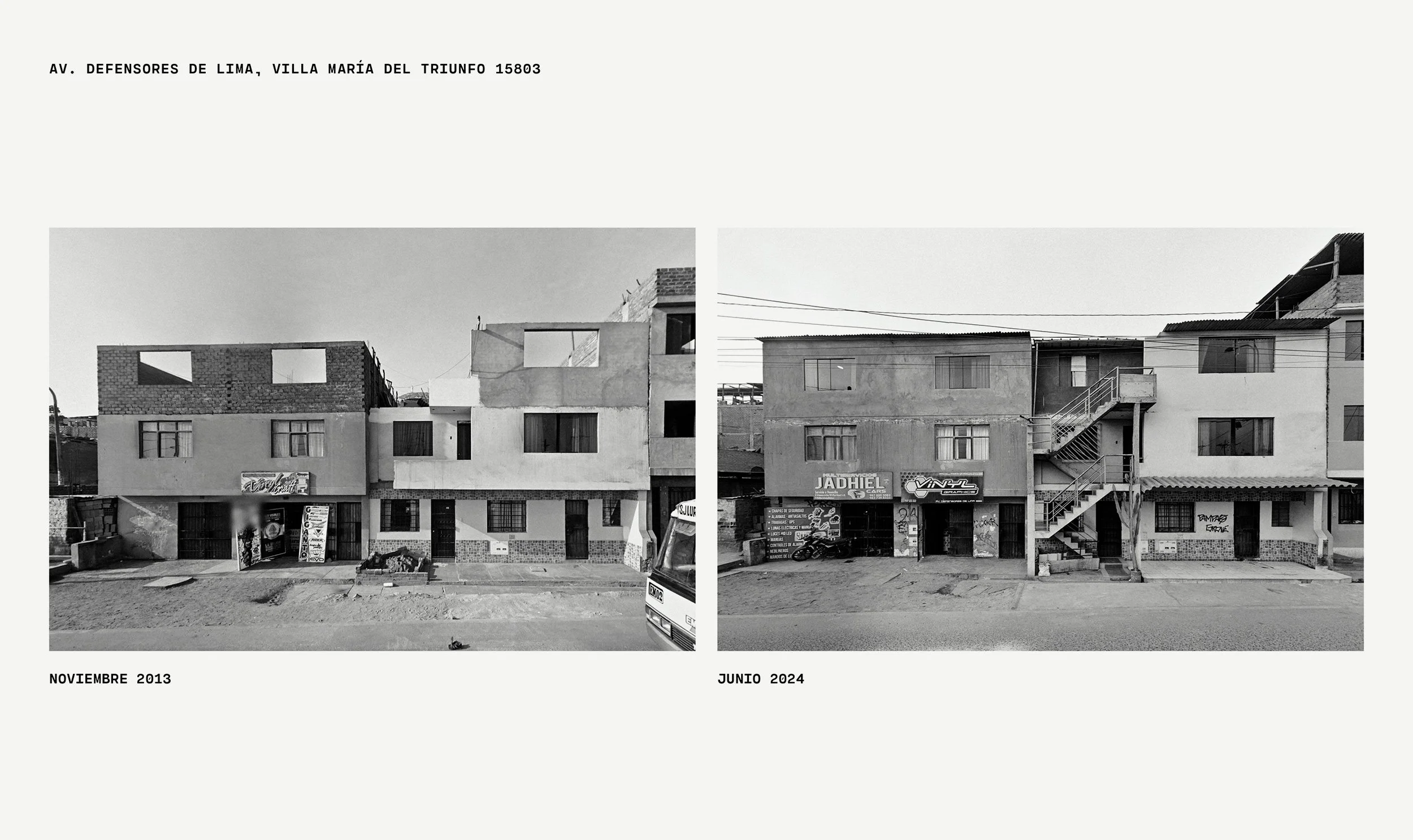
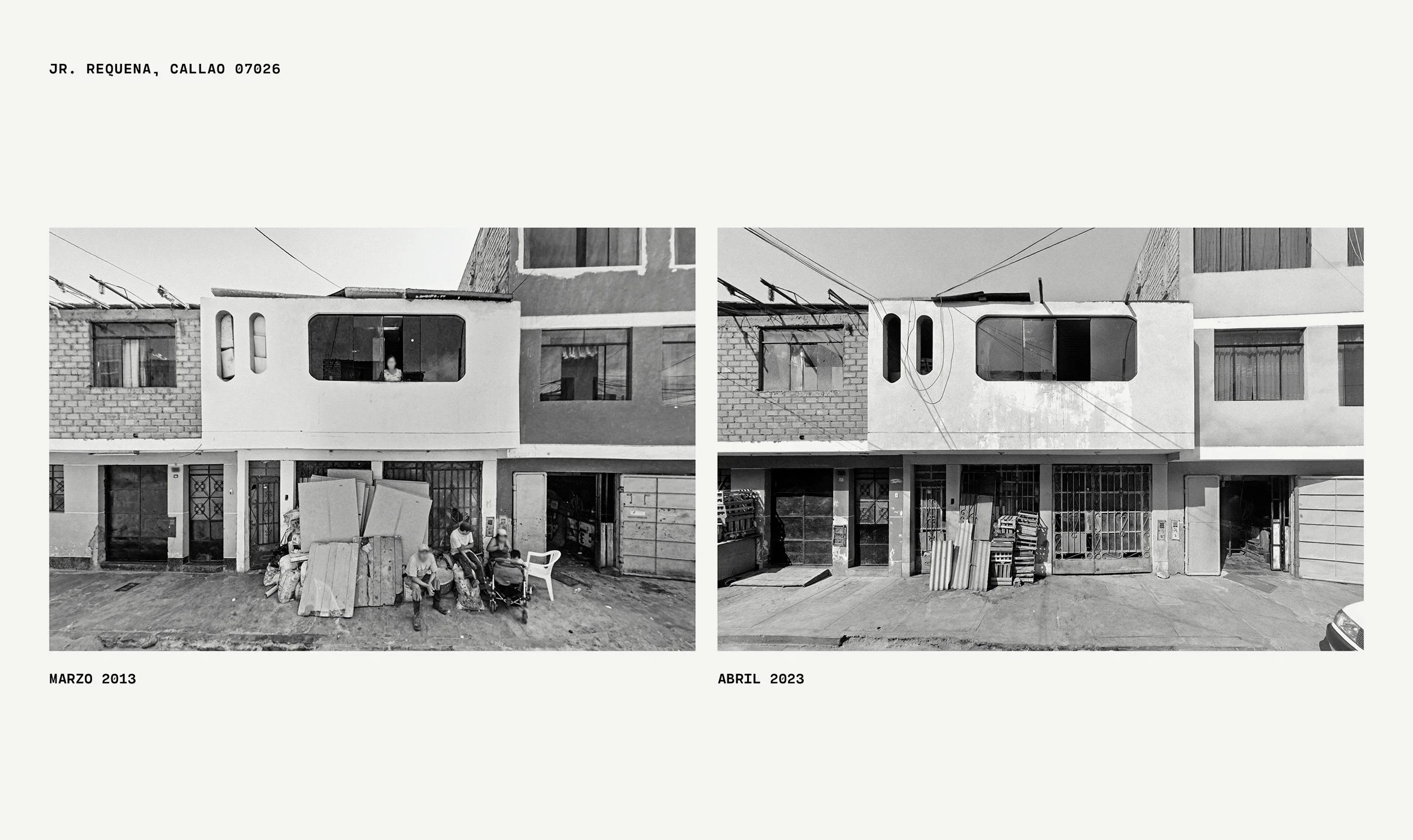
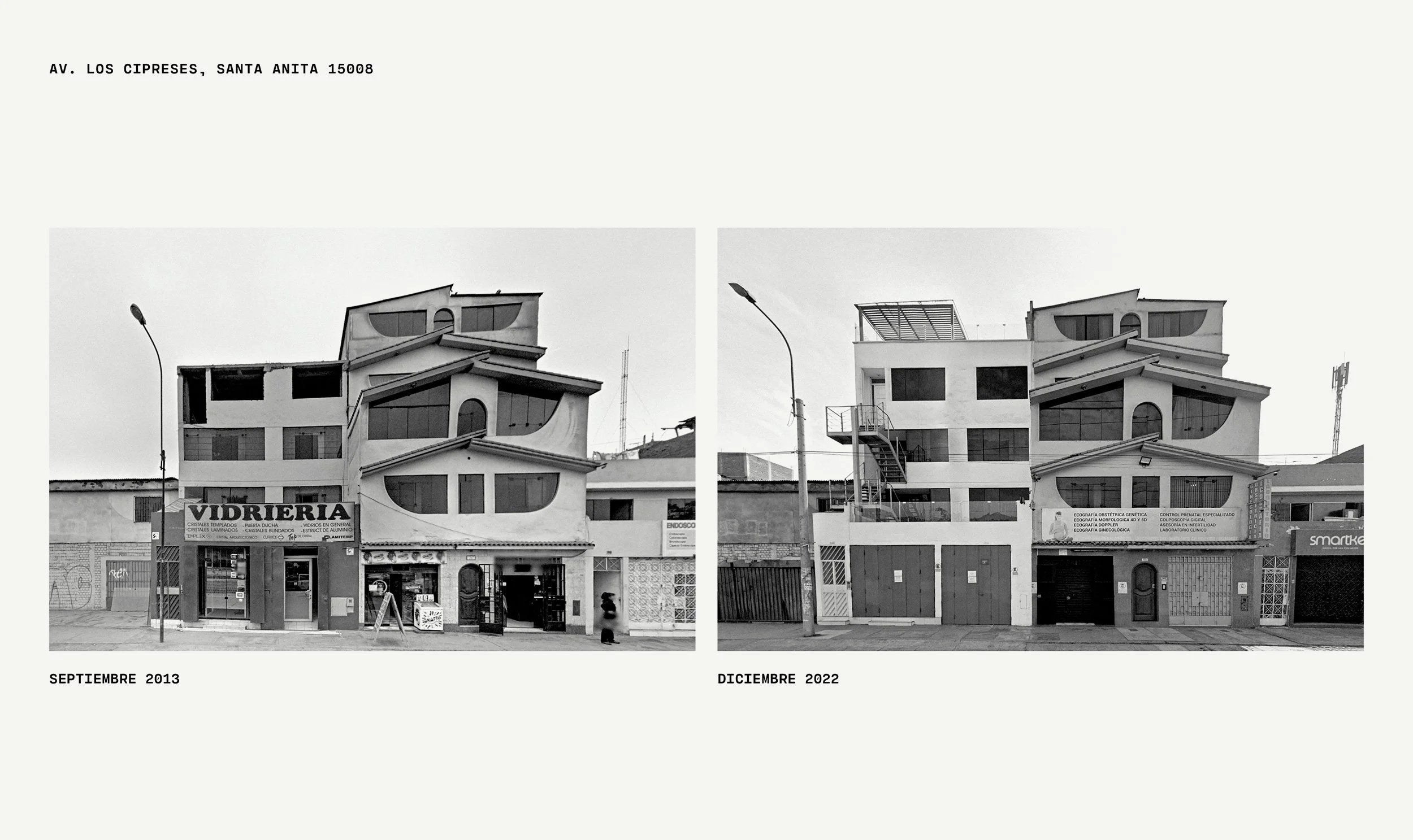
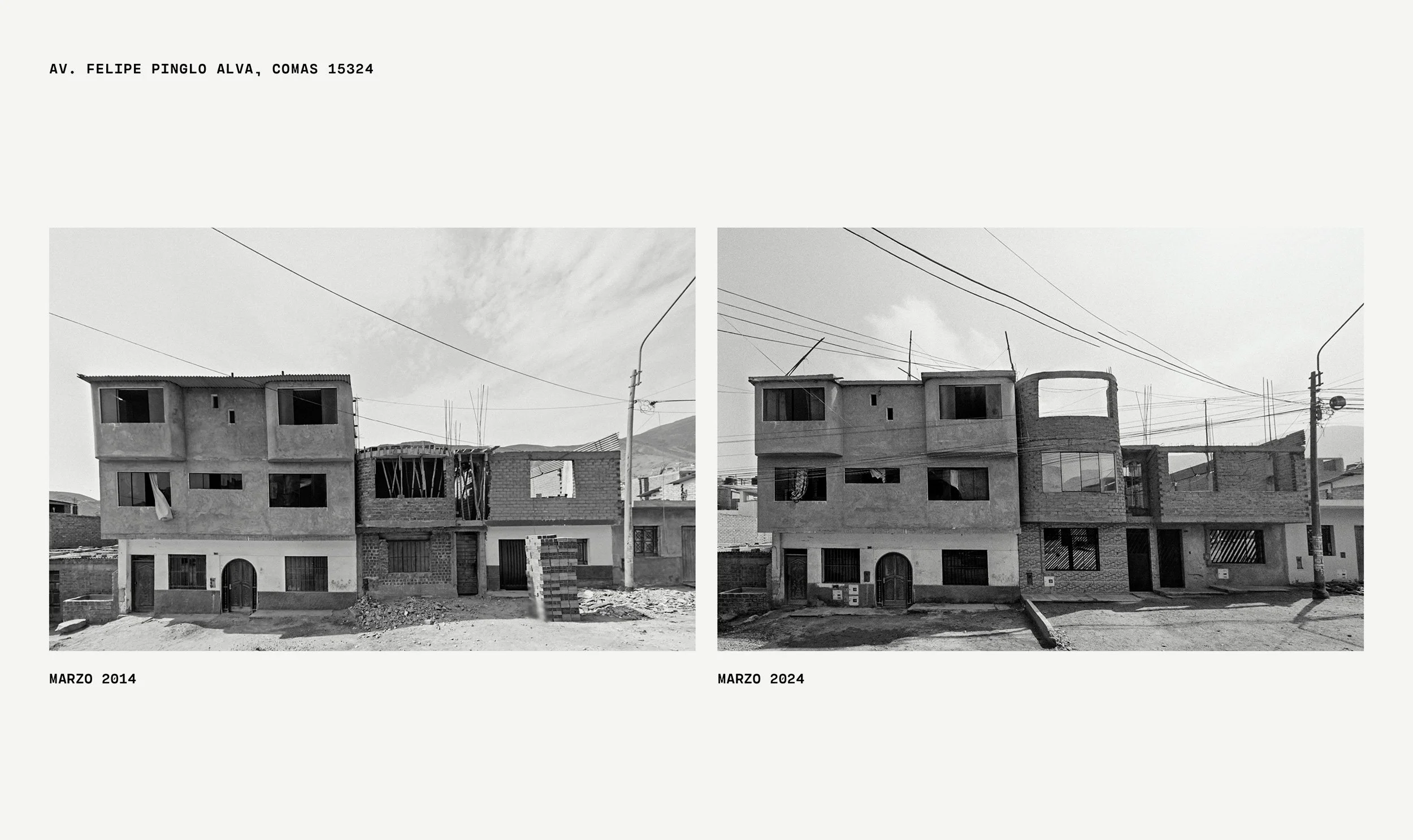
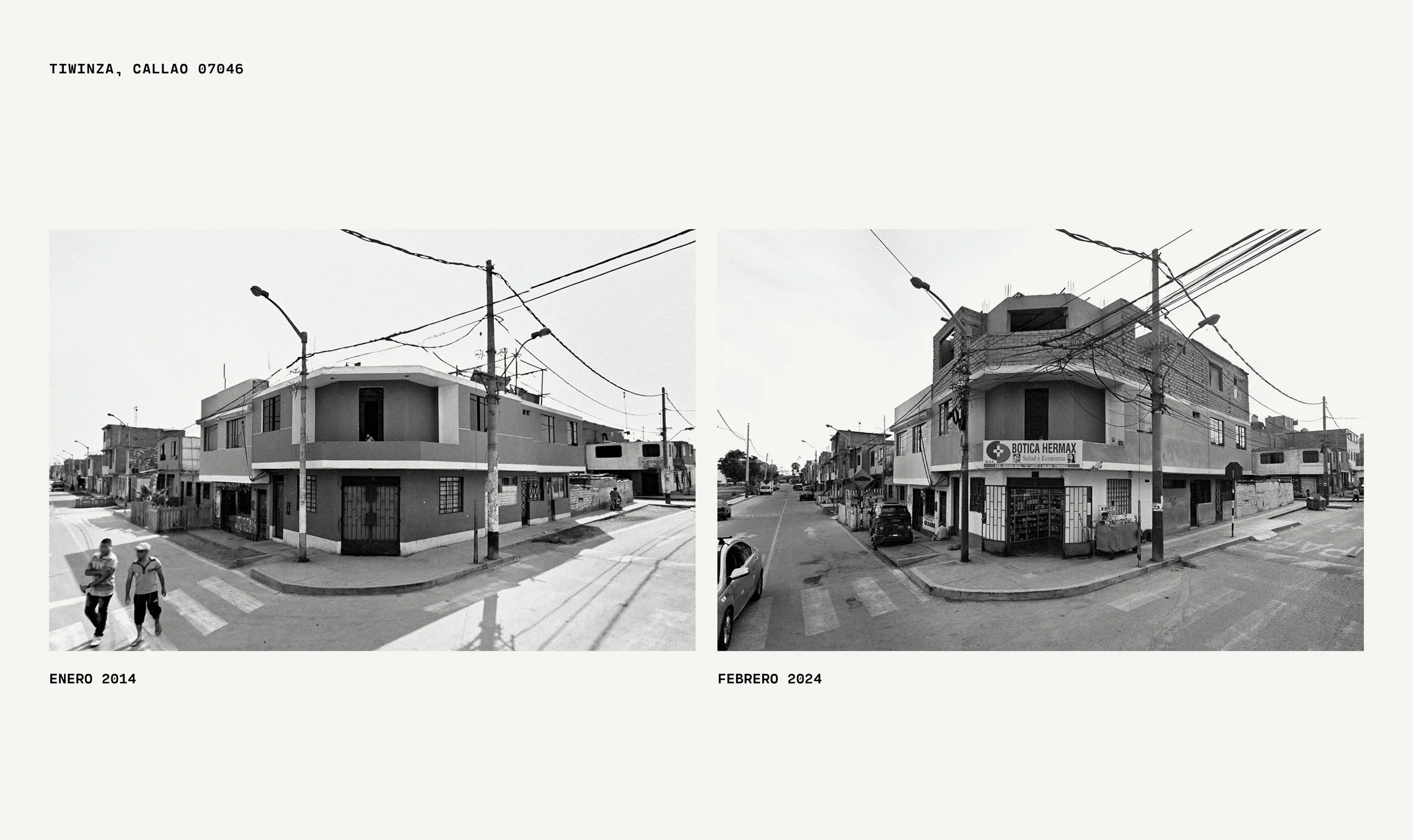
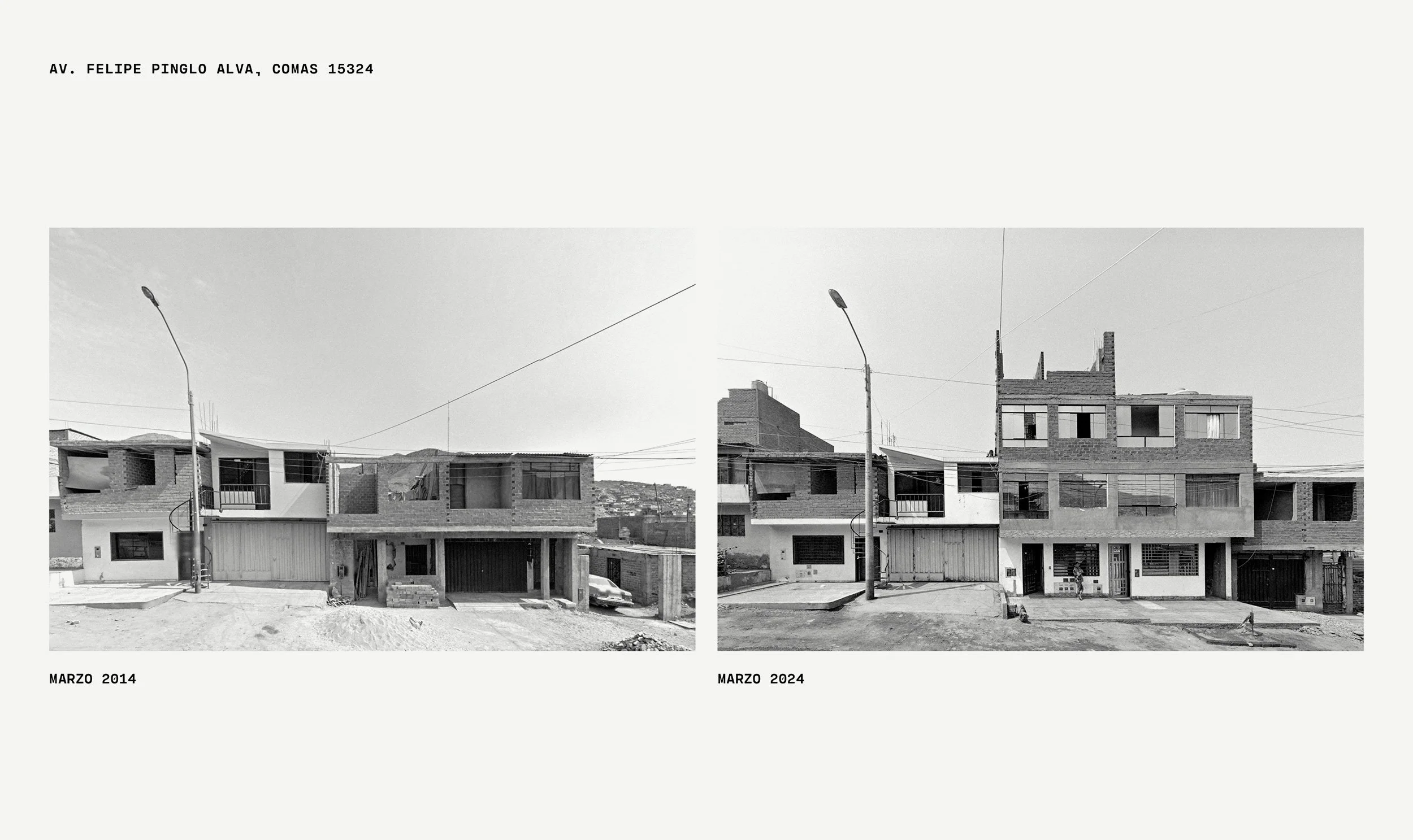
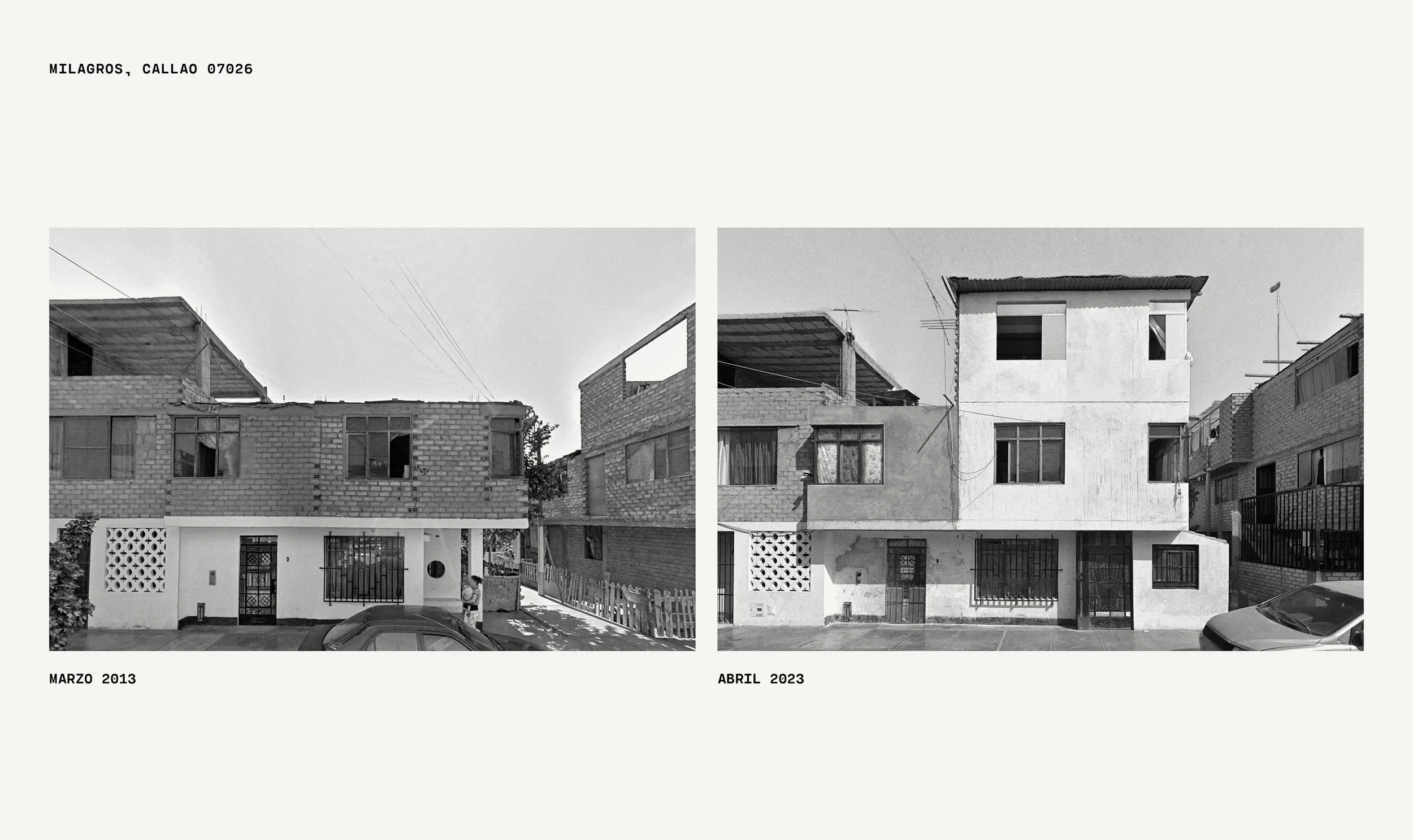
ARCHIVE OF SELF-CONSTRUCTION
CHAPTER I
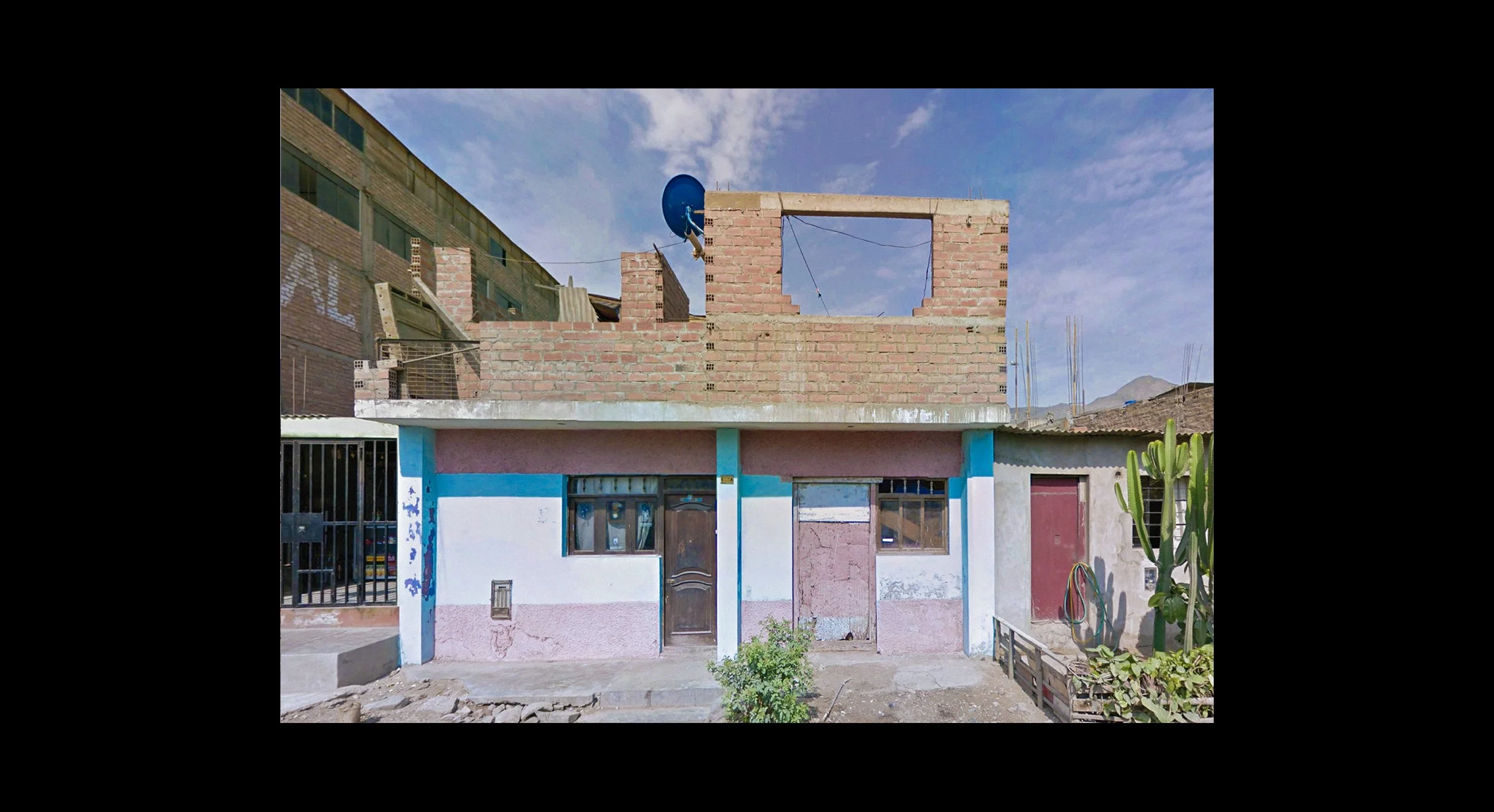
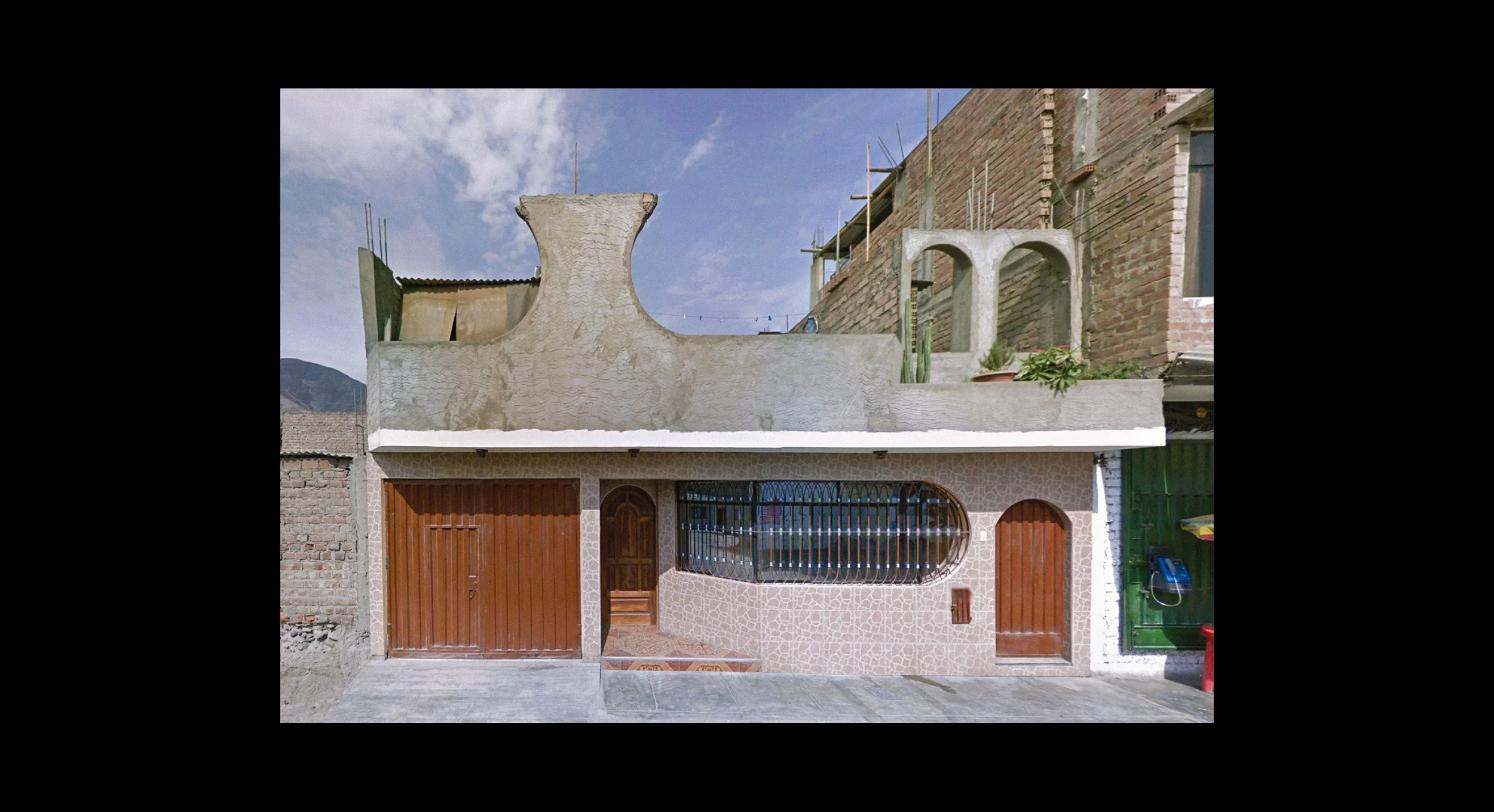
INFORMAL TYPOLOGIES
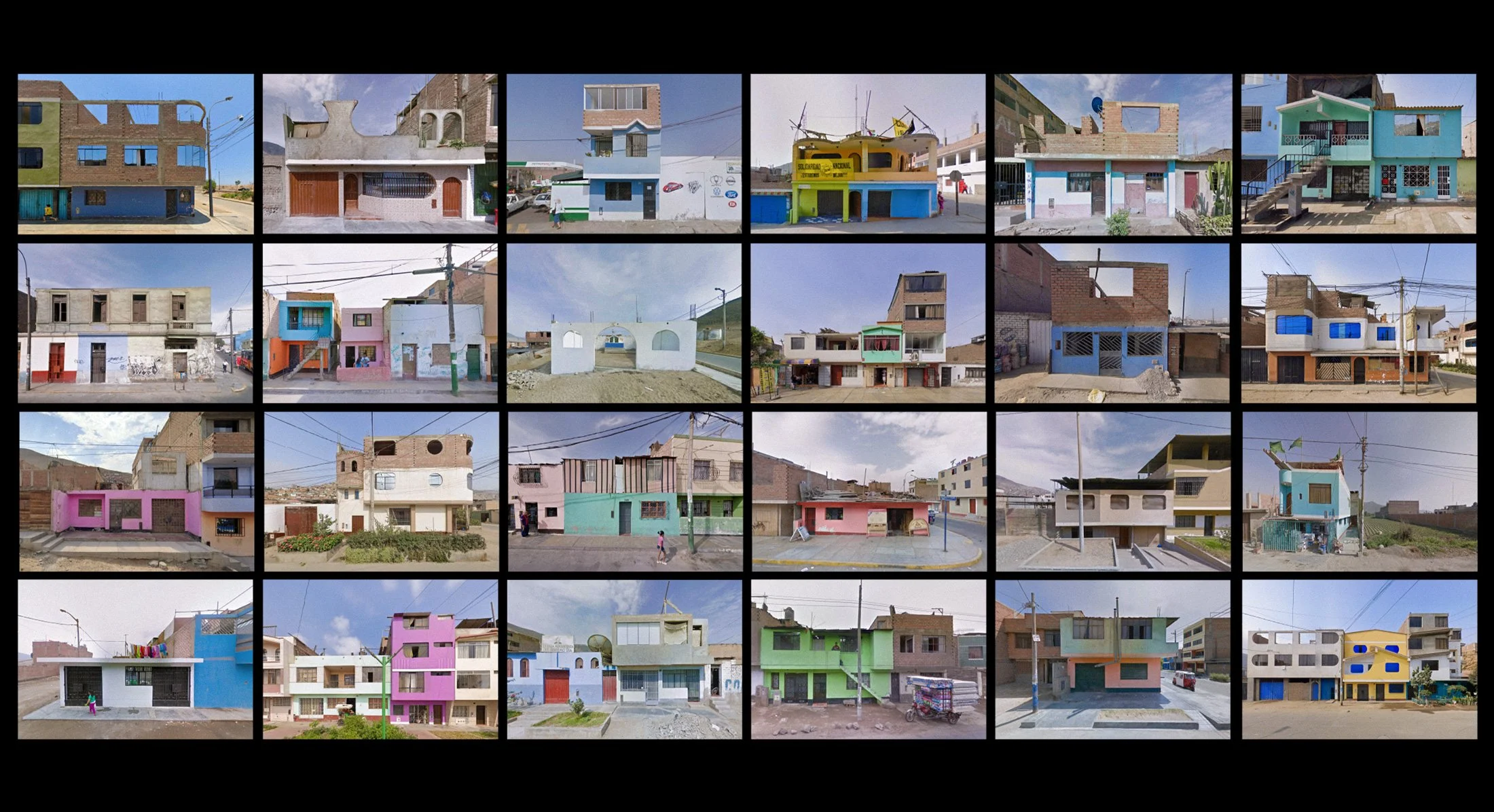
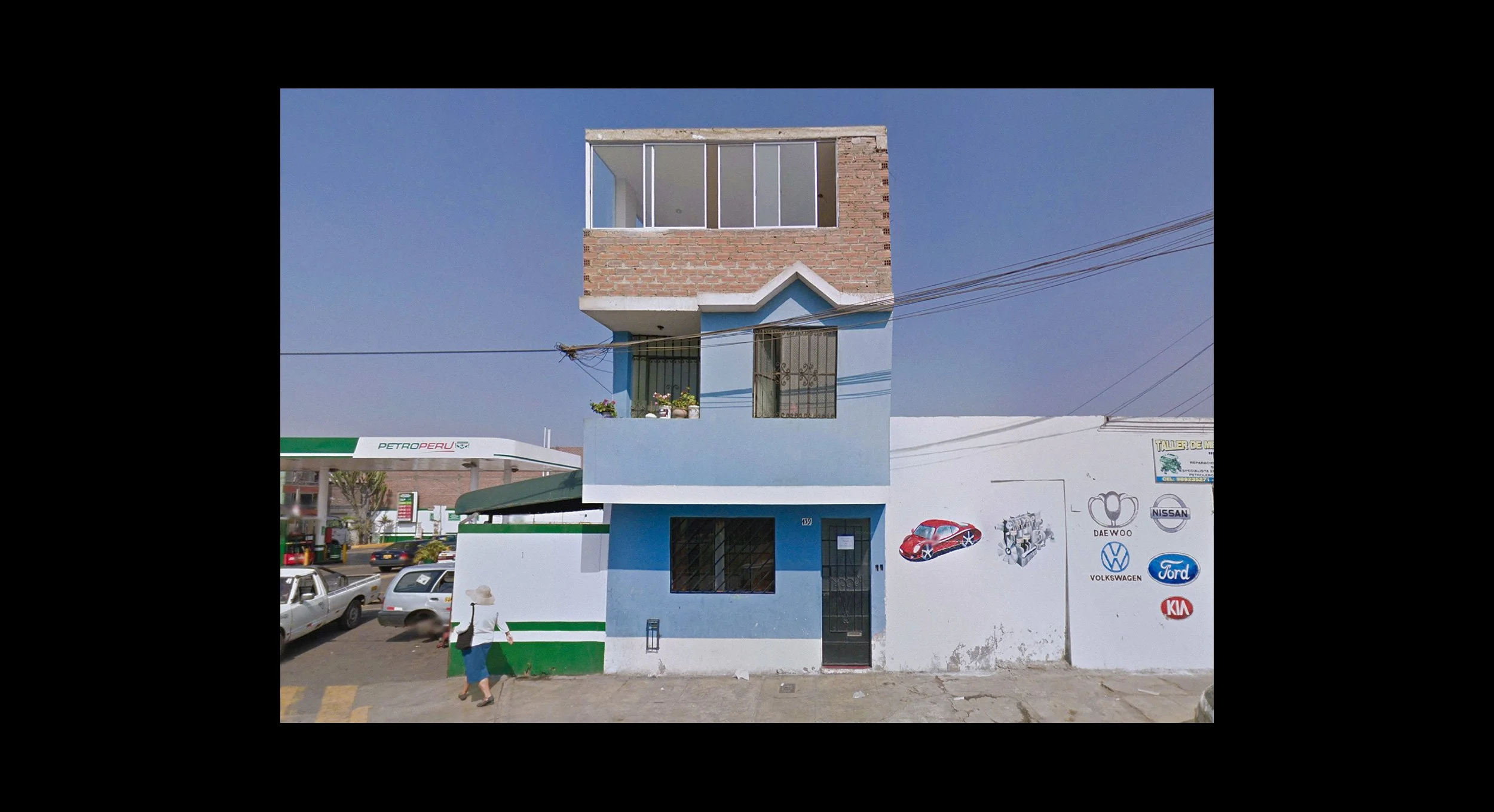
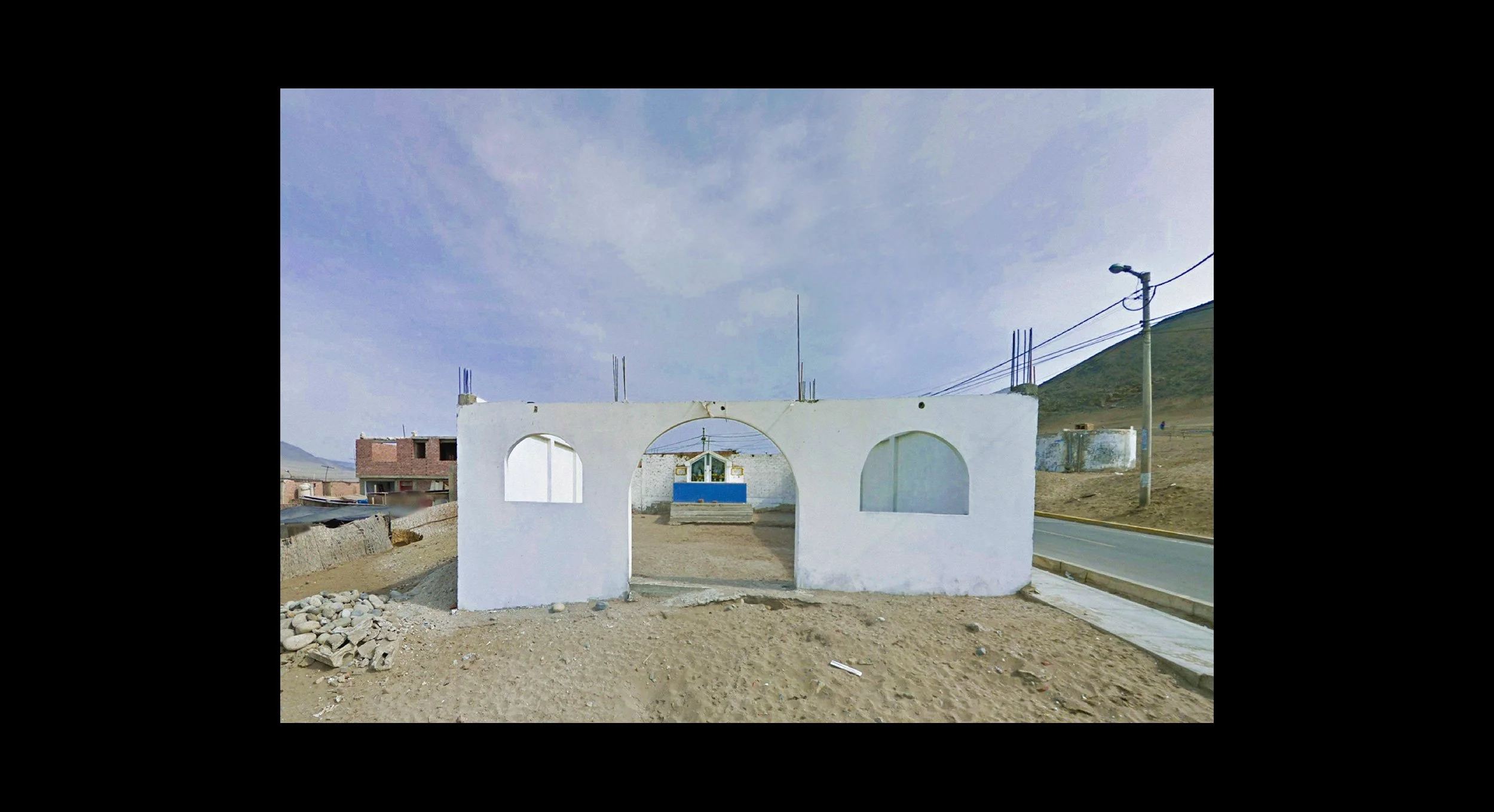
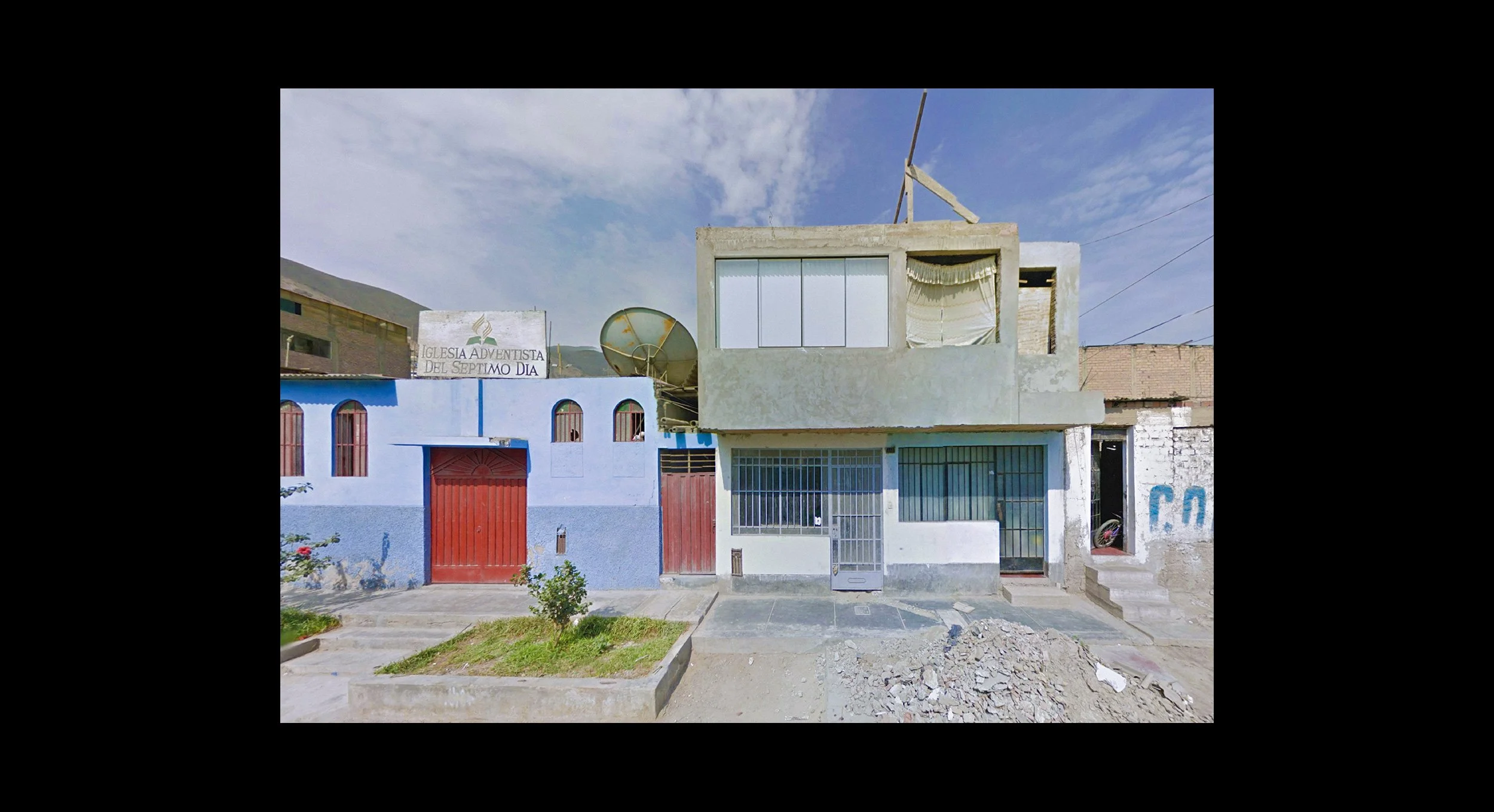
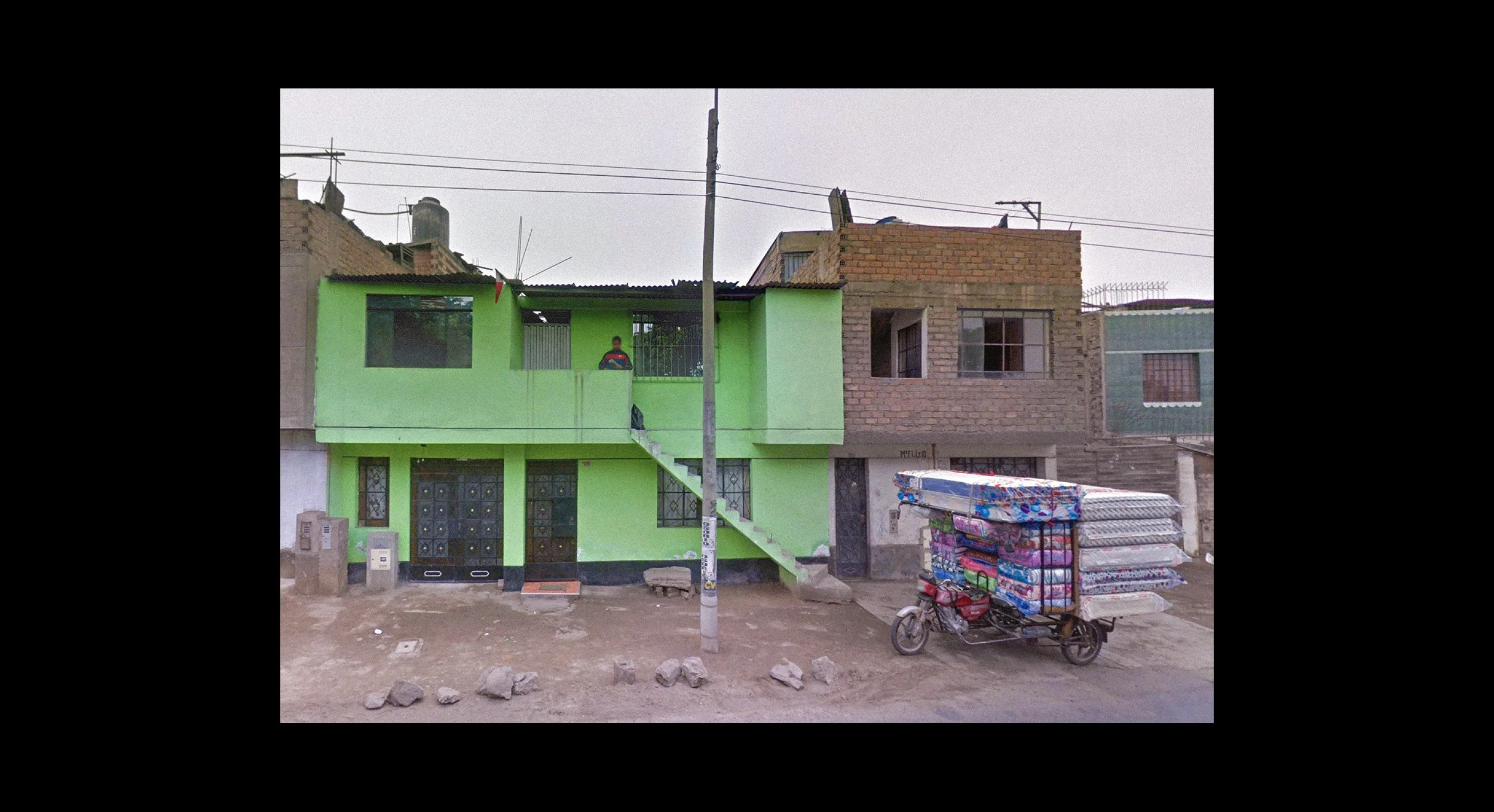
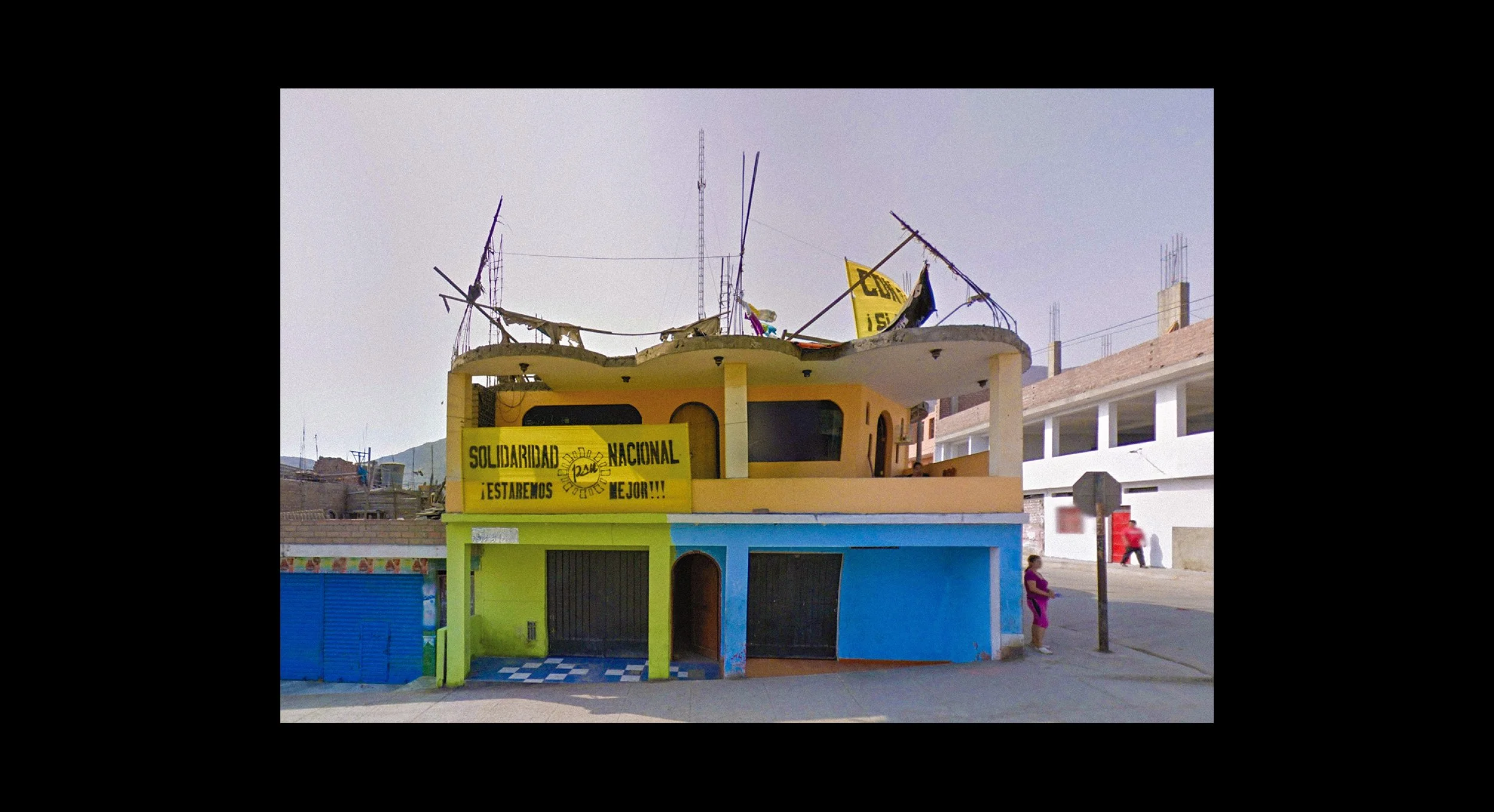
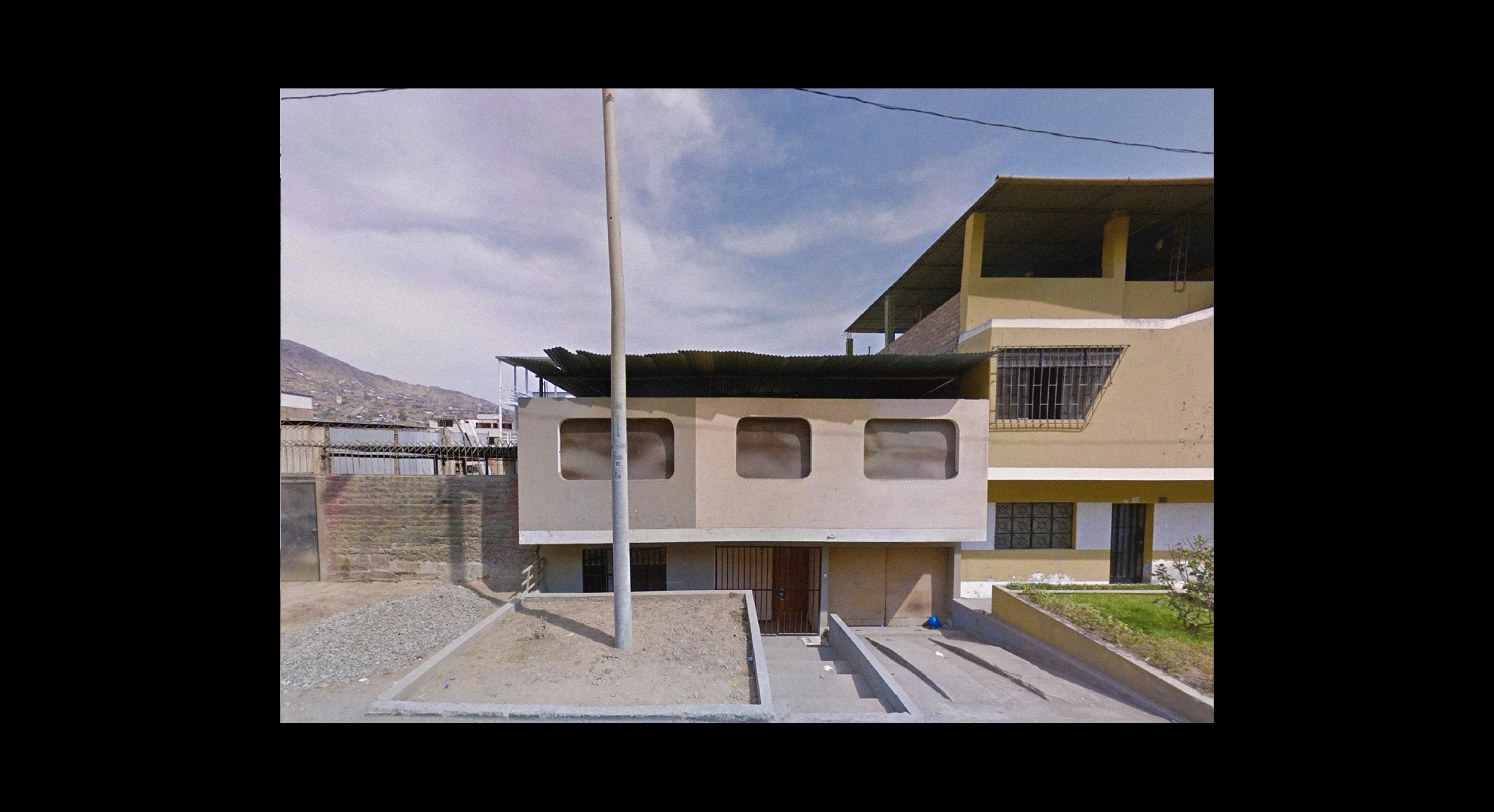
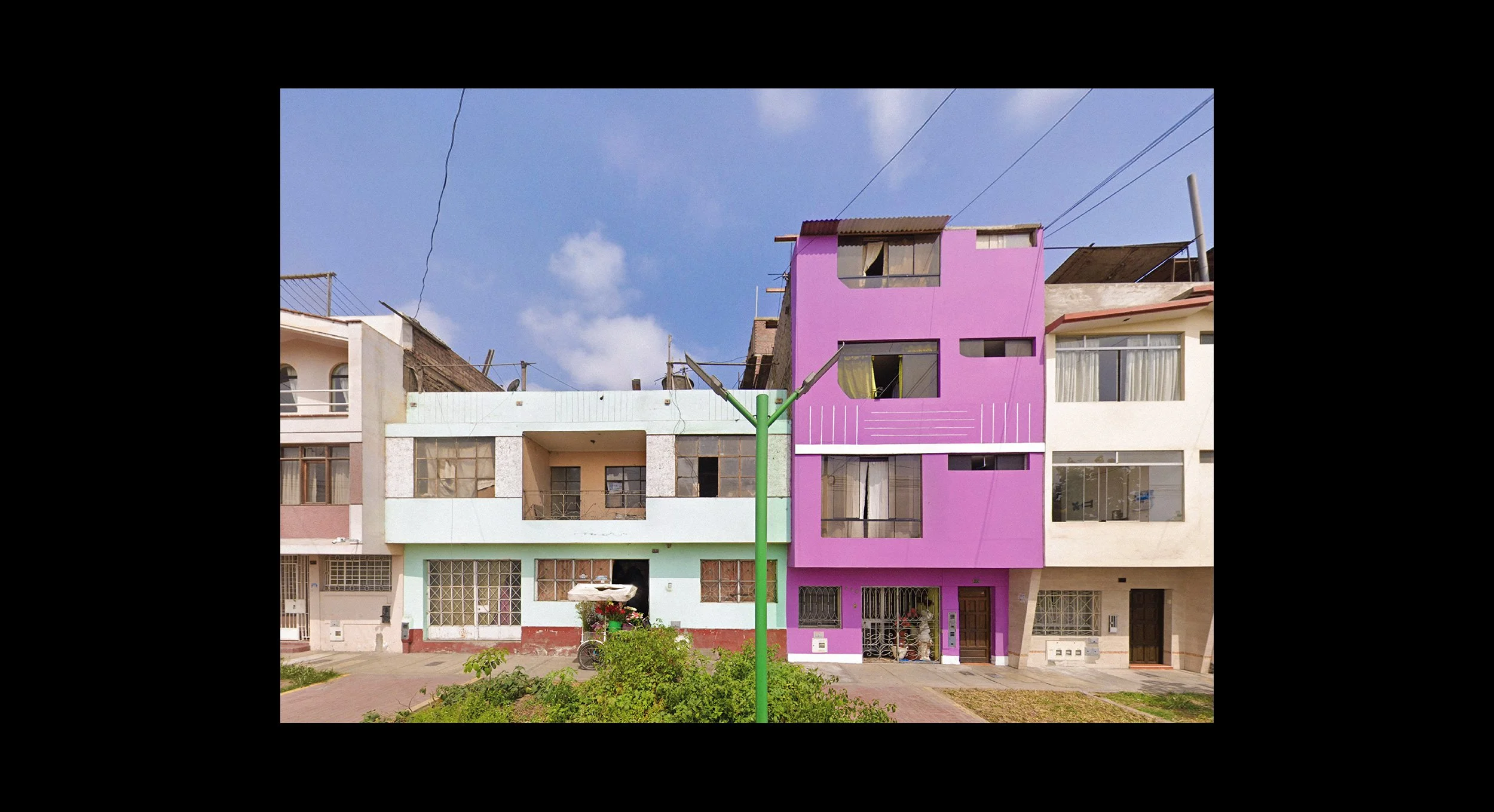
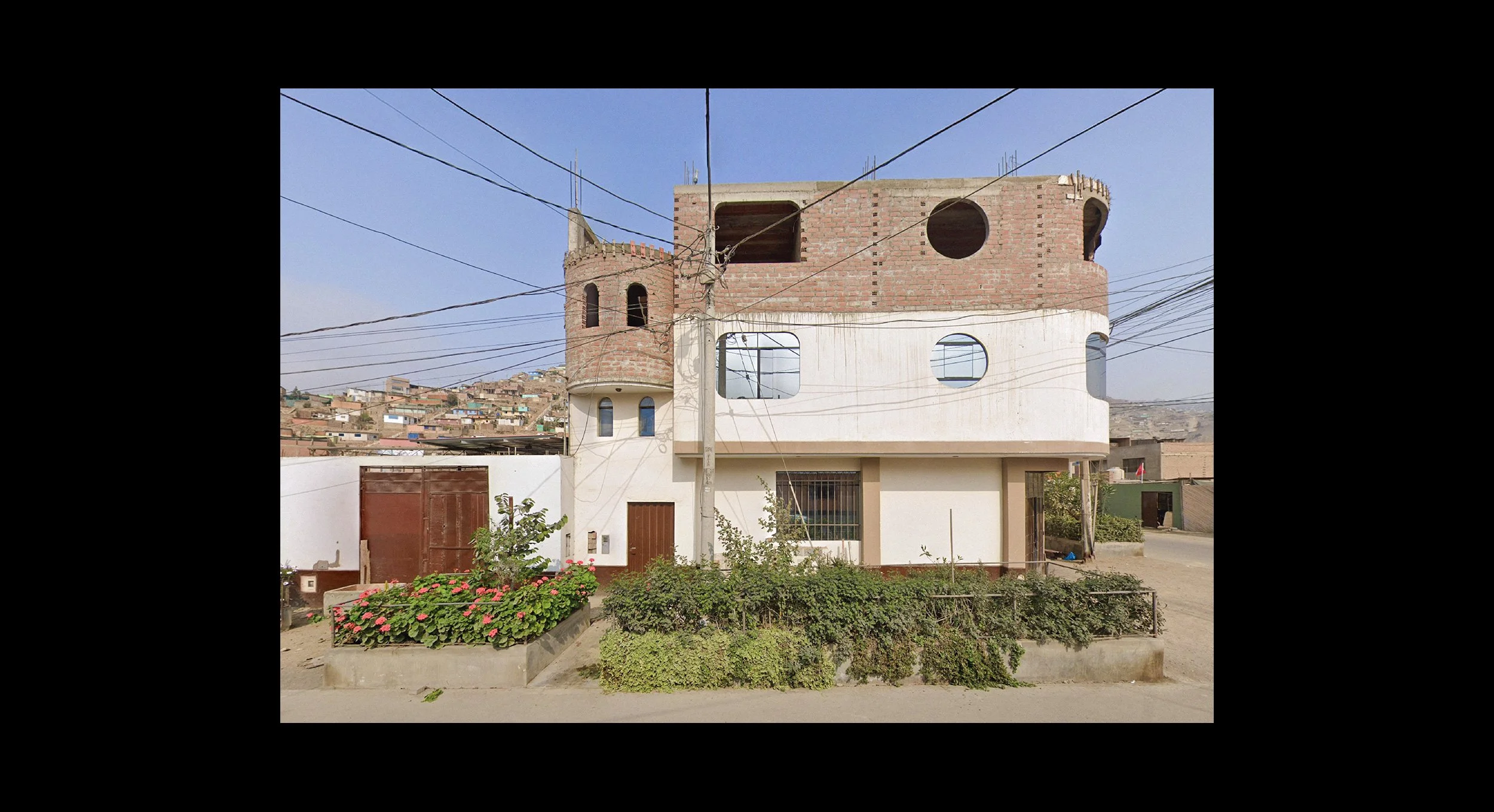
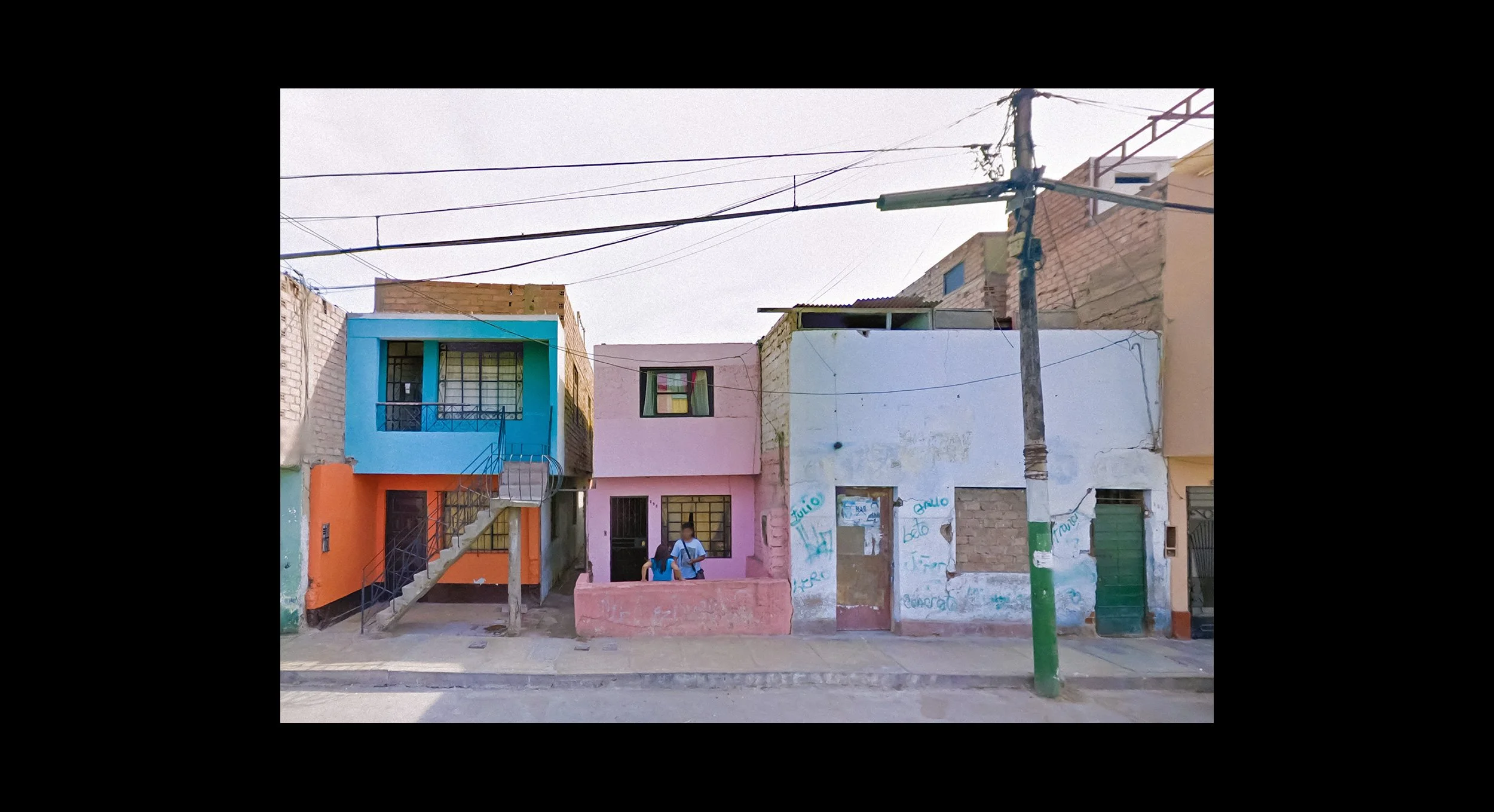
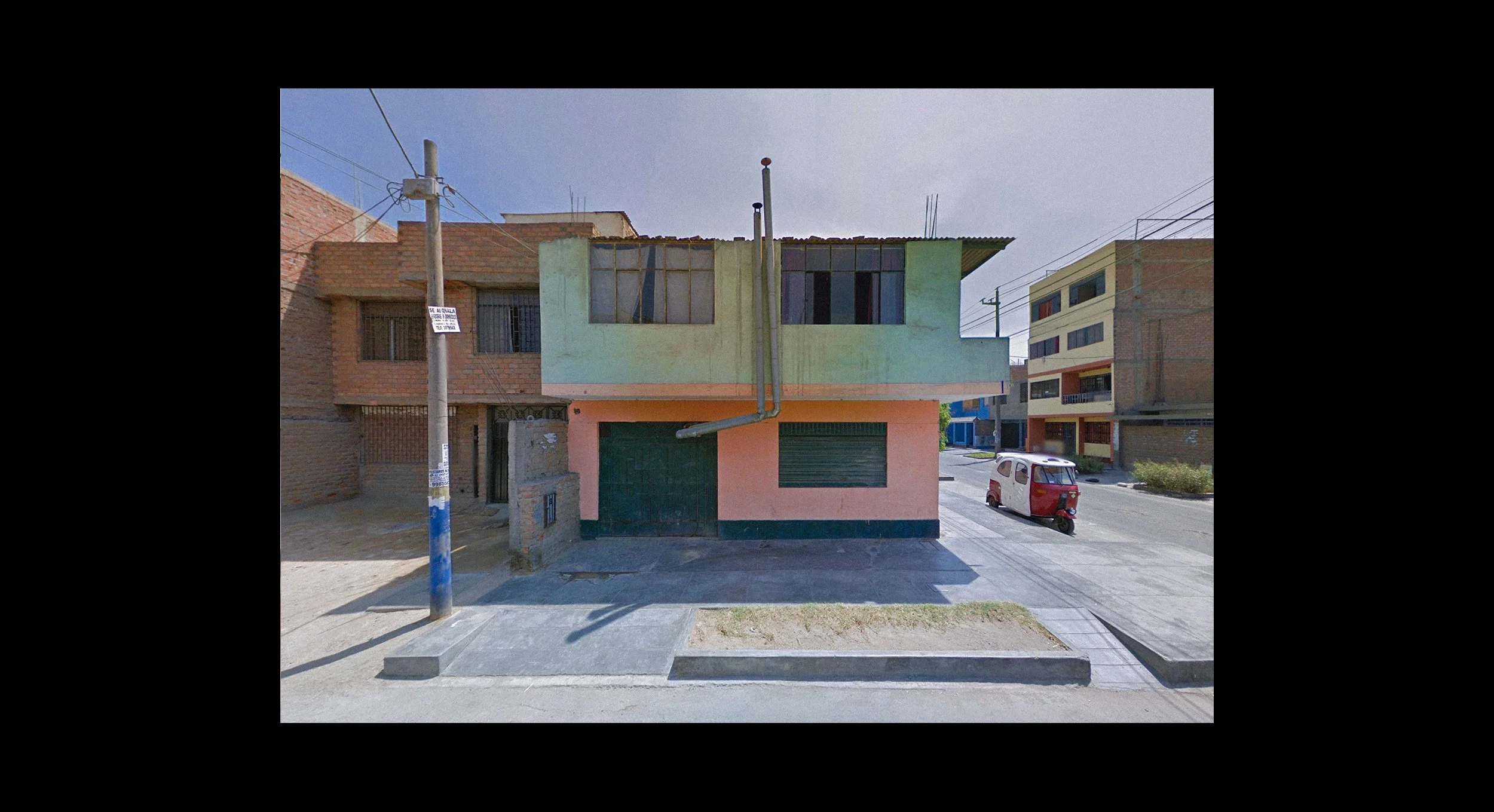
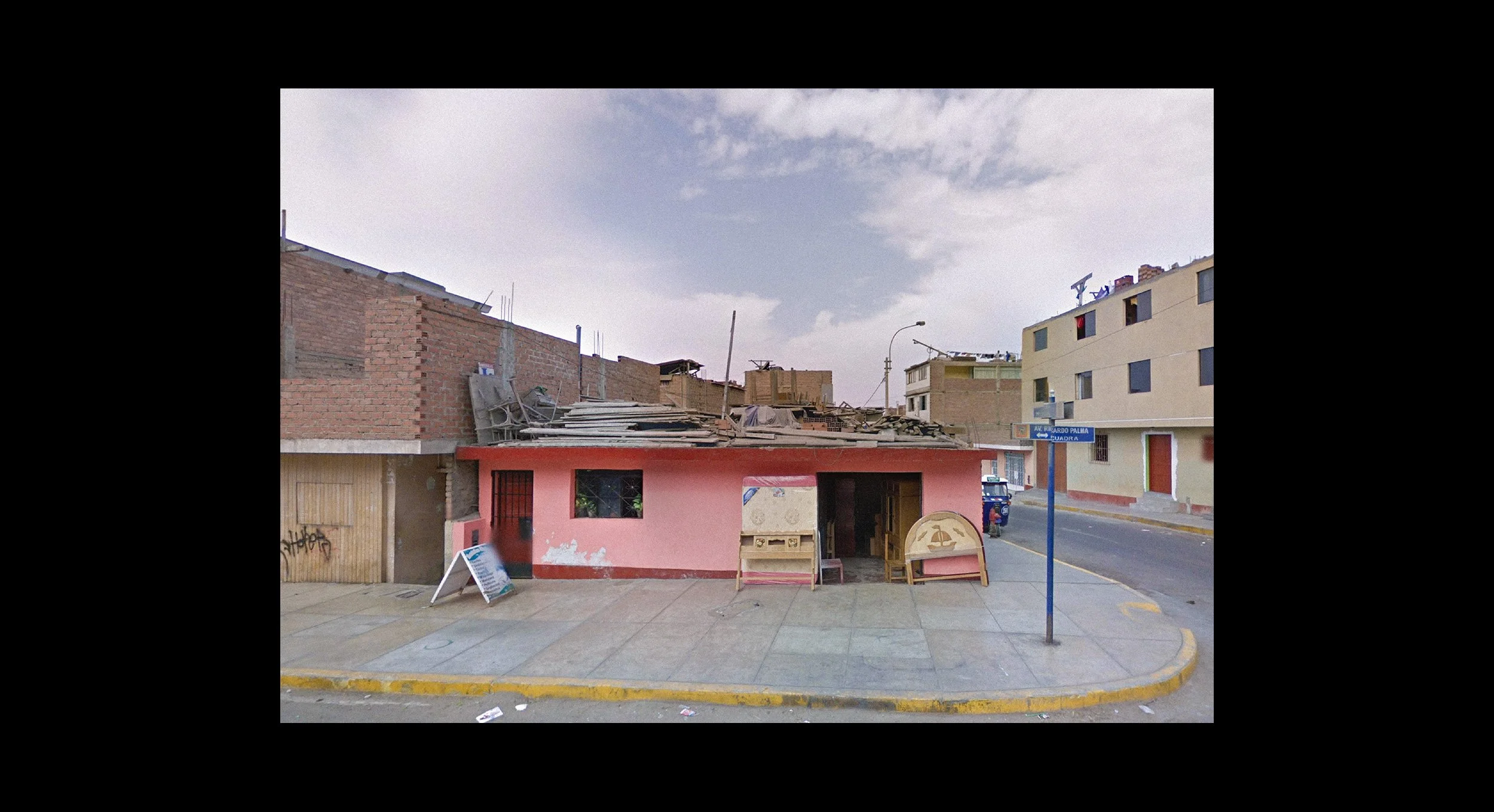
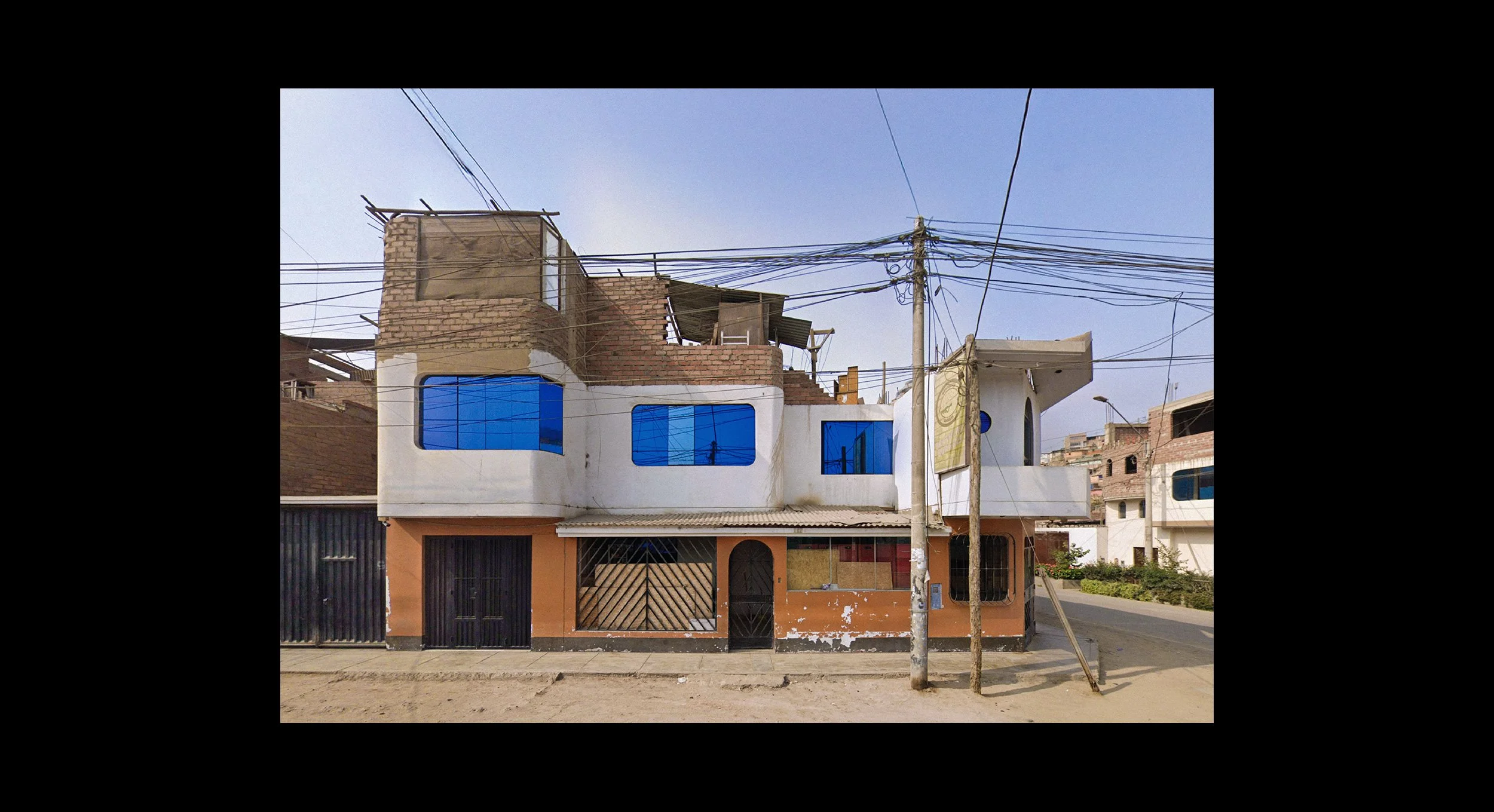
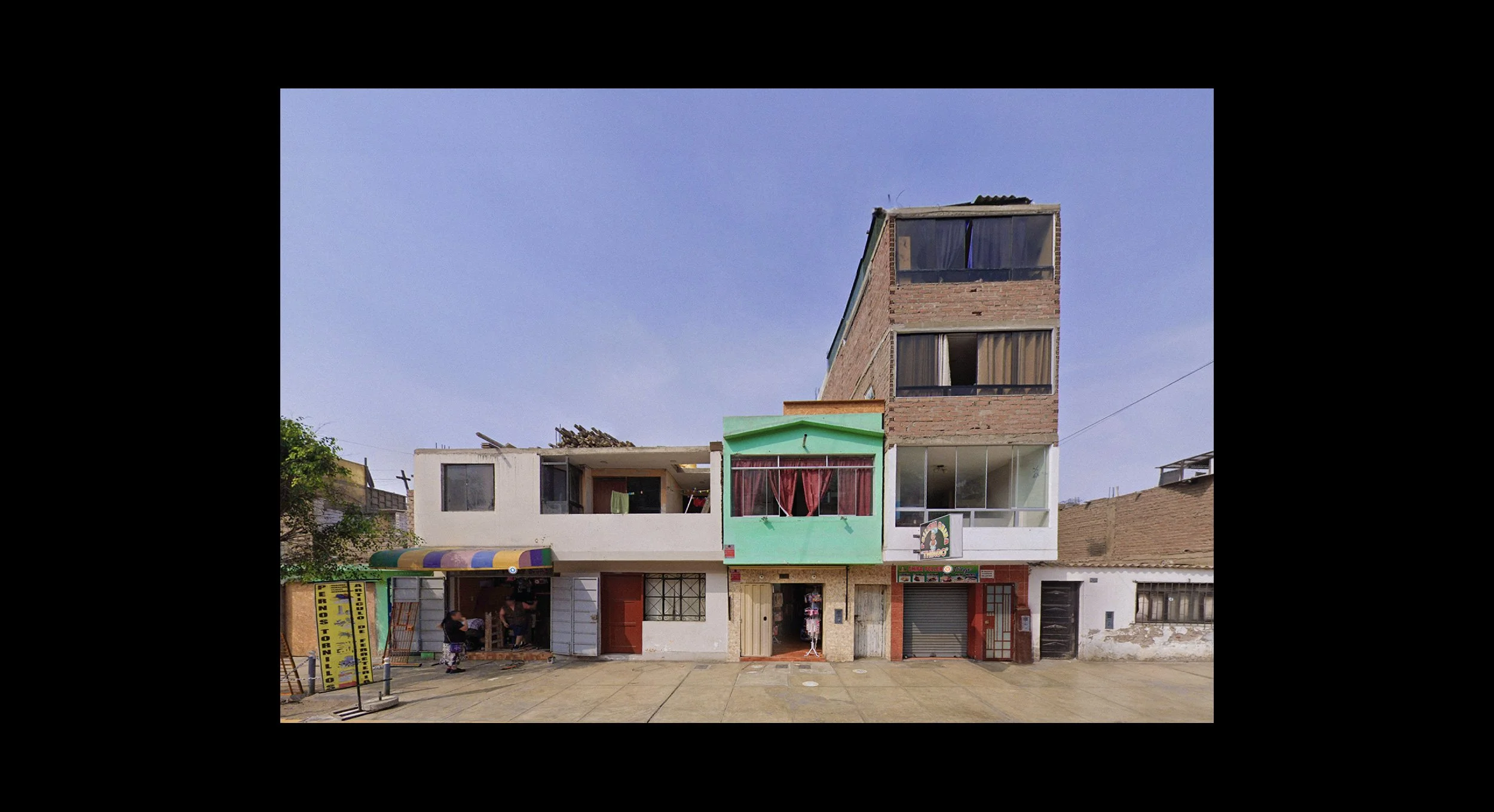
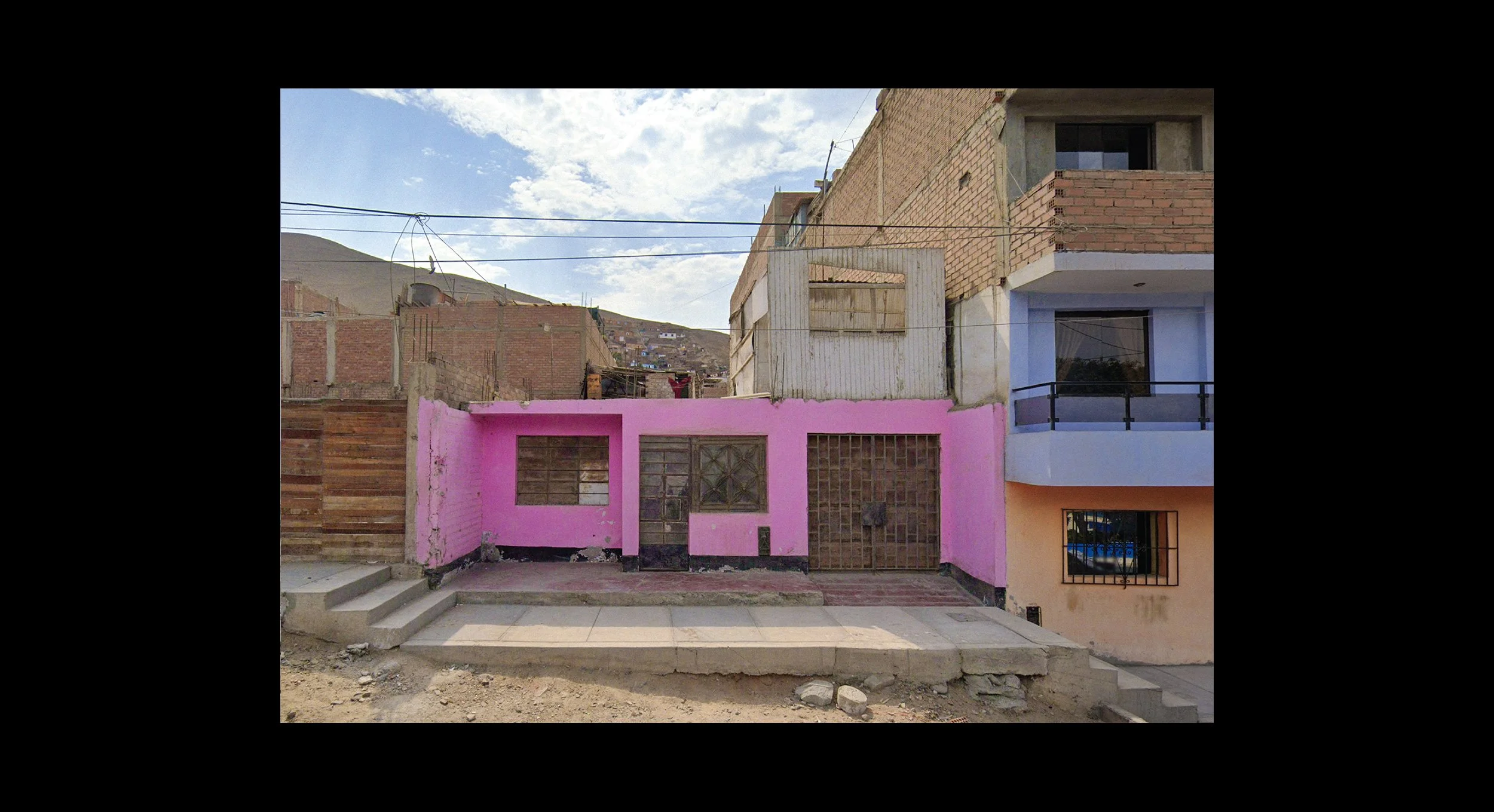
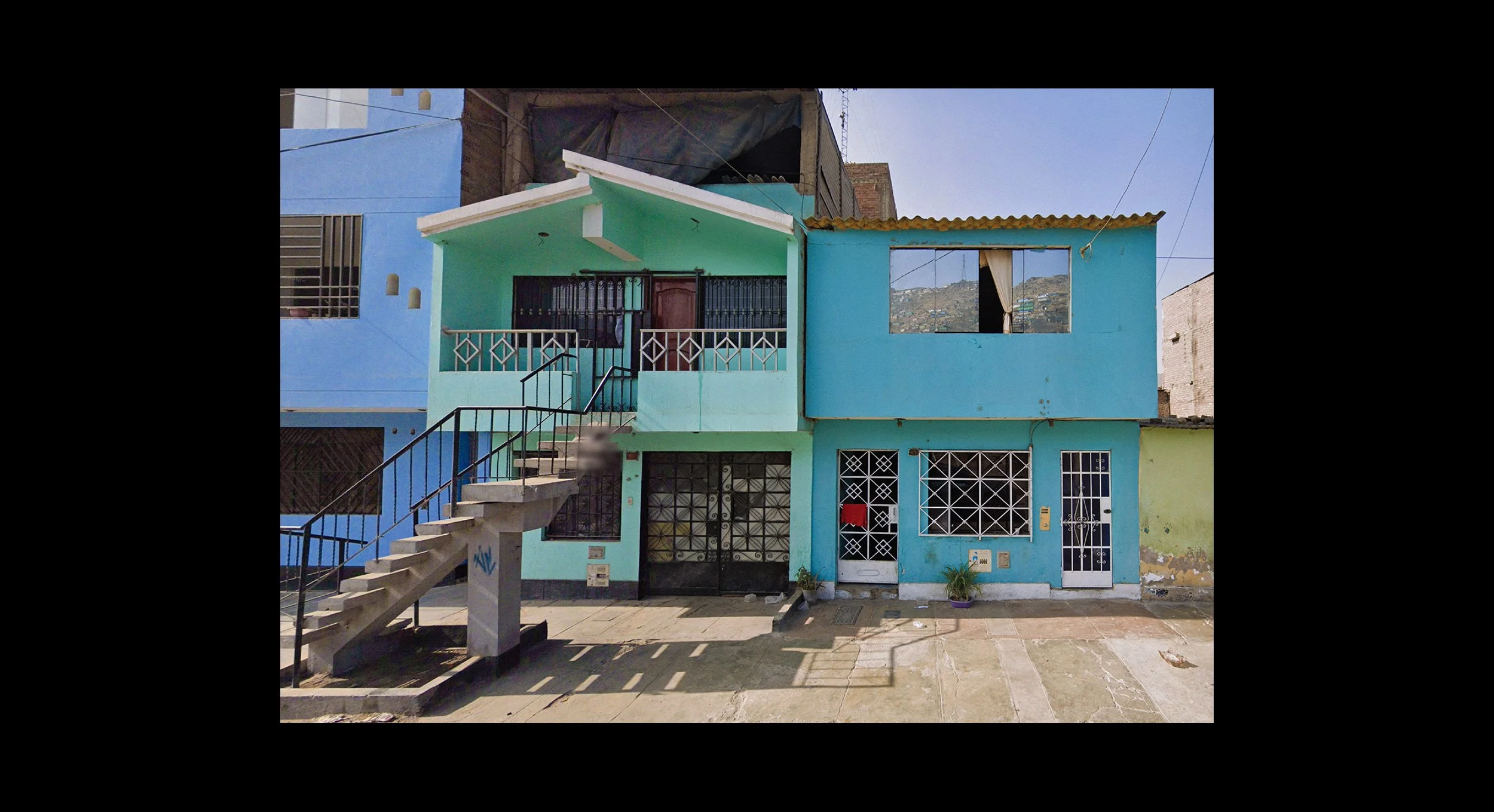
Informal Typologies brings together a selection of facades in color. Their colors and seemingly random forms defy conventional architectural categories, contrasting with the “objectivity” of Google Street View: a 360-degree camera that automatically documents spaces shaped by human decisions.
ARCHIVE OF SELF-CONSTRUCTION
CHAPTER I
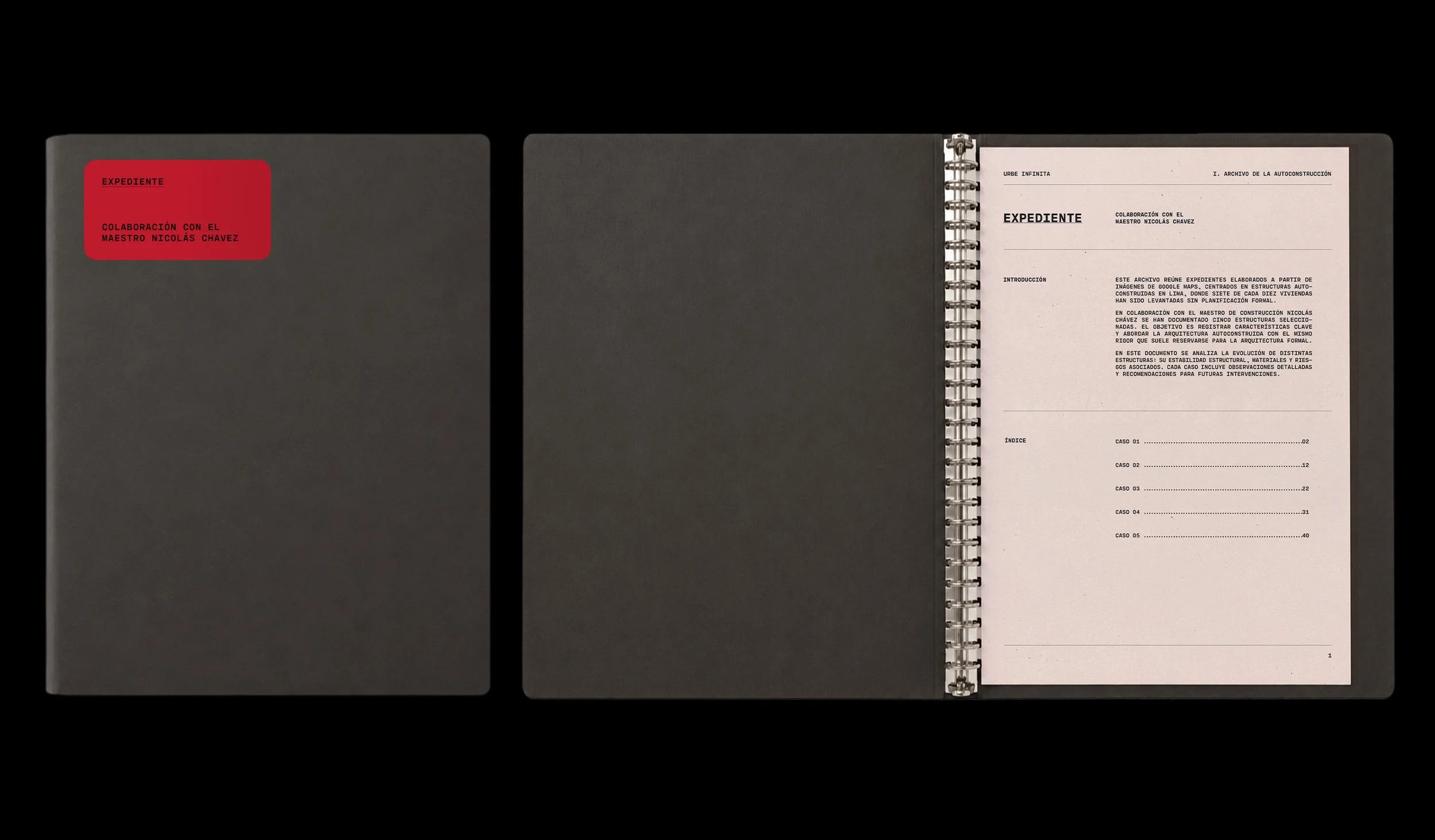
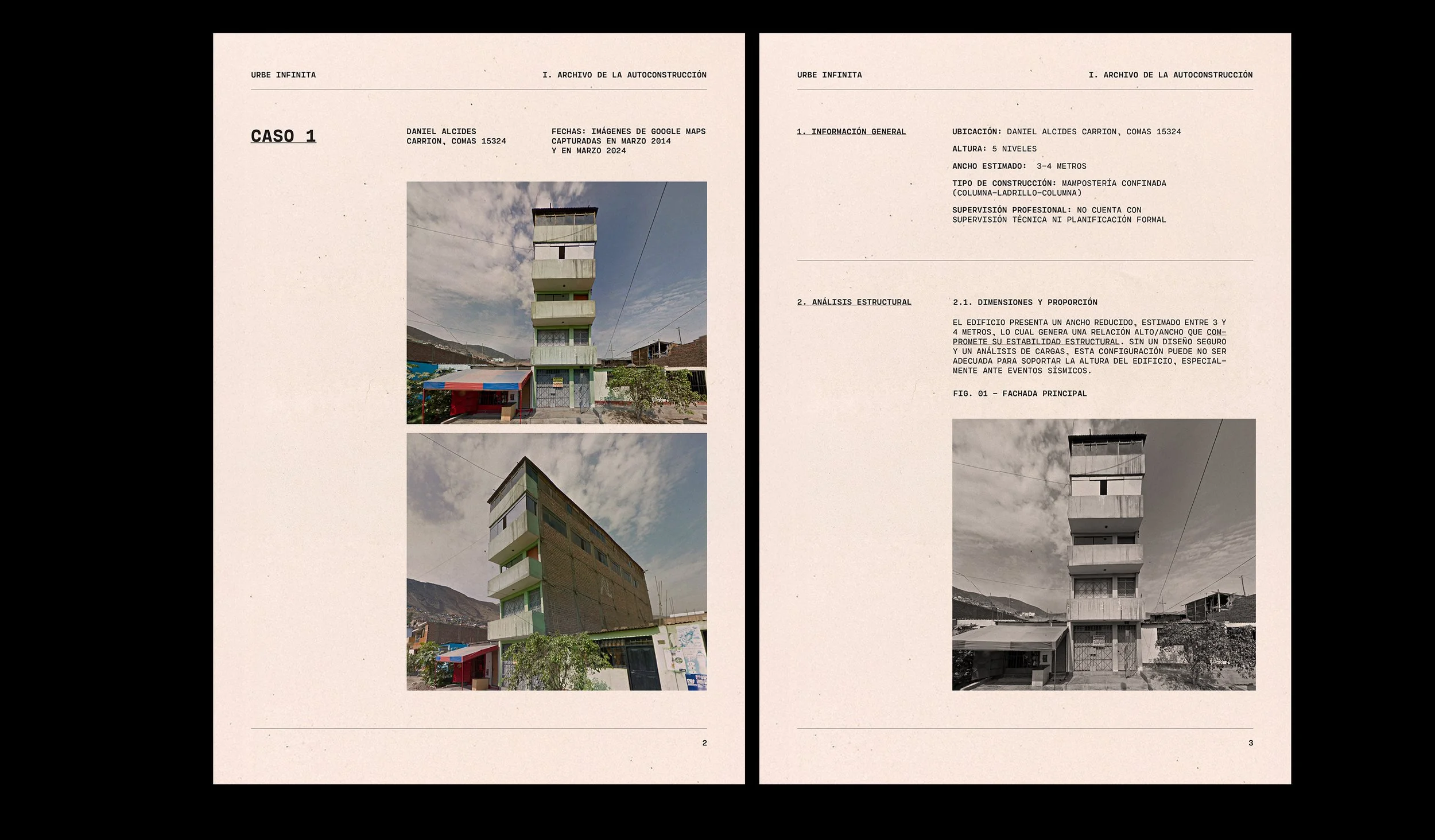
COLLABORATIVE DOSSIER
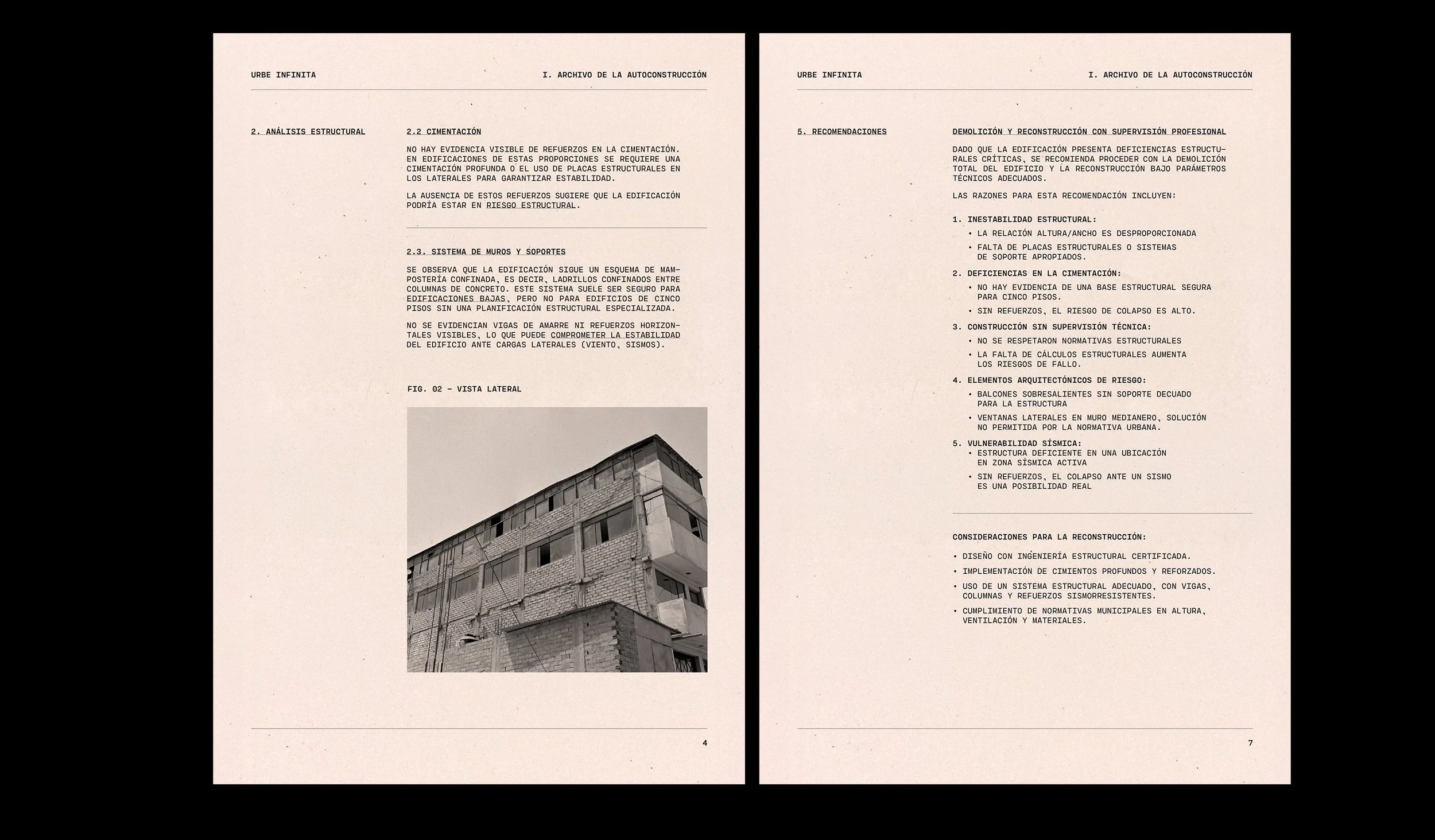
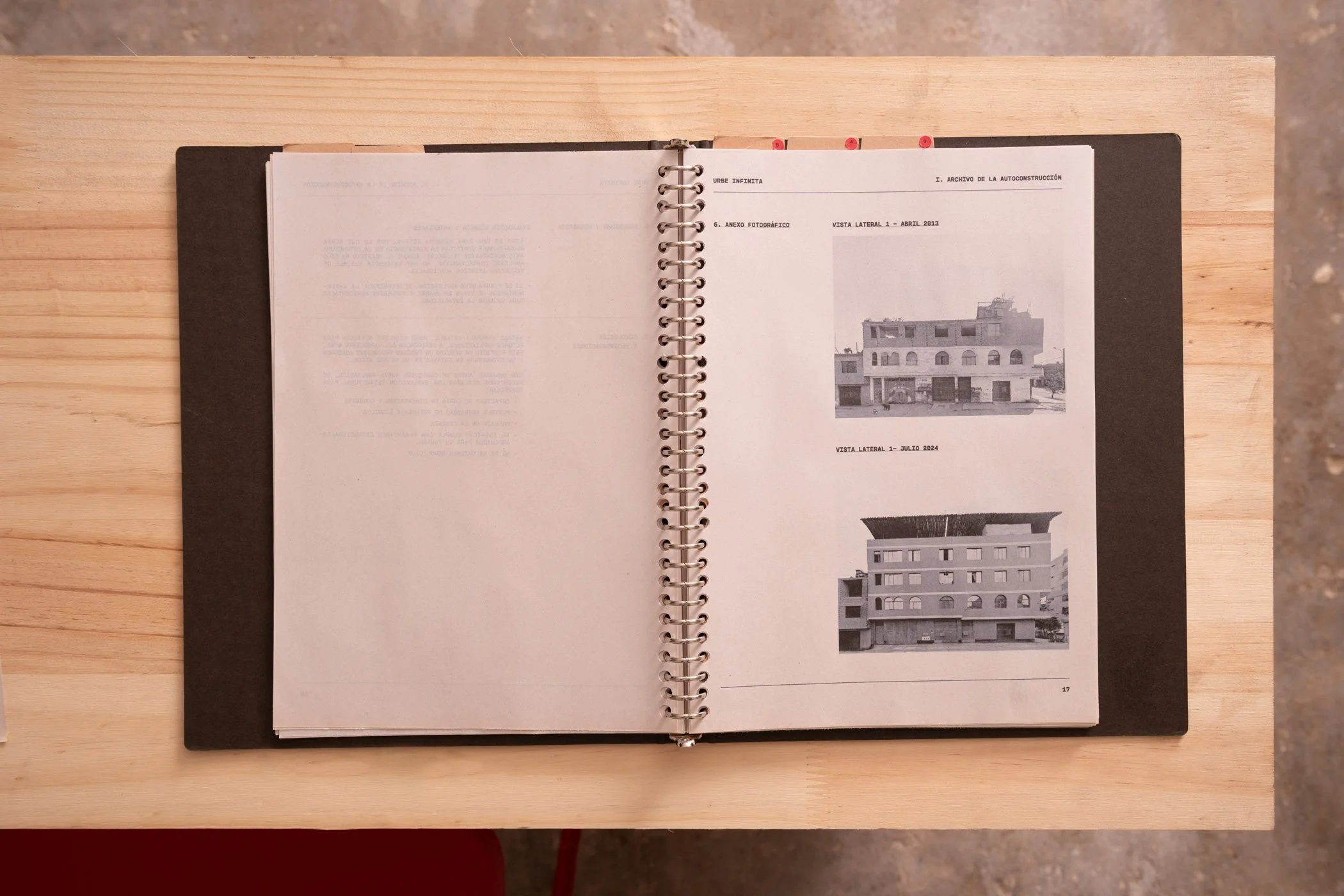
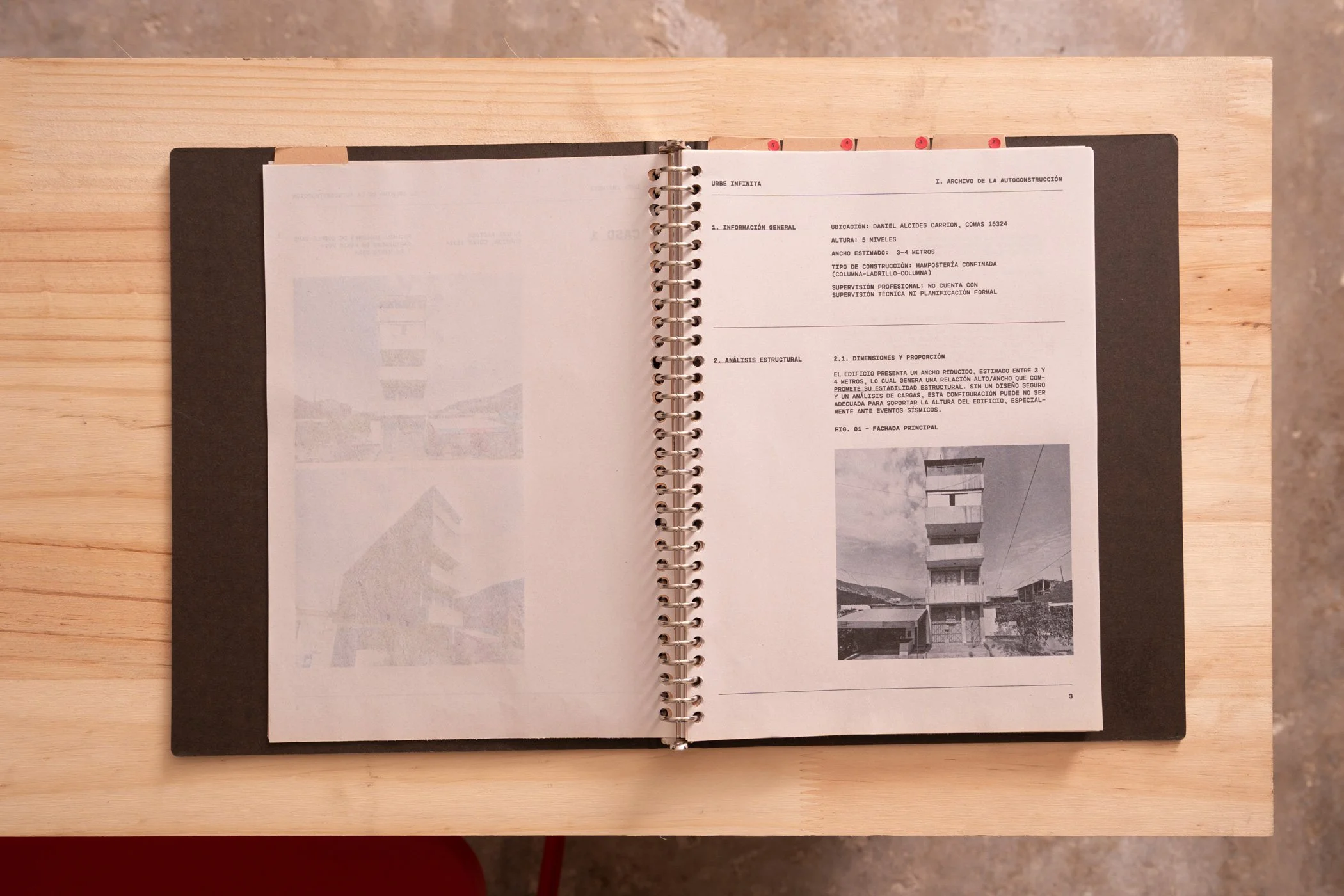
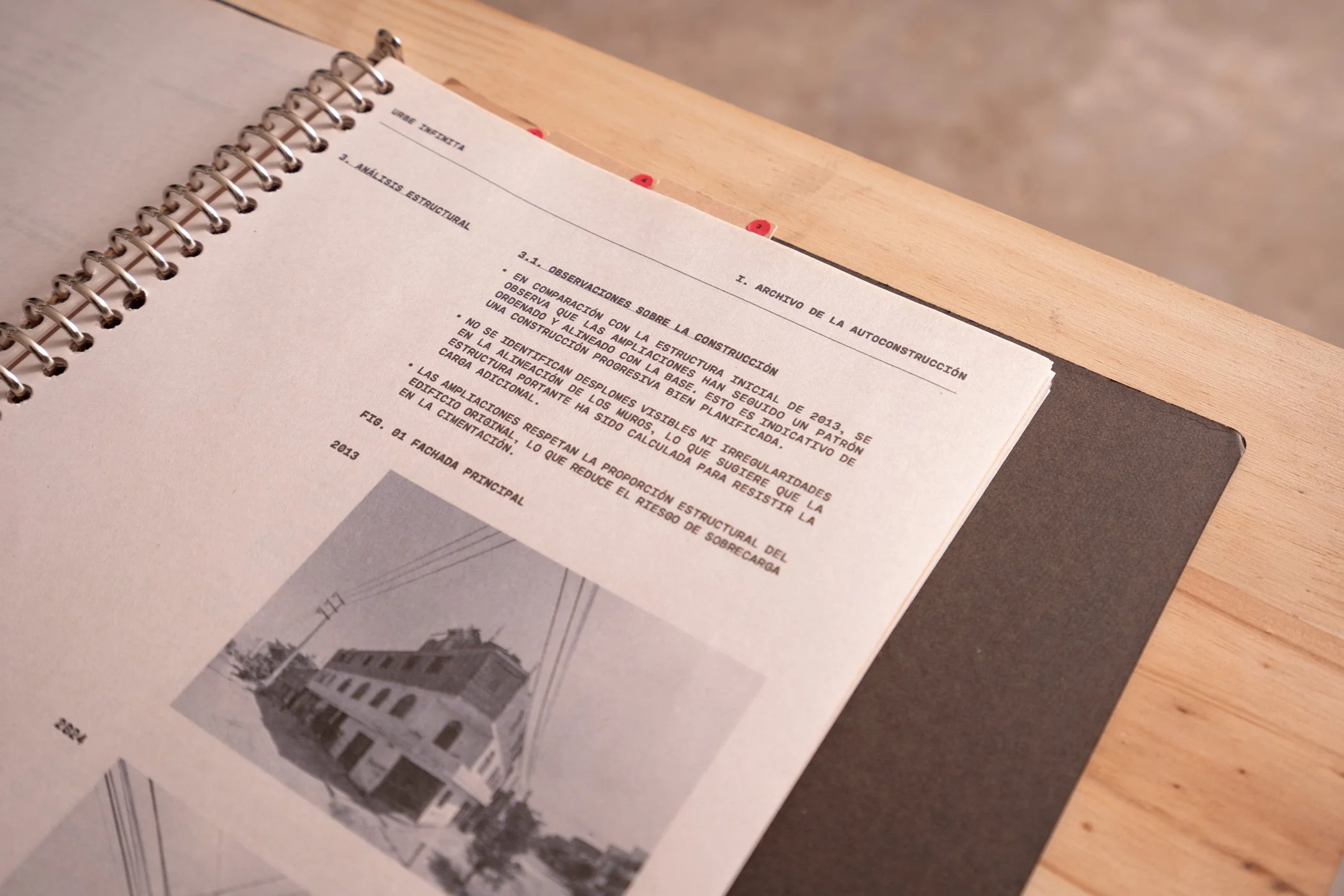
I collaborated with maestro de construcción (local master builder) Nicolás Chávez to create a dossier documenting different examples of self-built structures. The document records their defining characteristics and critically examines their growth, approaching self-construction with the same rigor typically reserved for formal architecture.
CHAPTER II — MAESTRO
The second chapter focuses on maestros de construcción (local master builders), key figures in the development of self-constructed buildings. Their work reflects the generational effort and collaborative nature of self-construction. They do more than build: they organize, design, and guide families through the process, developing a direct and personal connection to their work.
The video brings together footage of construction sites and testimonies from master builders, reflecting on informality, the future of the city, and their relationship with their craft.
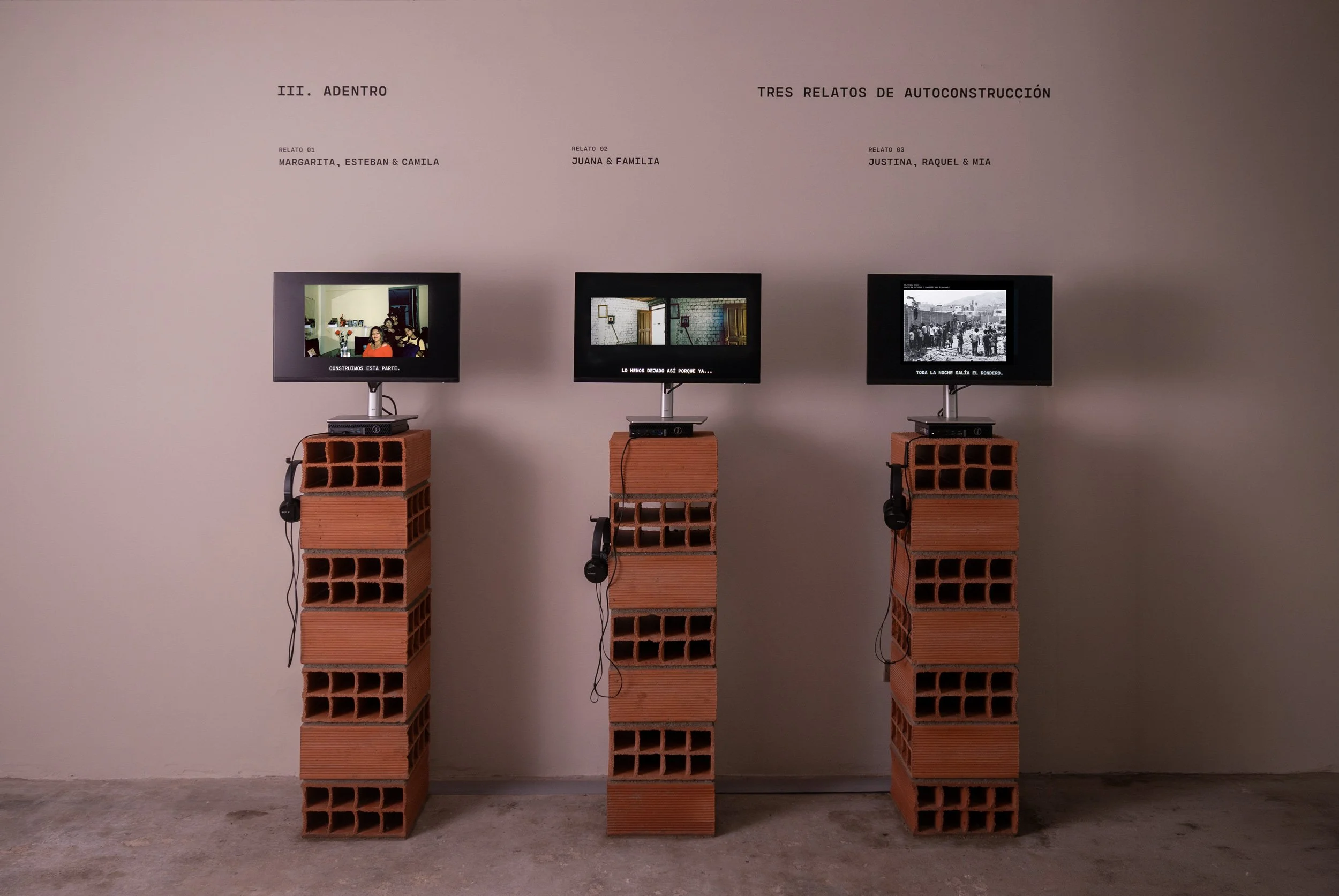
CHAPTER III — ADENTRO
Using images from Google Street View as a starting point, I spoke with three families about how they perceive their homes. Their testimonies are presented in three videos combining images and personal narratives.